

CPEC 2.0 industrial growth will depend on whether Pakistan can turn agreements with China into competitive industries, stronger local supply chains and lasting employment. As the next phase of the China-Pakistan Economic Corridor places greater emphasis on industrial cooperation, agriculture, technology and skills, its success will be measured not simply by the number of agreements signed, but by the investment delivered, businesses developed and jobs created.
At the 93rd CPEC Progress Review Meeting on 7 October 2026, Planning Minister Ahsan Iqbal reviewed priority initiatives. The initiatives covered education, agricultural modernisation, research and innovation, youth development, and cooperation between federal and provincial governments. The official CPEC Secretariat report highlighted expansion of STEM education from 42 to 58 districts. It also strengthens joint research and technology transfer.
These priorities point towards a broader development agenda. A policy direction is not a completed project. A signed agreement does not guarantee a functioning factory or new jobs. The central challenge for Pakistan is turning bilateral cooperation into productive capacity. This capacity must back domestic firms, raise workers’ skills, and create measurable economic value.
CPEC 2.0 Industrial Growth Must Move Beyond Announcements
The October review placed implementation and coordination at the centre of the next phase. It brought together federal and provincial officials and private-sector representatives, with the minister directing relevant institutions to strengthen coordination, review progress regularly and accelerate delivery. These are important administrative priorities, but the public announcement does not provide a comprehensive account of jobs created, investment disbursed or economic returns delivered by the initiatives discussed.
That gap matters. Announcements describe intentions; implementation data show whether resources have reached projects and whether those projects are operating. Pakistan needs a clearer public record of project status, financing, delivery milestones and results if policymakers and citizens are to judge CPEC 2.0 on evidence rather than expectations.
The wider policy direction is clear. During a separate consultation in August 2026, the CPEC Secretariat described business-to-business partnerships, industrial development, technology transfer and capacity building as priorities. The challenge now is to turn those priorities into specific commercial projects, with identifiable investors, realistic timelines and measurable objectives. For CPEC 2.0 industrial growth to move beyond policy commitments, Pakistan needs transparent implementation data, clear project timelines and measurable economic results.
CPEC 2.0 Industrial Growth Needs Strong Local Supply Chains
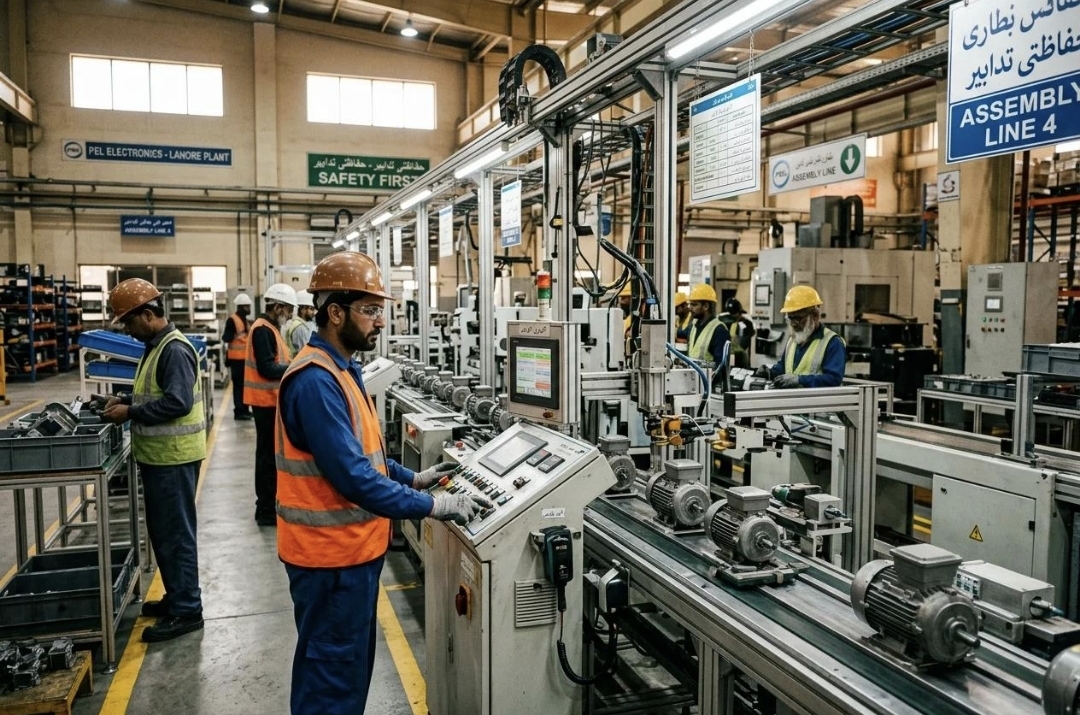
The strongest industrial partnerships do more than establish production facilities. They connect investment with local suppliers, technicians, transport operators, maintenance providers and other businesses. A factory may create direct employment. Its wider economic contribution depends on the value it generates across the domestic economy.
Pakistan and China have already identified industrial parks and manufacturing as areas for deeper cooperation. The joint statement from 26 May 2026 called for industrial parks tailored to local conditions. It also supported demonstration projects in sectors such as textiles and home appliances. It also endorsed wider cooperation in technology, trade and industrial supply chains. These commitments establish a policy direction; they do not, by themselves, demonstrate how much new production or employment has resulted.
For Pakistan, local participation will depend partly on whether domestic firms can meet investors’ requirements for quality, price, reliability and delivery. If local suppliers cannot meet those standards, businesses may rely heavily on imported components and services. Supplier-development programmes, technical certification, access to finance and practical partnerships between firms could help Pakistani businesses compete for contracts. Strengthening local suppliers is essential to CPEC 2.0 industrial growth because it can help Pakistani businesses participate in production networks rather than remain on the sidelines of new investment.
The objective should not be to maximise local purchasing regardless of cost or quality. It should be to help domestic companies become competitive suppliers that can serve Chinese-linked projects and sell to other customers at home and abroad. The Pakistan-China green supply-chain debate illustrates why developing manufacturing capabilities matters beyond assembling finished products.
Agriculture and Technology Need Commercial Pathways
Agriculture offers another route from bilateral cooperation to wider economic gains. At the October review, the CPEC Secretariat highlighted agricultural modernisation. It included using Chinese technologies to improve production of mangoes, tea, and apples. It also identified joint research laboratories and knowledge exchange as areas for cooperation. The authorities state these priorities, and they determine their value by how they are implemented and assessed.
Technology and research partnerships can deliver stronger results when they address clearly defined commercial problems. In agriculture, projects might assess whether improved cultivation methods increase yields, reduce input costs or limit post-harvest losses. Food-processing and storage initiatives could determine if higher-value sales are possible for more produce rather than allowing it to spoil before markets. In manufacturing, modernisation projects could measure production quality, energy use and equipment downtime.
We propose evaluation measures. Each project should establish a baseline, identify who is expected to benefit and report outcomes over a defined period. Successful pilots can then provide evidence for wider investment, while underperforming projects can be adjusted before more resources are committed.
Research also needs a route into commercial use. Stronger links between universities, technical institutes, farmers and businesses could help turn new methods into products and services that reach the market. The Daily CPEC’s reporting on China-Pakistan agricultural research cooperation provides relevant context for this part of the agenda.
Provincial Coordination Must Lead to Delivery
CPEC projects operate within Pakistan’s federal system, where national priorities often require action by provincial governments, local authorities, regulators and private companies. The October review’s focus on subnational cooperation is therefore relevant to practical delivery. Industrial projects need supporting infrastructure and trained workers, while agricultural initiatives must account for local growing conditions, markets and supply networks.
Coordination becomes ineffective when responsibility is unclear. Federal and provincial institutions should establish who is responsible for each stage of a project, what milestones must be met and how delays will be addressed. Public progress updates should make it possible to distinguish between a project that is being planned, one under construction and one that has begun commercial operations.
Local businesses and communities also need accessible information about procurement, training and employment opportunities. This would not guarantee that every project succeeds, but it could make participation more transparent and help institutions identify obstacles earlier.
The same principle applies to industrial zones. Announcing a site or approving a plan is only the beginning. Investors also need reliable infrastructure, predictable regulation, access to finance and a business environment in which production can operate competitively. Without these conditions, the potential of industrial cooperation may not translate into sustained economic activity.
Measuring CPEC 2.0 Industrial Growth Through Jobs and Investment
Measuring CPEC 2.0 growth requires more than announced projects; Pakistan must track investment, permanent jobs, supplier participation, and productivity gains. Projected jobs and verified employment are not interchangeable. A credible assessment should distinguish temporary construction from permanent positions, and direct jobs from indirect estimates. A credible assessment should distinguish temporary construction work from permanent operating positions. Direct jobs should be separated from indirect estimates. Announced hiring targets should be separated from positions actually filled.
The same discipline should apply to investment. Announced investment, signed commitments, funds disbursed and capital put into productive operation represent different stages. Reporting them separately would help prevent headline figures from obscuring the progress—or delays—of individual projects.
A public CPEC 2.0 scorecard could track a small set of indicators suited to each project: investment disbursed, operational status, domestic supplier participation, permanent employment, worker training, exports and productivity improvements. Where possible, we should measure results against a published baseline and report them over a consistent period. Independent verification would further strengthen public confidence.
Assessments should adapt to each project’s unique characteristics. A research partnership may be judged by applied innovations and their adoption, while an industrial facility may be assessed through production, jobs and export performance. The aim should be consistent transparency, not a single metric imposed on every initiative.
CPEC 2.0 has identified areas where cooperation could extend beyond infrastructure into industry, agriculture, technology and skills. Turning that agenda into lasting economic value will require commercially viable projects, capable local partners and credible implementation data. Pakistan’s objective should not simply be to attract Chinese investment, but to develop the domestic capabilities that allow investment to generate wider benefits.
The decisive test will be what Pakistan can produce, what its businesses can supply, what its workers can do and what its economy can sell after the announcements have passed.
Related Articles: