
CPEC 2.0 mining cooperation could help Pakistan turn its mineral wealth into industrial capacity, skilled employment and lasting economic returns. China and other international partners show growing interest in critical minerals and present Pakistan with a crucial challenge. Moving beyond extraction to develop processing facilities, stronger local supply chains and industries that retain more value within the country is where
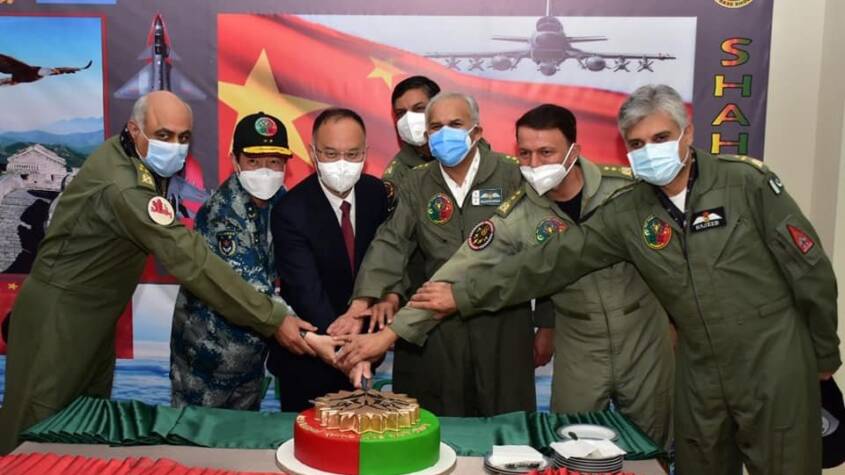
The Pakistan-China Mineral Cooperation Forum, held in Islamabad on 28 January 2026, highlighted the scale of interest. According to Pakistan’s Press Information Department, the event brought together more than 70 Chinese companies, over 100 Pakistani companies and more than 800 participants. The discussions covered the mineral value chain, from exploration and mining to processing, logistics, financing and technical training. Pakistan and China also launched the Pak-China E-Mining Platform to improve information sharing and connect relevant authorities with potential investors. Source: Pakistan’s Press Information Department.
The forum signals an effort to broaden bilateral mineral cooperation. But investor interest and memoranda of understanding are only starting points. Pakistan’s real test is whether investment can deliver commercially viable projects and help the country retain more value from its resources.
CPEC 2.0 Mining Puts Pakistan’s Mineral Wealth on the Map
Mining and minerals have become an explicit priority under CPEC 2.0. In August 2026, the CPEC Secretariat identified mining, industrial development, science and technology, innovation and business-to-business cooperation among the areas targeted for deeper engagement with China. Source: CPEC Secretariat.
The China-Pakistan Action Plan for 2025–2029 provides a wider framework for bilateral cooperation. The two countries have also publicly committed to advancing mining and oil and gas exploration and development. These priorities point towards a model in which minerals support industrial activity rather than remain an extraction-only business.
CPEC 2.0 mining cooperation will deliver lasting benefits only if investment commitments translate into operational projects, stronger domestic capabilities and measurable economic returns. Mining can generate royalties, exports and employment, but its wider economic impact depends on what happens after ore is removed from the ground. Processing, refining, equipment maintenance, engineering and mineral-based manufacturing can create additional opportunities—provided projects are commercially sound and domestic firms can compete.
For Pakistan, CPEC 2.0’s mining agenda should therefore be judged not simply by the number of agreements signed, but by the productive capacity those agreements help establish.
Saindak Shows What Pakistan Can Build On
Pakistan already has experience with China-linked mining. The Saindak Copper-Gold Project in Balochistan was constructed by China’s Metallurgical Construction Corporation, and commercial production began in August 2003 under an operating arrangement involving the Chinese company and Pakistan’s Saindak Metals Limited.
Saindak Metals Limited’s 2023–24 yearbook reports that the project produced 73,684.65 tonnes of copper concentrate and 17,041.86 tonnes of blister copper during the reporting period. It also records US$11.21 million in royalties paid to the Government of Balochistan, alongside other payments, including taxes and corporate social-responsibility contributions. Source: Saindak Metals Limited, Year Book 2023–24.
These figures demonstrate that an operating mine can generate production and public revenue. They do not, by themselves, establish the project’s full net economic benefit or show how much additional value could be retained through further domestic processing.
That is the next question for Pakistan’s mineral strategy. Can existing operations support stronger technical skills, local supplier networks and more sophisticated processing? The answer will depend on commercial feasibility, infrastructure, investment requirements and the ability to develop expertise beyond extraction.
The Bigger Opportunity Lies Beyond Extraction
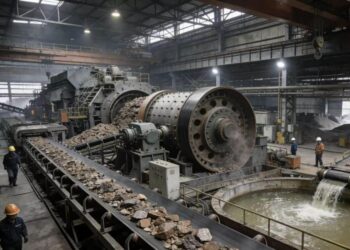
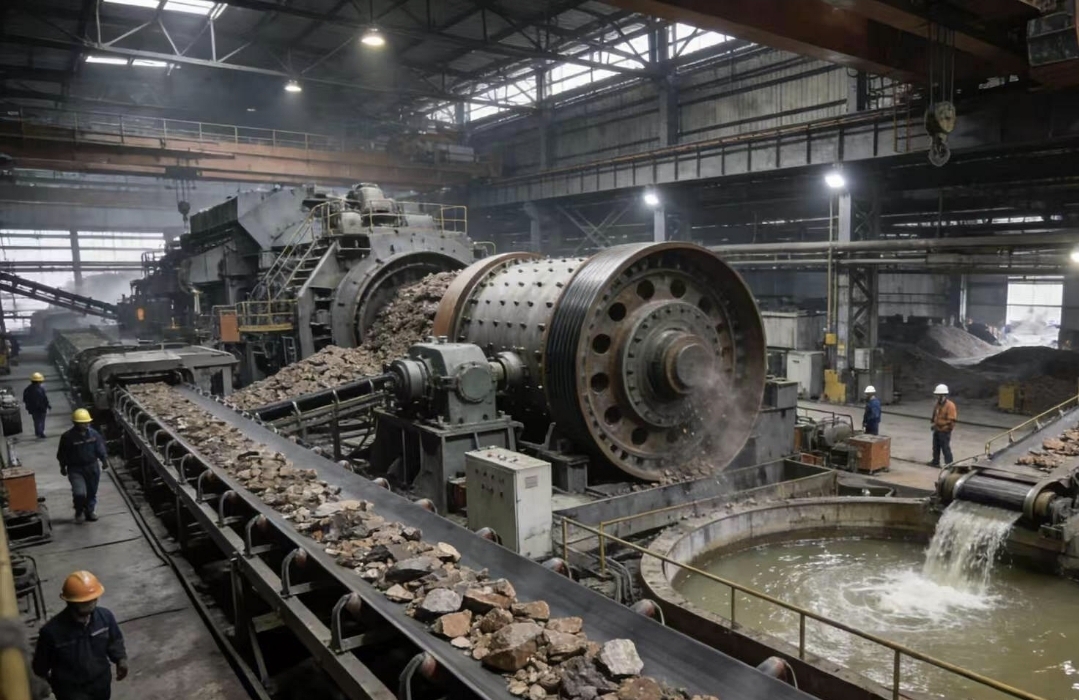
Mineral development is a chain of activities. Depending on the resource, ore may require concentration, smelting, refining or further chemical processing before it becomes a useful industrial input. Each stage requires appropriate technology, reliable energy, skilled workers, capital and access to markets.
For CPEC 2.0 mining to support industrial growth, Pakistan needs commercially viable processing, reliable infrastructure and a skilled domestic workforce. Pakistan’s policy debate increasingly recognises the importance of value addition. At the January forum, officials highlighted cooperation across exploration, processing, smelting, refining and manufacturing. The May 2026 China-Pakistan joint statement also committed both countries to advancing cooperation in mining and resource development. These are policy directions, not evidence that new processing facilities have already been built.
Balochistan’s Mines and Minerals Department says it is conducting a provincial geological resource survey and has allocated potential critical-mineral areas to provincial government-owned companies for joint ventures with international investors. It also says large-scale mineral title holders are being asked to reserve equity for provincial companies. Source: Government of Balochistan.
If implemented transparently and on commercially workable terms, such arrangements could strengthen provincial participation and encourage technology transfer. However, equity participation alone does not guarantee local jobs or industrial development. Results will also depend on project governance, workforce training, supplier development and effective regulation.
Rare Earths: Strategic Potential, but a Developing Industry
Rare earth elements have become strategically important because of their use in products such as permanent magnets, electronics and some clean-energy technologies. China’s established role in rare-earth processing has added to international interest in diversifying supply chains.
Pakistan has identified rare earths and other critical minerals as areas for exploration and technical development. The Geological Survey of Pakistan lists geological investigations involving lithium and associated minerals, while a 2026 public procurement notice from the Pakistan Council of Scientific and Industrial Research concerned a proposed mineral-testing laboratory in Skardu under a project focused on exploring, beneficiating and extracting rare earth elements, precious metals and critical minerals in Gilgit-Baltistan. Sources: Geological Survey of Pakistan and Pakistan Public Procurement Regulatory Authority.
These activities indicate exploration and capacity-building efforts, not proof of a mature, commercially established rare-earth industry comparable with China’s. Pakistan’s near-term mining examples are more concrete in copper and gold, particularly at Saindak and the planned development of Reko Diq.
This distinction strengthens the case for a realistic strategy. Geological potential must first be established through credible surveys and resource assessment. Projects then need technical and commercial evaluation, suitable processing methods, financing and reliable routes to market. Chinese expertise could contribute to that process, but investment decisions must be based on verified deposits and viable economics—not the global popularity of the rare-earth narrative.
Reko Diq Shows Why Security Matters
Reko Diq, one of Pakistan’s most significant undeveloped copper-gold projects, illustrates both the scale of the opportunity and the risks that can delay it. Its ownership is divided among Barrick, with a 50 per cent stake; Pakistani federal state-owned enterprises, with 25 per cent; and the Government of Balochistan, with the remaining 25 per cent. Source: Barrick.
Security has become a major constraint. On 2 April 2026, Barrick said it would slow development activity and continue reviewing the project until mid-2027 following escalating security concerns. The company also warned that the review could affect previously disclosed capital budgets and timelines. It said the project would remain under active management, with reduced capital spending. Source: Barrick’s Reko Diq update.
The announcement does not mean Reko Diq has been cancelled. It does, however, show how security risks can affect the pace, cost and financing of a major mining investment.
For Pakistan, the lesson extends beyond one project. Large mines require long planning horizons, substantial capital and reliable operating conditions. Investors must assess not only geological resources and commercial terms, but also worker safety, transport, infrastructure and the ability to operate consistently over decades.
Can Balochistan Capture More of the Value?
Balochistan’s participation is central to whether mining can produce lasting benefits. The province passed the Balochistan Mines and Minerals Act 2025 on 13 March 2025. Its Mines and Minerals Department says the law seeks to facilitate investment while prioritising sustainable mining practices and describes provincial participation in joint ventures involving critical minerals.
Yet the success of this approach cannot be measured solely through licences, equity stakes or investment announcements. It must also be assessed through employment, royalties, local procurement, technical training, environmental protection and the quality of public infrastructure.
Mining projects can generate economic activity while also placing pressure on water resources, land and local services. Transparent licensing, credible environmental assessments, meaningful community engagement and effective safety oversight are therefore essential to sustainable development.
Local participation must also extend beyond ownership. Training programmes, supplier-development initiatives and partnerships with Pakistani universities and technical institutes can help build the skills needed to operate and maintain more sophisticated industrial facilities. Without such capacity, the country risks remaining dependent on external expertise for the most technically demanding stages of production.
The Real CPEC 2.0 Mining Test
Pakistan needs foreign investment to develop capital-intensive mineral projects. China brings significant experience in mining technology, processing and industrial supply chains, making cooperation potentially valuable. But the outcome will depend on the terms of investment, the strength of institutions and the ability of Pakistani businesses and workers to participate meaningfully.
The success of CPEC 2.0’s mining agenda should be measured through operational projects, investment actually deployed, transparent public revenues, skilled employment, domestic supplier participation and demonstrable progress in processing and value addition.
Pakistan’s mineral wealth is not new. What matters now is whether exploration can lead to viable production, whether production can support wider industry, and whether communities and public institutions receive a fair and lasting share of the returns.
The long-term performance of CPEC 2.0 mining projects should be assessed through actual investment, processing capacity, local employment, public revenue and the participation of Pakistani businesses.The competition is not simply to extract what lies beneath Pakistan’s soil. It is to determine how much industrial capacity, knowledge, revenue and long-term economic value the country can retain once those resources reach the market.