

China AI strategy offers Pakistan a useful reference point as Islamabad seeks to turn digital ambitions into economic gains.Guidelines issued on 9 October 2026 by the Communist Party of China Central Committee and the State Council set out 19 measures across five policy areas, linking scientific innovation with industrial development, institutional reform and talent cultivation. The framework also calls for wider implementation of China’s “AI Plus” initiative, which promotes the integration of artificial intelligence into traditional industries and the wider economy.
For Pakistan, the significance extends beyond technology. The country has approved a national AI policy and announced major investment and skills-development targets. Meanwhile, CPEC 2.0 is creating opportunities to deepen cooperation in research, agriculture, industrial development and technical education. China’s approach offers lessons, but Pakistan’s success will depend on adapting them to local conditions, strengthening implementation and measuring whether new technologies deliver practical results.
China AI Strategy Connects Innovation With Industry
China AI strategy forms part of Beijing’s broader effort to develop what Chinese policymakers call “new quality productive forces”. The concept emphasises technological innovation, industrial upgrading and more efficient use of economic resources. The guidelines call for closer integration between scientific and industrial innovation, alongside changes to development models and talent policies. They also stress the need to prevent reckless investment and ensure that emerging technologies develop in a controlled and productive way.
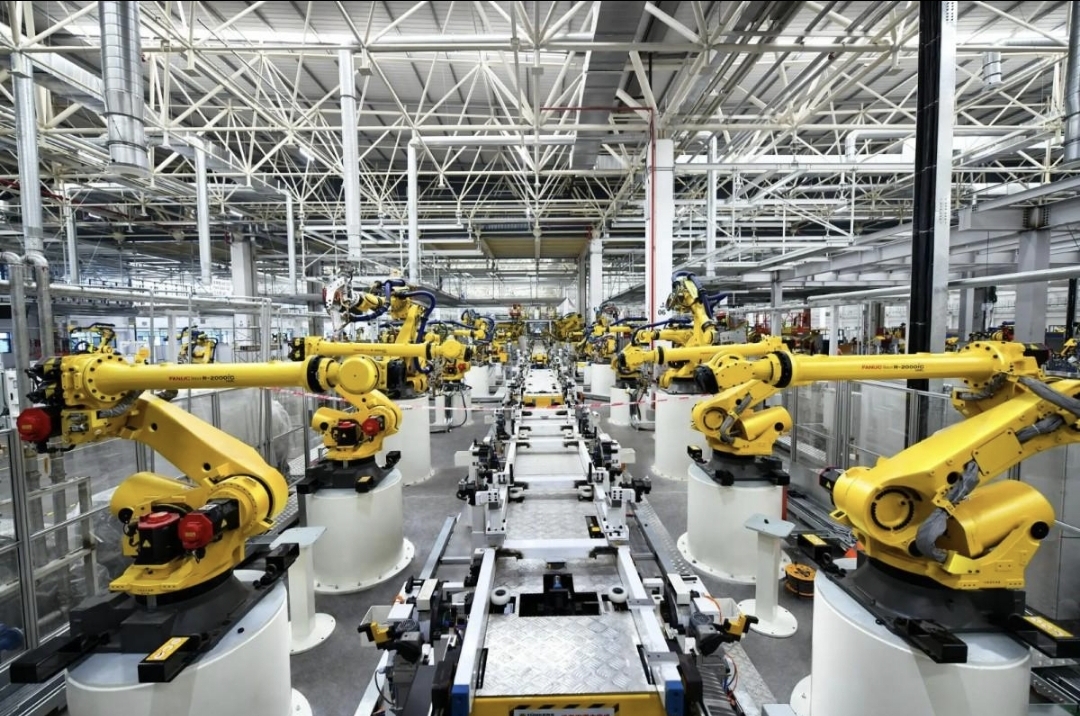
This approach highlights an important distinction: adopting AI is not the same as improving productivity. Businesses must identify problems that technology can realistically solve, integrate suitable tools into their operations and assess the results. Applications such as predictive maintenance, demand forecasting, automated quality control and energy management can potentially improve efficiency. Their actual value, however, depends on implementation costs, reliable data, staff expertise and the needs of individual industries.
Pakistan could explore similar applications in agriculture, manufacturing and logistics. Digital systems might help farmers make better-informed irrigation decisions, allow factories to identify equipment faults earlier or improve supply-chain planning. These are potential uses rather than proof of nationwide gains. Projects should establish baseline performance and measure changes in costs, output, quality or service delivery before claiming economic success.
China AI Strategy Offers Lessons for Pakistan’s AI Policy
Pakistan has already established a national policy framework for artificial intelligence. The Ministry of Information Technology and Telecommunication lists the National Artificial Intelligence Policy as approved on 31 July 2025. On 9 February 2026, Prime Minister Shehbaz Sharif announced a planned US$1 billion investment in AI by 2030, alongside 1,000 fully funded AI PhD scholarships and a target to train one million non-IT professionals in AI skills.
China AI strategy also highlights why Pakistan must distinguish policy commitments from measurable results. These commitments indicate the government’s intended direction, but announced targets must not be confused with completed results.The investment pledge alone does not show how much funding is allocated or spent. Likewise, the scholarship and training targets do not confirm how many people have enrolled, completed programmes or secured relevant employment.
Implementation should therefore become a central measure of progress. Public reporting should identify responsible institutions, funding arrangements, delivery timelines and results against stated targets. Training programmes should publish completion rates and practical assessments, while employment-focused initiatives should track whether participants acquire skills that employers need.
Transparent reporting would help policymakers identify gaps and direct limited resources towards effective programmes. It would also allow businesses, universities and the public to assess whether AI commitments are translating into stronger technical capacity and useful economic activity.
China AI Strategy and CPEC 2.0: Linking Technology With Economic Needs
The China–Pakistan Economic Corridor offers a potential channel for translating technology cooperation into practical projects. At its 93rd progress review on 7 October 2026, the CPEC Secretariat reported discussions on STEM education, agricultural modernisation, research and innovation, and cooperation between federal and provincial authorities. The review also referred to joint research laboratories in applied sciences, disaster management and AI.
These priorities provide a basis for deeper cooperation, but discussions and directions are not the same as completed projects. We should identify specific problems, set realistic objectives, and define how we will evaluate results.
In agriculture, a pilot could test whether digital monitoring improves irrigation decisions or helps reduce crop losses. In manufacturing, participating firms could measure whether predictive maintenance reduces equipment downtime. Logistics operators could assess whether better demand forecasting improves inventory management or delivery reliability. Each project should establish a baseline, define an evaluation period, and report results before it asserts wider economic impact.
CPEC 2.0 could support these efforts through industry partnerships, applied research and technical exchanges. However, equipment procurement alone would offer limited long-term value if local institutions lack the skills to operate, maintain and adapt the technology. Stronger partnerships would build Pakistani expertise, involve local businesses and universities, and establish clear responsibilities for training and knowledge transfer.
Workforce Skills Must Keep Pace With AI Adoption
China AI strategy places talent development alongside scientific and industrial innovation, highlighting the importance of building skills alongside technological capacity. This is relevant to Pakistan because the adoption of AI will require more than a small pool of specialist engineers. Workers across the economy will need different levels of digital competence, depending on their roles and the technologies they use.
Farmers may need training in digital advisory systems, while engineers could require expertise in automated production and data analysis. Teachers and public-sector employees may need to understand how AI-assisted tools work, where they can help and when human judgement remains essential. These needs call for practical training designed around specific tasks rather than a single programme for every profession.
Universities, technical institutes and employers could work together to develop curricula that reflect workplace requirements. Partnerships with Chinese institutions could also support research collaboration, technical exchanges and industry placements. Yet participation figures alone will not demonstrate success. Programmes should assess what participants can do after training and, where relevant, whether employers use their new skills.
Pakistan should distinguish between basic AI literacy, advanced technical training and specialist research. All three matter, but they serve different purposes. A broad foundation of digital skills can support adoption across industries, while specialist programmes can develop researchers and professionals capable of building and maintaining more complex systems.
Responsible Innovation Requires Strong Safeguards
China’s guidelines call for technology monitoring, early-warning systems and emergency responses to address AI-related risks. They also emphasise the need to make AI safe, reliable and controllable. Reuters’ reporting on the policy highlighted Beijing’s concerns about reckless investment and speculative expansion in emerging technology sectors.
Pakistan faces its own governance questions as public institutions and private companies consider wider AI use. These include how personal data are collected and protected, how automated decisions can be challenged, and who is accountable when systems produce errors. Reliability and cybersecurity also matter, particularly when technology supports services that affect people’s rights, livelihoods or access to resources.
A proportionate approach would allow useful applications to develop while requiring stronger safeguards for higher-risk uses. Organisations should maintain meaningful human oversight where automated decisions could seriously affect individuals. They should also establish procedures for complaints, correction and accountability.
Investment decisions need similar discipline. Before committing scarce resources to new systems, organisations should assess their costs, technical requirements, maintenance needs and likely benefits. China’s emphasis on preventing blind investment reinforces a wider lesson: technological ambition must be matched by sound planning and realistic evaluation.
Turning AI Ambitions Into Measurable Gains
China AI strategy offers Pakistan a reference point for connecting research, industrial applications and talent development.They do not guarantee success, and their provisions cannot simply be transferred to a different economic and institutional environment. Pakistan must determine which approaches suit its own industries, infrastructure and public priorities.
The country already has an AI policy and has announced investment and skills targets. The immediate task is to demonstrate how these commitments will be funded, implemented and assessed. Transparent budgets, credible timelines, practical training outcomes and independently assessable projects would provide a stronger basis for judging progress than announcements alone.
CPEC 2.0 could contribute by linking China–Pakistan cooperation with applied research, agriculture, manufacturing, logistics and workforce development. Its value will depend on whether partnerships address local needs, build domestic expertise and report measurable results.
Ultimately, Pakistan’s digital economy will not be defined by the number of AI initiatives it announces. It will be defined by whether businesses become more productive, workers gain useful skills and public institutions deliver better outcomes. That is the standard against which the country’s AI ambitions—and CPEC 2.0’s contribution—should be measured.