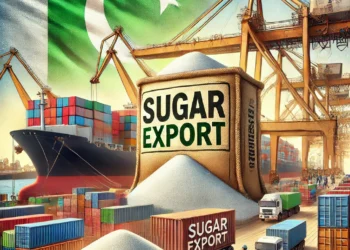

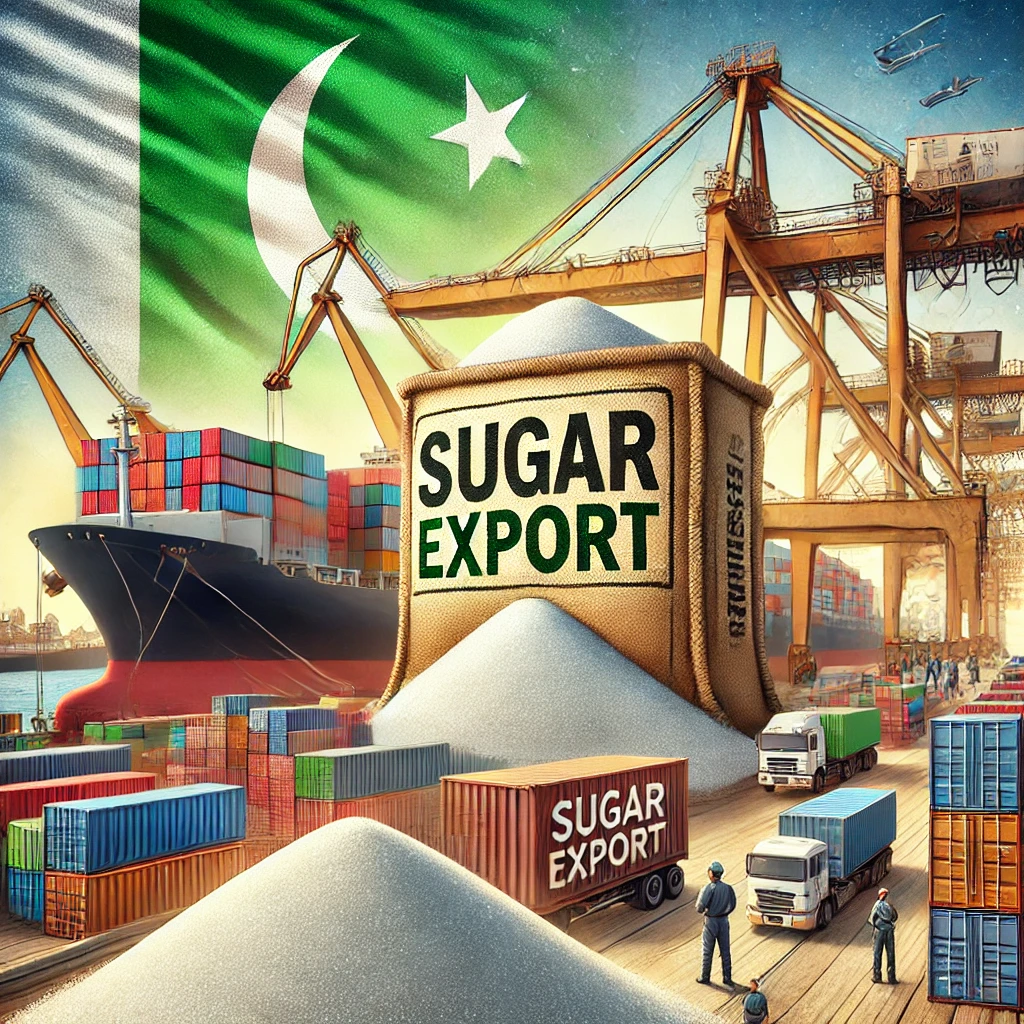
Pakistan has approved another 416,000 metric tonnes of sugar exports despite failing to implement the International Monetary Fund’s (IMF) proposed reforms to deregulate the sugar sector and reduce government intervention in the commodity’s trade.
The Economic Coordination Committee (ECC) of the Cabinet approved the latest export quota during a meeting on Friday, November 20, chaired by Finance Minister Muhammad Aurangzeb.
Minister for National Food Security Rana Tanveer Hussain confirmed the decision to The Express Tribune, saying the sugarcane crushing season was about to begin and the country had sufficient stocks of sugar.
The latest approval marks the third export permission in four months, bringing the total quantity authorised for export during the current season to 724,000 tonnes.
ECC Approves 416,000 Tonnes of Sugar Exports
The Cabinet Committee on Export of Sugar had recommended allowing the export of 400,000 tonnes. It also proposed an additional allocation of 16,000 tonnes for Sindh, bringing the latest approved quantity to 416,000 tonnes.
The government had previously authorised the export of 108,000 tonnes of imported sugar in August and another 200,000 tonnes of locally produced sugar in September.
According to The Express Tribune, the latest summary was presented before the ECC as an additional agenda item rather than being circulated to the relevant ministries as part of the regular agenda. This limited the opportunity for other ministries to review and comment on the proposal before its approval.
The report also cited an industry source who claimed that an in-principle decision to export 600,000 tonnes had been taken months earlier, with implementation divided into phases.
The Finance Ministry’s official announcement confirmed that the ECC considered the sugar export recommendations to safeguard farmers’ interests by ensuring adequate price support for their produce. However, it did not disclose the approved export quantity.
IMF Deregulation Condition Remains Unfulfilled
The latest export approval has renewed questions about Pakistan’s commitment to reforming its sugar industry under the IMF programme.
The IMF has called for complete deregulation of the sugar sector, including ending the government’s role in decisions concerning sugar imports and exports. However, Pakistan has yet to implement the proposed changes.
According to The Express Tribune, Finance Secretary Imdadullah Bosal attributed the delay to resistance from one province.
The ECC chairman, Finance Minister Muhammad Aurangzeb, reportedly reiterated the importance of deregulating the sector during the meeting. Nevertheless, the committee approved another export quota through the existing government-controlled mechanism.
The timing is also significant because the decision came days before an expected IMF Executive Board meeting. The board is due to consider Pakistan’s request for a $1 billion tranche under its structural reform programme, an additional $200 million under the climate facility and the country’s Article IV review.
IMF Report Highlights Governance Problems in Sugar Industry
Pakistan’s sugar sector has faced longstanding concerns over government intervention, market competition and the influence of powerful industry interests.
The IMF’s Governance and Corruption Diagnostic Assessment, published in November 2025, identified the sugar industry as an example of weak regulatory enforcement, anti-competitive behaviour and discretionary decision-making.
The report noted that government restrictions on sugarcane procurement, licensing and pricing had weakened competition. It also highlighted how government-authorised export subsidies had benefited sugar mill owners without a robust assessment of their overall costs and benefits.
The IMF further warned that price controls could contribute to supply shortages, hoarding and artificial price increases for consumers.
The assessment described the relationship between economic elites and state regulators as a major governance concern, with implications for the wider economy and public interest.
Pakistan’s Sugar Production, Consumption and Export Earnings
The government’s draft National Policy for De-regulation of the Sugar Sector provides an overview of the industry’s size and economic performance.
According to the draft, Pakistan exported approximately 3.92 million tonnes of sugar over the past decade while importing around 565,000 tonnes. The country’s sugar exports generated nearly $1.6 billion during the same period.
Pakistan produces an average of approximately 6.13 million tonnes of refined sugar annually and ranks as the world’s seventh-largest producer, according to the policy document.
The country has 79 sugar processing mills, mainly located in southern Punjab, northern and central Sindh, and southern Khyber-Pakhtunkhwa.
However, the draft estimates that mills operate at around 60% of their installed capacity. It attributes the industry’s difficulties partly to extensive government intervention, including zoning regulations, administered prices and discretionary restrictions on trade.
The document puts Pakistan’s sugar production at 5.8 million tonnes in the previous year, with an estimated value of Rs1.1 trillion. Annual domestic consumption, meanwhile, stands at approximately 6.3 million tonnes.
It also highlights considerable volatility in retail prices, which have increased by an average of around 16% annually over the past five years, with occasional increases approaching 28%.
These figures underline the challenges facing the industry as policymakers attempt to balance export opportunities, domestic supply, farmer incomes and consumer prices.
Government Maintains Restrictions on Sugar Imports
Although Pakistan has continued to permit sugar exports through government approvals, imports also remain subject to significant taxation.
According to the Ministry of Industries figures cited in the draft policy, the effective protection against imported sugar stands at approximately 55%.
This includes a 20% customs duty, 6% additional customs duty, 18% sales tax, 3% additional sales tax and 6% income tax. A provincial cess of 0.85% also applies to imports.
The draft policy argues that these restrictions, alongside export controls and other interventions, limit competition and distort market incentives.
The proposed deregulation framework seeks to reduce these interventions and create a more predictable market environment for producers, traders and consumers.
ECC Relaxes Export Financing Rules for SMEs
Alongside the sugar export decision, the ECC approved changes to long-term financing conditions to improve access to export financing for small and medium-sized enterprises (SMEs).
The government has earmarked an initial allocation of Rs50 billion for SMEs under its long-term export financing arrangements, drawn from a wider Rs350 billion financing envelope.
Previously, eligible businesses were required to generate at least 80% of their sales through exports from the outset. The ECC waived this upfront requirement, allowing businesses more time to establish production facilities, develop overseas markets and secure export orders.
Under the revised conditions, participating SMEs must achieve exports equivalent to at least 50% of their projected total sales within four years.
The decision is intended to help newly established businesses and smaller companies that may struggle to meet strict export requirements immediately after securing financing.
The ECC also granted borrowers under the Long Term Export Growth Financing Facility a four-year exemption from compliance with the Pakistan Green Taxonomy framework. The exemption will apply to financing disbursements during the transition period, while other eligibility requirements and facility conditions will remain unchanged.
The Finance Ministry said the changes would give emerging exporters greater flexibility while supporting their gradual expansion into international markets. The ECC also directed a review of progress under the revised financing arrangements after six months.
Balancing Export Growth and Market Reforms
The ECC’s latest decisions highlight two different policy priorities: expanding exports and improving access to financing for smaller businesses, while addressing longstanding structural problems in regulated industries.
The SME financing changes are designed to lower barriers for emerging exporters. However, the sugar export approval illustrates the continued role of government decisions in controlling trade in an essential commodity.
For Pakistan, implementing sugar-sector reforms will require balancing the interests of farmers, mill owners, consumers and the wider economy. The challenge will be to improve competition and market transparency without creating disruptions to domestic supply or agricultural incomes.
The government’s progress on deregulation will remain an important issue as Pakistan continues its engagement with the IMF and pursues broader economic reforms.
Read More Articles:
Pakistan and Indonesia Conclude Elang Strike-III Exercise