
Pakistan is approaching a historic milestone in human spaceflight, with Planning Minister Ahsan Iqbal announcing that the country’s first astronaut is expected to undertake a mission from China on 25 November 2026. The planned journey to the Tiangong space station would mark a new phase in Pakistan-China scientific cooperation, moving the relationship beyond satellite technology and into human spaceflight and research in orbit.
The announcement, made on 18 October during the concluding ceremony of World Space Week in Narowal, also highlighted Pakistan’s longer-term ambition to develop its space capabilities. However, the mission’s final details remain important: Chinese authorities have not publicly confirmed which Pakistani candidate will fly, and the announced date should be understood as a planned milestone rather than a completed mission.
Tiangong Space Station Mission: Who Will Represent Pakistan?
Two Pakistani pilots, Muhammad Zeeshan Ali and Khurram Daud, have been undergoing intensive training in China after being selected as candidates for the country’s first human spaceflight mission. According to Reuters’ reporting on Pakistan’s astronaut mission, the programme also includes scientific experiments proposed by Pakistani universities
The astronaut is expected to serve as a payload specialist, concentrating on scientific experiments rather than piloting the spacecraft. This role would allow Pakistan to participate in research conducted in microgravity while relying on China’s established human-spaceflight infrastructure.
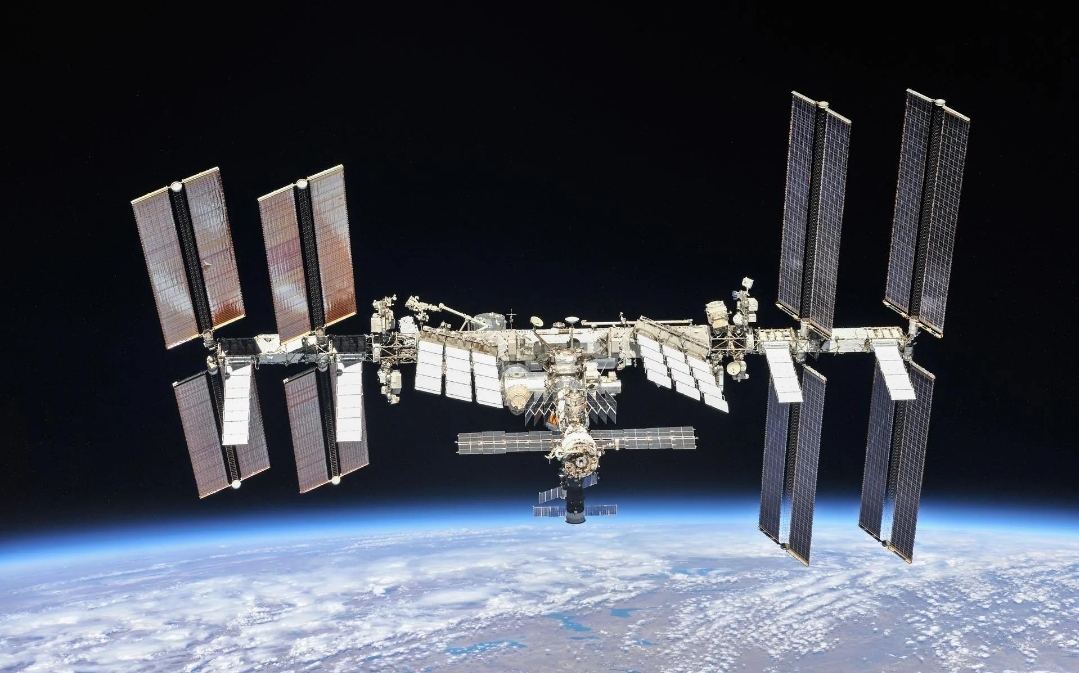
The Tiangong space station, China’s permanently crewed orbital laboratory, offers a platform for scientific investigations that are difficult to conduct under Earth’s gravitational conditions. For Pakistan, participation could provide valuable practical experience in experimental design, astronaut training, mission preparation and space-based research.
Scientific Research Aboard the Tiangong Space Station
The mission’s scientific component could be as significant as its symbolic value. Reuters reported that four experiments were selected from more than 300 proposals submitted by Pakistani universities. The selected research includes biotechnology work linked to challenges such as food security and climate change.
Experiments conducted in microgravity can help researchers investigate biological processes and other phenomena under conditions that differ substantially from those on Earth. Their practical value, however, will depend on the quality of the research, the findings produced and Pakistan’s ability to apply those findings after the mission.
The involvement of Pakistani universities is particularly important. A successful programme should connect the experience of one astronaut with a wider research ecosystem involving students, laboratories, scientists and technical institutions. Access to an orbital laboratory can create opportunities, but sustained investment in research, equipment and specialist training is necessary to convert those opportunities into lasting scientific capacity.
China-Pakistan Space Cooperation Beyond One Mission
The planned Tiangong space station mission forms part of a broader partnership between Pakistan and China. In February 2025, the two countries signed an agreement covering Pakistani astronaut training and participation in China’s human-spaceflight programme, establishing a framework for the collaboration.Further information about the country’s space activities is available through SUPARCO, Pakistan’s national space agency
Cooperation also extends to lunar exploration. Pakistan is working on an artificial-intelligence-enabled lunar rover intended for China’s Chang’e 8 mission, planned for 2028. The project could provide opportunities to develop expertise in robotics, autonomous systems, remote operations and scientific instrumentation.
These initiatives illustrate different levels of participation in space exploration. The astronaut mission gives Pakistan access to China’s crewed spaceflight capabilities, while the planned rover offers a route for Pakistani-developed technology to contribute to an international lunar mission. Neither initiative alone establishes an independent Pakistani human-spaceflight programme, but both could help build technical experience.
What the Tiangong Space Station Means for Pakistan’s Technology Sector
The long-term value of the Tiangong space station partnership will depend on what Pakistan develops at home. Training, university research, engineering experience and collaboration with Chinese institutions could strengthen the country’s scientific workforce. Space-derived technologies can also support applications in communications, agriculture, disaster management and climate monitoring.
Realising these benefits will require a clear domestic strategy. Pakistani institutions need opportunities to retain trained specialists, fund follow-up experiments, strengthen university laboratories and translate research into practical applications. Without that continuity, a historic mission risks remaining an isolated achievement rather than a foundation for a stronger national space programme.
The government has also set a target of achieving a lunar landing by 2035. This is a longer-term national ambition, not a result guaranteed by the astronaut mission. Progress towards it would require sustained funding, technical development, international collaboration and clearly defined milestones.
CPEC 2.0 and the Case for Knowledge-Based Cooperation
Although the astronaut mission is not a CPEC infrastructure project, it connects with a broader question relevant to CPEC 2.0: how can Pakistan-China cooperation generate more knowledge, technical expertise and domestic productive capacity?
CPEC’s next phase is increasingly discussed in the context of industrial development, technology, investment and skills. Space cooperation offers a complementary example of how a bilateral relationship can support specialised training and research. The connection should not be overstated: the astronaut programme and the China-Pakistan Economic Corridor are distinct initiatives, with different institutional arrangements and objectives.
The strategic lesson is that international cooperation delivers its strongest long-term benefits when access is paired with domestic capability. For Pakistan, that means using opportunities provided by China’s space programme to strengthen scientific education, university research, engineering and technology development at home.
From a Historic Flight to Lasting Scientific Capacity
Pakistan’s planned mission to the Tiangong space station could become a defining moment for the country’s space programme. It would demonstrate the potential of international collaboration to open doors that Pakistan could not yet access independently, while giving Pakistani researchers an opportunity to participate in work conducted in orbit.
Yet the significance of the mission will ultimately be measured by what follows. Continued university participation, investment in research infrastructure, retention of trained specialists and progress on projects such as the proposed lunar rover will determine whether this milestone produces enduring benefits.
The journey to orbit may last only a short period, but the scientific and technological gains could extend much further. If Pakistan builds on the mission with a sustained national research strategy, cooperation with China could help turn a historic flight into a foundation for future innovation.
Related Stories
- China’s AI Strategy and Pakistan’s CPEC 2.0
- Pakistan-China Digital Corridor
- China and Pakistan Advance CPEC 2.0 Cooperation