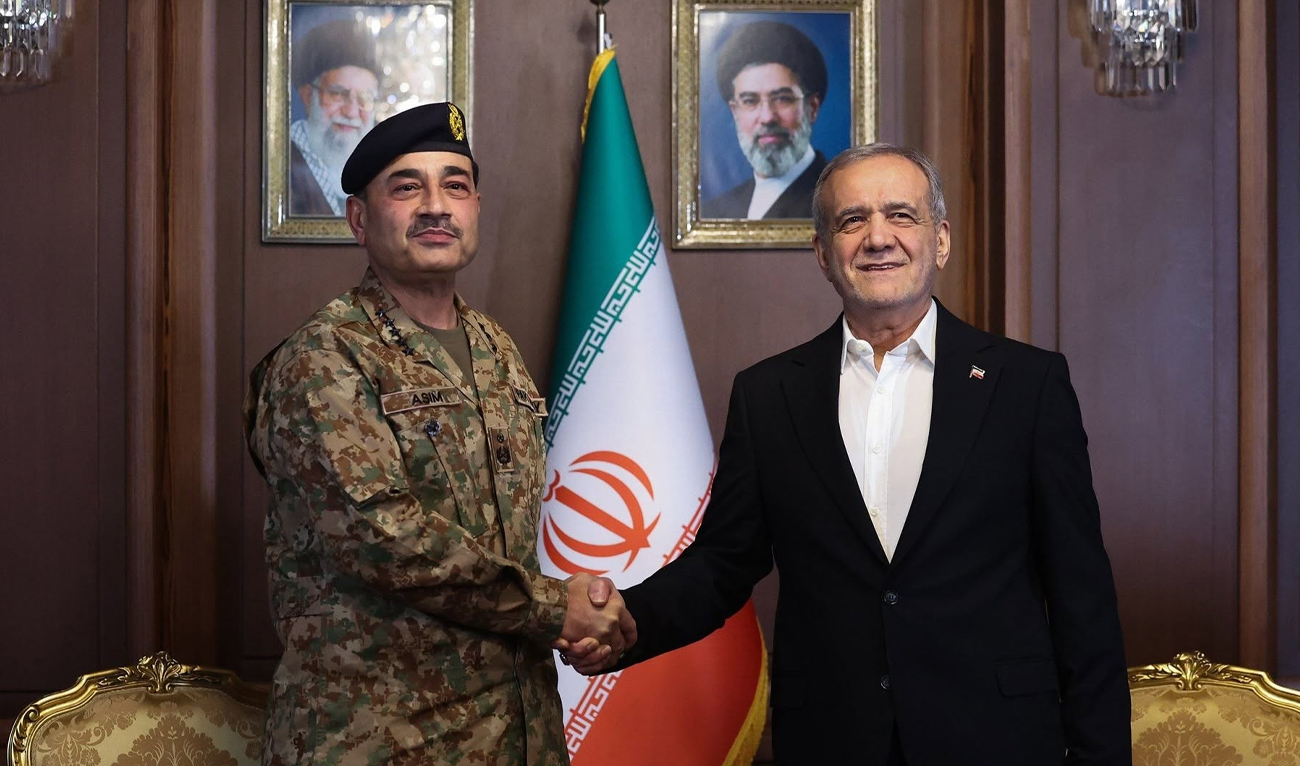
Pakistan’s Army Chief, Field Marshal Asim Munir, held talks with Iranian President Masoud Pezeshkian and Foreign Minister Abbas Araghchi in Tehran on Tuesday, according to Iranian state media.
Munir arrived in Iran with a delegation of Pakistani officials amid continued uncertainty over efforts to secure a lasting settlement between Washington and Tehran.
The visit comes as tensions persist over the conflict, stalled negotiations and key regional security issues.
Talks Focus on Bilateral Relations and US-Iran Negotiations
Iran’s state-run IRNA news agency reported that Munir met Araghchi before holding talks with President Pezeshkian. Pakistan’s Interior Minister, Mohsin Naqvi, accompanied the army chief during the presidential meeting.
Iranian Foreign Ministry spokesperson Esmaeil Baqaei said the discussions would address issues related to negotiations between the United States and Iran. However, he said the main focus would be bilateral relations and stronger cooperation between Pakistan and Iran.
Pakistan has sought to facilitate diplomatic engagement between Washington and Tehran. The latest visit follows the collapse of a short-lived agreement brokered by Pakistan in June.
No official comment from Pakistan on the visit was included in the reports.
Strait of Hormuz and Nuclear Programme Remain Key Issues
Washington and Tehran remain divided over several issues, including Iran’s nuclear programme and the future of the Strait of Hormuz.
The strait is a vital route for global oil and gas shipments. Iran has sought to restrict shipping through the waterway during the conflict.
On Monday, Araghchi blamed Washington for insecurity in the strait, according to reports.
Meanwhile, Baqaei warned that renewed fighting remained possible. He said Iran could not rule out the possibility of another escalation, even while diplomatic contacts continued.
Regional Tensions Add to Diplomatic Pressure
Munir’s visit followed a trip to Iran by Russian Foreign Minister Sergei Lavrov on Monday. The visits reflect ongoing diplomatic contacts surrounding the regional conflict.
Tensions have also increased following missile and drone attacks by Yemen’s Iran-aligned Houthi movement against Saudi energy and civilian infrastructure this month.
Pakistan has defence agreements with Saudi Arabia and has pledged to support the Kingdom’s security amid the attacks.
As Islamabad engages with Tehran and other regional partners, diplomatic efforts remain focused on reducing tensions and exploring ways to prevent further escalation.
Read More Articles:
BRICS and Pakistan: New Opportunities for Growth