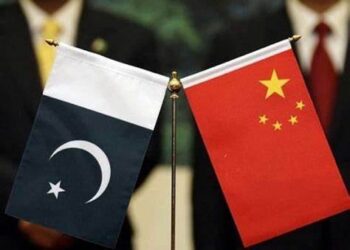
The Pakistan-China digital corridor could open new opportunities for technology exports, remote services and cross-border business cooperation. Pakistan’s technology exports reached a record US$4.6 billion in fiscal year 2025–26, rising 20.6 per cent year on year, according to figures reported by the Associated Press of Pakistan. As CPEC 2.0 expands beyond physical infrastructure, Pakistan’s growing technology workforce could help build new commercial links with Chinese businesses.
The figures point to an opportunity that extends beyond traditional outsourcing. As Pakistan and China expand cooperation under the China–Pakistan Economic Corridor (CPEC) 2.0, digital services, technical expertise and business partnerships could create new links between the two economies. A software team in Lahore may be able to serve a Chinese client without relocating, just as a Chinese company could draw on Pakistani engineering talent for selected projects.
This virtual corridor is not yet a fully established system of cross-border digital trade. It is an emerging possibility, supported by Pakistan’s expanding technology sector and a bilateral agenda that increasingly includes innovation, the digital economy and business-to-business cooperation.
CPEC 2.0 Opens the Door to Digital Cooperation
The next phase of CPEC is placing greater emphasis on industrial development, technology, human-resource development and private-sector partnerships. At its 92nd progress review on 31 August 2026, the CPEC secretariat identified industry, agriculture, minerals, technology and business-to-business cooperation among the priorities for Phase II. A subsequent review on 7 October also addressed education, agriculture, technology and cooperation across different levels of government.
This broader agenda creates room to explore forms of cooperation that do not depend on the movement of physical goods. Software development, engineering design, data services and digital commerce can connect businesses across borders through online platforms and professional networks. Such work still requires commercial agreements, secure systems and dependable connectivity, but it can allow some collaboration to take place without employees moving permanently between countries.
For Pakistan, the opportunity is to connect its growing technology workforce with Chinese businesses seeking specialist skills and reliable service providers. For China, partnerships with Pakistani firms could offer additional technical capacity and access to a neighbouring market. Whether these possibilities translate into significant trade will depend on actual contracts, investment and long-term demand. Building a Pakistan-China digital corridor will require sustained commercial partnerships, reliable digital infrastructure and a workforce equipped to meet international standards.
Pakistan-China Digital Cooperation: Connecting Talent with Chinese Business
A practical link between Pakistani professionals and Chinese enterprises emerged in January 2026, when the Embassy of Pakistan in Beijing organised a job fair with the China Overseas Development Association and China International Intellectech Group.
According to the details supplied for the event, nearly 2,000 people participated online and in person. Some 372 Pakistani candidates registered, and almost 100 took part in initial interviews with representatives of Chinese state-owned enterprises operating in areas including energy, infrastructure and engineering.
The event should not be presented as evidence that a large cross-border remote workforce already exists. It does, however, illustrate an institutional effort to connect Pakistani talent with Chinese employers. Such links can help professionals explore employment opportunities, build familiarity with workplace expectations and develop networks that may later support commercial cooperation.
For a digital corridor to expand, connections of this kind would need to extend beyond individual recruitment events. Companies would have to identify continuing demand for Pakistani expertise, establish workable contracts and create routes through which skills and experience translate into sustained employment or export earnings.
Chinese Investment Signals Interest in the Digital Economy
Chinese business engagement in Pakistan’s digital economy is also becoming more visible. On 15 May 2026, Prime Minister Shehbaz Sharif welcomed IBI Group’s decision to establish a Pakistan Digital Economy Headquarters. The announcement followed a meeting with a Chinese business delegation led by Qian Xiaojun, founder and president of IBI Beijing United Technology, according to the Associated Press of Pakistan.
The initiative indicates interest in expanding business-to-business cooperation and digital-economy activity. However, an announced headquarters should not automatically be treated as a completed investment or proof of a particular number of jobs. Its significance will depend on implementation, the activities established in Pakistan and the extent to which local firms and professionals participate.
Another development came on 24 May, when Pakistan’s Small and Medium Enterprises Development Authority signed a memorandum of understanding with Alibaba Group to support digital trade and improve international market access for small and medium-sized enterprises. The agreement is relevant to the wider digital-economy story because online platforms can help businesses reach customers beyond their domestic markets.
Yet digital trade and remote professional services are not identical. An e-commerce agreement may help a Pakistani business sell products internationally, while software exports involve delivering technical services to clients. Both can widen economic connectivity, but their outcomes should be measured separately.
The Barriers Between Talent and Trade
A skilled workforce alone will not create a seamless virtual corridor. Pakistani professionals working with Chinese companies may need to navigate language differences, management styles, documentation practices and expectations around meetings and decision-making. These challenges can become harder to resolve remotely, when colleagues have fewer opportunities to build trust through informal workplace interaction.
The ability to communicate in Chinese and understand local business culture may therefore complement technical qualifications. The Beijing job fair’s emphasis on professional competence and familiarity with Chinese society points to the importance of combining specialist skills with cross-cultural understanding. For companies, clear project briefs, transparent payment arrangements and well-defined responsibilities are equally important.
Digital infrastructure and regulatory conditions also matter. Businesses need reliable connectivity, appropriate cybersecurity safeguards, clarity around contracts and payments, and confidence that intellectual property and sensitive information will be protected. Companies entering new markets must also assess applicable legal, tax and data-protection requirements rather than assuming that remote work removes them.
Pakistan’s challenge is to turn a growing pool of talent into internationally competitive services. That requires more than training individuals: it calls for capable firms, professional standards, dependable infrastructure and stable conditions for exporters. Chinese companies, meanwhile, need clear commercial incentives to build lasting relationships with Pakistani providers.
Building the Pakistan-China Digital Corridor Through CPEC 2.0
CPEC 2.0 provides a framework for exploring technology cooperation, but the existence of a policy agenda does not guarantee a digital corridor. Progress should be assessed through concrete outcomes: cross-border service contracts, repeat business, technology partnerships, skilled employment and measurable growth in exports.
Pakistan’s US$4.6 billion in technology exports demonstrates that digital services already contribute substantially to the economy. It does not establish how much of that revenue comes from China. Reliable bilateral data on digital services and professional contracts would help policymakers and businesses determine whether cooperation with Chinese firms is expanding and where the strongest opportunities lie.
The next step is to connect institutional initiatives with commercially viable projects. Universities and training providers can help prepare professionals for relevant technical and language requirements. Export-support organisations can help firms understand market conditions, while companies on both sides can test partnerships through defined projects before scaling them up.
The virtual Beijing–Islamabad corridor will ultimately be measured not by its name or the number of agreements announced, but by the business it enables. If Pakistan can turn digital expertise into dependable services for Chinese clients, technology cooperation could complement CPEC’s physical infrastructure with a more flexible network of skills, knowledge and trade. The long-term success of the Pakistan-China digital corridor will depend on measurable growth in technology services, repeat business and skilled employment.
Related Stories
- Pakistan IT Exports Surge Toward $5B Milestone — Pakistan’s expanding technology exports and their growing contribution to the economy.
- China AI Strategy: Lessons for Pakistan and CPEC 2.0 — How China’s technology ambitions could inform Pakistan’s digital development under CPEC 2.0.
- PMYP Signs LoI with Chinese Partners to Empower Youth — China-Pakistan cooperation on youth empowerment, skills and professional opportunities.
- CPEC 2.0: Mining Pakistan’s Mineral Wealth — Another perspective on the expanding economic and investment agenda under CPEC 2.0.