
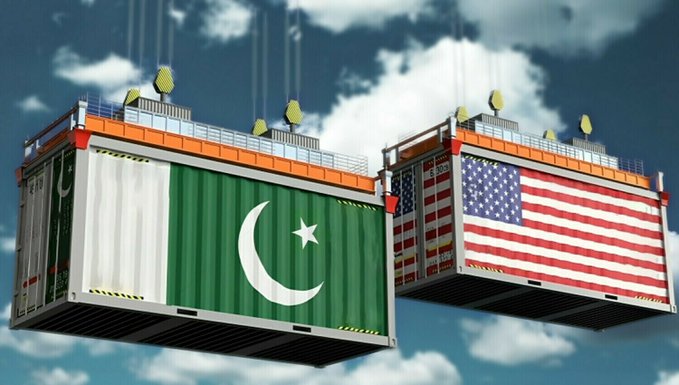
Pakistan and the United States have made significant progress toward a reciprocal trade agreement following two days of negotiations in Washington on July 9 and 10.
According to Pakistan’s Foreign Office, both sides narrowed differences and built consensus to finalize the agreement at the earliest opportunity.
Positive Outcome from Washington Talks
Foreign Office spokesperson Tahir Andrabi described the discussions as constructive and cordial.
Moreover, Commerce Secretary Jawad Paul, who led Pakistan’s delegation, called the negotiations positive and welcomed the progress achieved during the meetings.
The Pakistani delegation also included Secretary Overseas Pakistanis and Human Resource Development Nadeem Chaudhary, Joint Secretary Tariff Policy Mohammad Ashfaq, and officials from the Ministry of Foreign Affairs.
Focus on Trade and Investment
The negotiations centered on expanding bilateral trade and strengthening commercial cooperation.
In addition, both countries discussed ways to encourage investment and improve market access. The talks form part of broader efforts to deepen economic engagement between Pakistan and the United States.
US Remains a Key Export Market
The United States continues to be Pakistan’s largest single-country export destination.
According to the Office of the U.S. Trade Representative, total bilateral trade in goods and services reached an estimated $10.1 billion in 2024. Meanwhile, goods trade totaled $8.7 billion in 2025, with U.S. exports to Pakistan reaching $3.3 billion and imports from Pakistan rising to $5.4 billion.
Business Community Welcomes Progress
Business leaders have welcomed the progress made during the negotiations.
Lahore Chamber of Commerce and Industry President Faheem Ur Rehman Saigol said the agreement could benefit Pakistan’s textile, apparel, surgical instruments, sports goods, and information technology sectors.
Furthermore, he emphasized that stronger trade ties could improve export competitiveness, attract investment, create jobs, and support long-term economic growth.
Tariff Issues Remain Part of Discussions
The negotiations also took place against the backdrop of evolving U.S. tariff measures affecting Pakistani exports.
Earlier this year, the U.S. administration proposed a 29% tariff on Pakistani goods before reducing it to 19% after negotiations. Subsequently, a temporary 10% global tariff was introduced under Section 122 of the Trade Act of 1974.
In addition, Pakistan has responded to a Section 301 investigation by U.S. trade authorities regarding alleged forced labor-related trade practices.
Looking Ahead
Both countries aim to conclude the reciprocal trade agreement in the coming months.
As a result, the proposed pact could strengthen bilateral trade, expand investment opportunities, and provide greater access for Pakistani exporters to the U.S. market.
Read More Articles:
Xi Urges Stronger China-North Korea Ties