


Islamabad has taken a sharp turn in its Afghan policy following deadly cross-border attacks by Taliban forces on Pakistani posts. The shift marks the end of Pakistan’s long-standing diplomatic patience and support for the Afghan Taliban, who returned to power in August 2021.
Initially, Pakistan had been the strongest advocate for global engagement with the Taliban government, believing its rise would stabilise bilateral ties and curb cross-border militancy. Islamabad expected that the new rulers in Kabul would prevent Tehreek-e-Taliban Pakistan (TTP) and its affiliates from using Afghan soil for attacks.
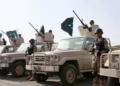
However, the recent “unprovoked assaults” by Afghan Taliban forces across multiple locations, including Angoor Adda, Bajaur, Kurram, Dir, Chitral, and Zhob, have forced Pakistan to reconsider its stance. The Pakistan Army’s swift retaliation reportedly killed around 200 Taliban and TTP operatives.
In a notable diplomatic shift, Pakistan’s Foreign Office statement referred to the Kabul rulers as the “Taliban regime” instead of the “interim government”, a deliberate move questioning their legitimacy. The statement also expressed Pakistan’s hope for a “true representative government” in Afghanistan, signalling a break from earlier endorsement.
According to official sources, Pakistan has now set new rules of engagement, making it clear that any future cross-border terrorism will invite immediate military retaliation inside Afghanistan. Islamabad’s new stance underlines its frustration with the Taliban’s failure to address security concerns and its resolve to defend its sovereignty.
Related stories:
Border Flare-Up Strains Pakistan-Afghanistan Ties
Pakistan Seeks Regional Cooperation for Afghanistan Security