

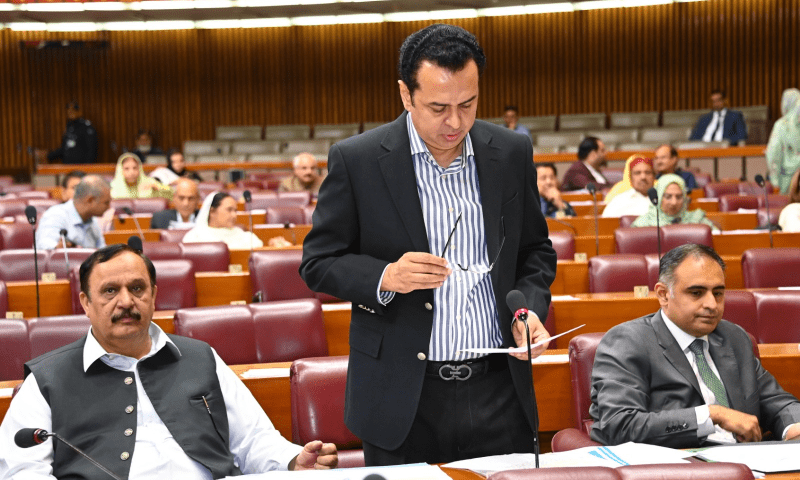
The National Assembly on Thursday approved the Pakistan Land Port Authority Bill 2025, paving the way for the creation of a dedicated body to regulate and manage land ports, facilitate cross-border trade, and streamline passenger movement at border crossings.
Bill Presented and Amended Before Approval
The bill, presented by Minister of State for Interior Talal Chaudhry on behalf of Interior Minister Mohsin Raza Naqvi, was passed with a majority vote after incorporating 18 amendments proposed by PPP lawmaker Syed Naveed Qamar.
Chairing the session, MNA Ali Zahid oversaw the clause-by-clause reading, during which all amendments were adopted without objection.
Pakistan Joins Regional Neighbours with Land Port Authority
Once approved by the Senate and signed into law by President Asif Ali Zardari, Pakistan will become the third South Asian nation, after Bangladesh (2002) and India (2012), to establish a land port authority.
Comprehensive Framework for Border Trade and Security
The legislation provides a framework for declaring, regulating, securing, and overseeing all land ports in Pakistan. It seeks to enhance border control, promote trade, protect strategic interests, and foster regional competitiveness in line with international agreements and conventions.
Governing Council to Oversee Operations
A 16-member governing council will supervise the authority, ensuring inter-agency coordination among border agencies to address the long-standing absence of a single regulatory body. This gap has often resulted in delays in cargo clearance and passenger processing at international border points.
Technology-Driven Measures to Combat Smuggling and Illegal Immigration
The bill also emphasises the installation of modern technology at land ports to curb illegal immigration, smuggling, and other cross-border crimes while promoting efficiency in trade logistics.
Boost to Regional Trade Competitiveness
Government officials say the Pakistan Land Port Authority will not only boost trade volumes but also improve cooperation with neighbouring countries, making the nation a stronger player in the region’s land-based trade network.
Related stories: