


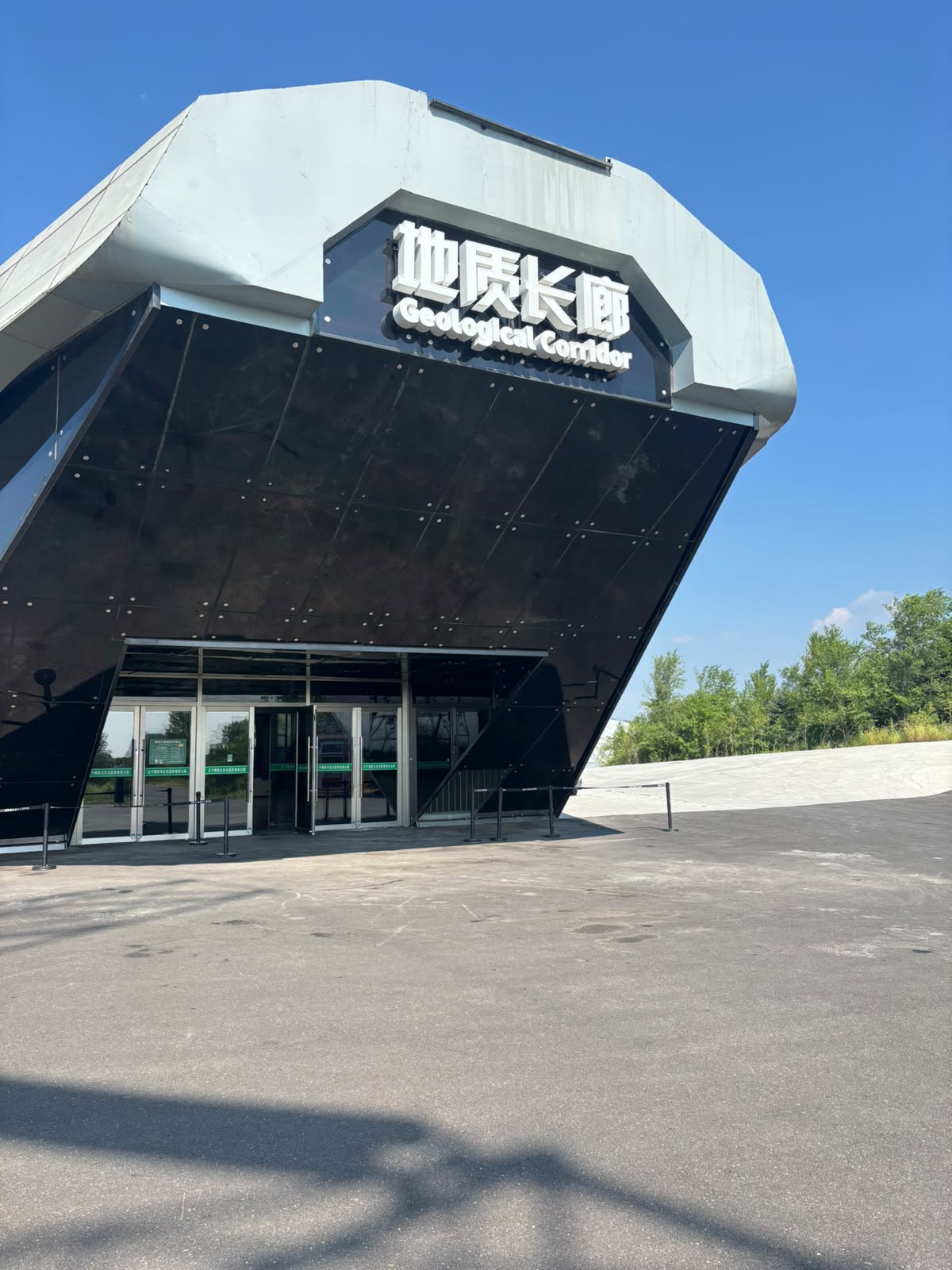
The Geological Corridor offers visitors a unique opportunity to explore the Cretaceous Period through one of the world’s most significant fossil exhibition sites. Inspired by Hyphalosaurus lingyuanensis, the dragon-shaped museum combines scientific research, fossil preservation, and modern technology to create an immersive educational experience.
Located at the second excavation site in Shangheshou, the museum stands on the very ground where scientists uncovered thousands of ancient vertebrate fossils. Today, it serves as the Second Site Museum and showcases one of the world’s largest indoor Cretaceous geological sections.
A Landmark for Paleontology
The Geological Corridor was built on an important excavation site explored by the Liaoxi Team from the Institute of Vertebrate Paleontology and Paleoanthropology of the Chinese Academy of Sciences.
Between 2001 and 2002, Professor Wang Xiaolin led the excavation. During the project, researchers discovered a rich collection of fossils, including fish, dinosaurs, pterosaurs, and ancient birds. These discoveries have contributed significantly to the study of prehistoric life and the evolution of vertebrates.
Fossils Preserved in Their Original Location
One of the museum’s most impressive features is its nearly 100-meter-long fossil-rich geological section.
Moreover, many fossils remain preserved in their original positions, allowing visitors to observe them exactly where scientists discovered them. This unique display provides valuable insight into Earth’s geological history and fossil formation.
Advanced Technology Enhances the Experience
The museum combines traditional fossil displays with modern multimedia technology.
Visitors can explore Asia’s largest naked-eye 3D geological projection area, which recreates the ancient Cretaceous environment without requiring special glasses. In addition, sound, lighting, and digital effects make the exhibits more engaging and interactive.
These technologies help visitors better understand prehistoric ecosystems while making scientific knowledge accessible to audiences of all ages.
Educational Programs for Families and Students
The Geological Corridor offers educational programs designed for children, families, students, and researchers.
Furthermore, interactive learning activities encourage visitors to explore paleontology through hands-on experiences. These programs promote scientific curiosity while providing an enjoyable museum experience.
Preserving Earth’s Ancient History
The Geological Corridor serves as both a research center and a public exhibition space. It protects valuable fossil discoveries while helping visitors understand the importance of geological heritage.
As a result, the museum has become one of China’s leading destinations for dinosaur research, paleontology, and science education. It continues to attract researchers, students, and tourists interested in exploring the fascinating world of the Cretaceous Period.
Read More Articles:
Niuheliang Reveals Hongshan Civilization