

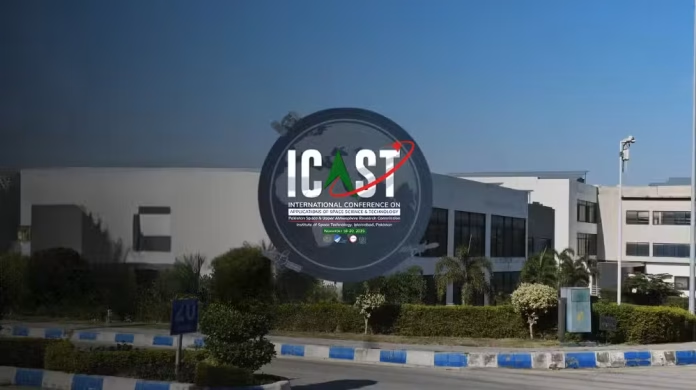
Pakistan is set to showcase its growing role in space science as it hosts the International Conference on Applications of Space Science and Technology (ICAST–2025) from November 18–20 at the Institute of Space Technology (IST) in Islamabad. The three-day event aims to deepen global cooperation, promote innovation, and highlight the use of space technologies for sustainable development.
Jointly organised by SUPARCO and IST, the conference brings together leading international partners, including ISNET, APSCO, ICESCO, IEEE, and NCGSA. This year’s theme, “Space for Sustainable Development,” focuses on how satellite technology, geospatial science, and space-based solutions can help address climate change, food security, disaster management, and long-term socio-economic planning.
ICAST–2025 is among Pakistan’s most globally diverse scientific gatherings, with participation from over 25 countries across Asia, Europe, Africa, North America, and Oceania. More than 70 international delegates and 2,000 total participants are expected at the event, reflecting Pakistan’s rising profile in the international space ecosystem.
The conference features a wide-ranging program: ISNET’s Strategic Leadership Forum, specialised seminars, panel discussions, five plenary sessions, 12 masterclasses, and 23 technical sessions across eight major tracks, including aeronautics, astrophysics, satellite systems, PNT, remote sensing, climate change, ICT, and space law. A technology exhibition, scientific posters, and a Meet the Astronauts Forum, featuring astronauts from Turkiye, Mongolia, and the U.S., add further depth.
A notable session will explore “Moon Sighting: Scientific, Religious and Technological Perspectives,” bringing together global experts to discuss traditional and modern methods of crescent observation. ICAST–2025 will also coincide with GIS Day, placing strong emphasis on Earth observation, AI-powered climate analytics, and geospatial innovation.
Diplomatic engagement will be a major highlight, with the 14th Governing Body Meeting of ISNET and the signing of several MoUs with space agencies from the Asia-Pacific region, Bangladesh, Iraq, Kazakhstan, Senegal, Tunisia, and others to enhance cooperation in peaceful space applications.
ICAST–2025 represents a significant milestone in Pakistan’s efforts to position itself as a regional leader in space science and technology. By hosting this landmark conference, Pakistan aims to strengthen global partnerships, promote scientific advancement, and demonstrate its commitment to the future of sustainable, space-driven development.
Related stories:
China’s Shenzhou-21 Mission Strengthens Space Ties with Pakistan