


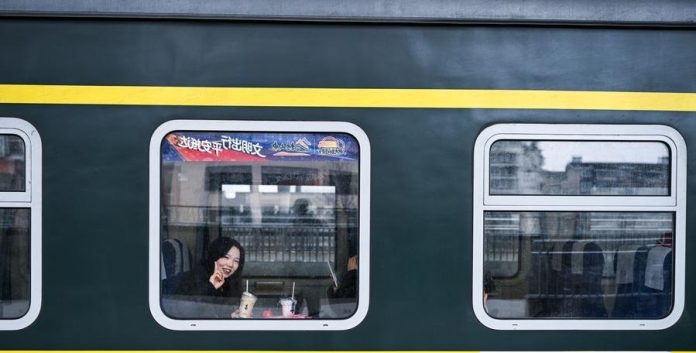
In southwest China, slow trains traveling through Guizhou’s mountains are transforming the local economy. The No. 5639 and 5640 trains cover 337 kilometers at less than 50 km/h, linking 16 stations and more than 100 ethnic villages. Affordable tickets make these trains a vital daily lifeline for villagers and small traders.
Locals like Wu Shoufen from Wengdang Village rely on the trains to transport fresh vegetables to Kaili City, generating steady income for their families. Other residents use the service similarly, turning train carriages into mobile marketplaces where passengers and staff purchase fresh produce.
Railway authorities have even converted carriages into display areas for local goods, while online platforms connect farmers with buyers, boosting trade efficiency. Tourists are drawn to the trains’ nostalgic charm, enjoying authentic interactions and traditional experiences. With over 80 subsidized slow train services nationwide, these trains remain crucial for rural commerce, cultural tourism, and ensuring that remote communities can celebrate festivals while sustaining livelihoods.
Related stories: