
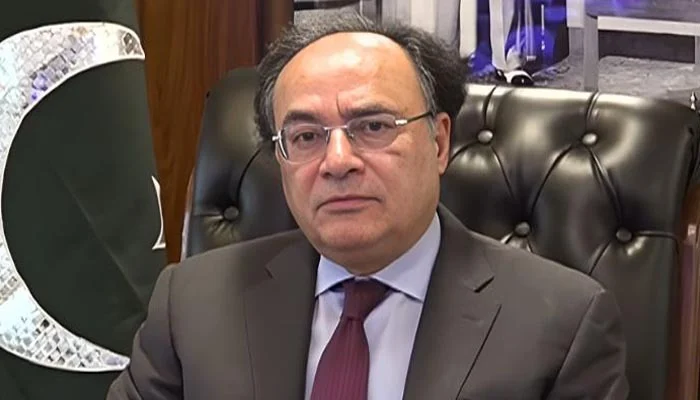
Finance Minister Muhammad Aurangzeb has outlined an ambitious vision to expand Pakistan’s blue economy from its current modest contribution of around $1 billion to $100 billion by 2047, calling it a “game-changing sector” for the country’s long-term growth.
Speaking at the Pakistan International Maritime Expo and Conference (PIMEC) 2025 in Karachi, Aurangzeb said Pakistan’s blue economy presently accounts for just 0.4–0.5% of the national GDP, but holds immense untapped potential for transformation through sustainable development, technology, and trade integration.
Expanding Maritime and Fisheries Potential
Aurangzeb emphasised the fisheries and aquaculture sector as the first pillar of this transformation. The government aims to modernise cold chain logistics, improve value-added seafood processing, and align hygiene standards with international norms. He projected that seafood exports could rise from $500 million to $2 billion within the next four years, supported by a National Fisheries and Aquaculture Policy developed in partnership with the FAO.
Ports, Logistics, and Renewable Energy Push
The minister announced plans to digitise and upgrade Pakistan’s major ports, including Karachi, Port Qasim, and Gwadar, to meet global standards and strengthen regional trade links. He said that efficient port logistics will play a key role in driving trade-led growth and attracting investment from strategic partners.
Aurangzeb also highlighted the potential of renewable energy and marine biotechnology, revealing that Pakistan is exploring tidal and offshore wind generation projects and developing marine biotech value chains.
To finance these initiatives, the government plans to introduce blue bonds and blended financing models, expanding on earlier success with green financing tools.
Leveraging Strategic Partnerships for Investment
The finance czar said Pakistan must shift its relationships with countries such as Saudi Arabia, the UAE, China, and the United States from traditional government-to-government cooperation to trade- and investment-driven partnerships.
“Our long-standing allies have supported us through thick and thin; now is the time to leverage these partnerships to bring investment and technology into Pakistan,” he said.
He also cited positive signs of macroeconomic stability, noting that global rating agencies have upgraded Pakistan’s outlook after years of uncertainty, and the IMF’s continued engagement reflects renewed confidence in the economy.
A Long-Term Vision for Growth
Aurangzeb said the blue economy will be one of the “critical engines” of Pakistan’s economic transformation, alongside digital infrastructure, artificial intelligence, and mining.
“With clear policy consistency and targeted reforms, this sector will not only secure our coasts but also strengthen our economy,” he concluded.
Related stories:
Pakistan, Iran to Boost Blue Economy Cooperation
Pakistan’s Blue Economy gains momentum with New Aquaculture Park