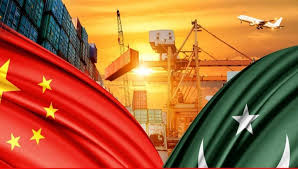


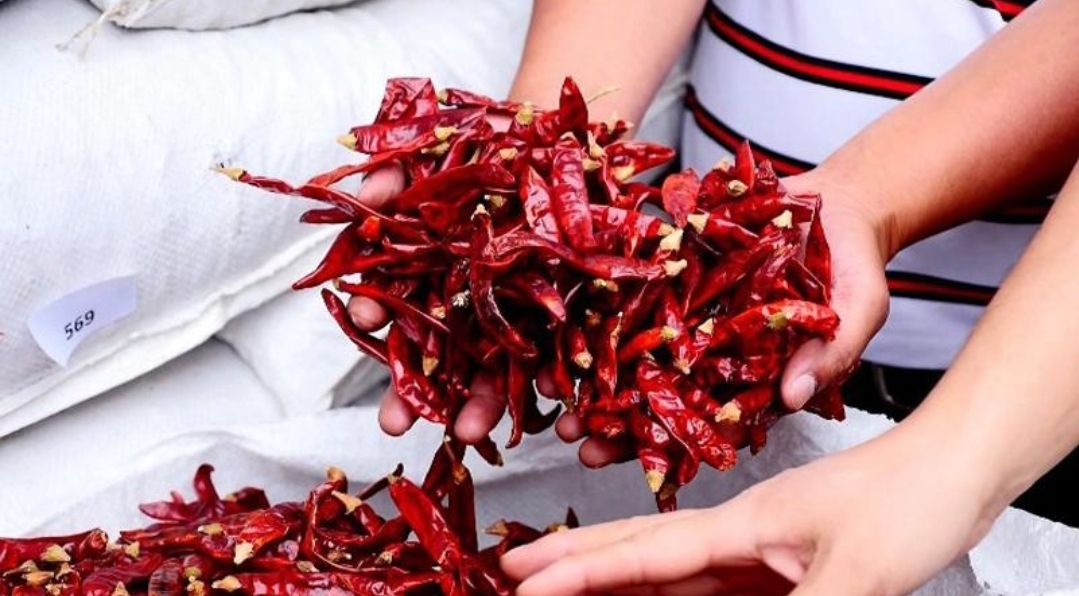
Pakistan chilli exports to China are entering a new phase, with a sea-rail trade route connecting Pakistani agricultural products to Chengdu in southwest China. In early September 2026, more than 80 tonnes of dried Pakistani chillies arrived at Chengdu International Railway Port through a logistics corridor linking maritime transport with China’s domestic rail network. The shipment demonstrates how improved connectivity can help Pakistani exporters reach markets beyond traditional trading hubs. But the larger test for CPEC 2.0 is whether this route can support regular exports, stronger commercial relationships and greater value addition for Pakistan’s agricultural sector.
According to Sichuan Online’s report on the shipment, the first consignment consisted of eight containers that entered China through Qinzhou Port in Guangxi before travelling by rail to Chengdu under the New International Land-Sea Trade Corridor. Chinese reporting also indicated that more than 900 additional tonnes of Pakistani dried chillies were subsequently being shipped or were in transit, suggesting potential for trade beyond the initial consignment.
How Pakistan’s Chilli Exports to China Could Become More Competitive
Transport costs and delivery times can determine whether an agricultural export remains commercially viable. For Pakistani producers, traders and exporters, the Chengdu route could offer an alternative to established distribution channels serving northern China.
Chinese reports on the shipment indicated that the route could reduce logistics costs by approximately 1,000 yuan per tonne, equivalent to around US$140, while shortening transit time by seven to ten days compared with the route previously used for distribution towards northern China. These reported savings are significant, although their practical value will depend on the full cost of transportation, customs clearance, handling, storage and onward delivery.
For Pakistan chilli exports to China to become consistently competitive, exporters will need more than a promising first shipment. They will require predictable freight schedules, transparent charges, efficient border procedures and reliable delivery times. Even modest improvements in these areas can strengthen exporters’ ability to negotiate contracts, manage inventory and meet buyers’ requirements.
The commercial question is therefore not simply whether a shipment can reach Chengdu. It is whether the route can deliver measurable savings across repeated consignments and make Pakistani products more attractive to Chinese importers.
CPEC 2.0 and the Expansion of Pakistan-China Agricultural Trade
The shipment also reflects a broader opportunity for CPEC 2.0: expanding cooperation beyond infrastructure development into trade, agriculture and industrial value chains.
The CPEC Secretariat’s agricultural cooperation framework identifies areas of collaboration that include agricultural technology, capacity building, processing and market-related cooperation. These priorities are relevant to Pakistan’s efforts to strengthen agricultural exports, particularly where better logistics can be combined with improvements in productivity and product quality.
There is also a policy dimension. In May 2026, Pakistan and China announced further cooperation on agricultural development and market access. The official CPEC announcement on bilateral agreements records agricultural cooperation arrangements and protocols covering selected products. Separately, the Pakistan-China joint statement issued on 26 May 2026 highlighted China’s willingness to facilitate market access for more high-quality Pakistani agricultural products.
These developments provide a policy context for expanding agricultural trade, but agreements alone do not guarantee export growth. Businesses must still meet the applicable phytosanitary, food-safety, packaging, labelling and documentation requirements. Consistent implementation, exporter awareness and coordination between relevant authorities will be essential if new market opportunities are to translate into sustained commercial activity.
Why Value Addition Matters for Pakistan’s Agricultural Exports
Lower transport costs can improve export competitiveness, but Pakistan’s longer-term gains will depend on the value its businesses capture from agricultural products.
Dried chillies can serve multiple segments of the Chinese market, including food processing, catering and condiment production. However, accessing these buyers may require more than selling raw agricultural produce. Grading, cleaning, quality control, suitable packaging and reliable supply can help exporters meet the expectations of commercial customers and establish repeat business.
Investment in processing and post-harvest handling could also allow Pakistani businesses to retain a greater share of the final product’s value. Better storage and sorting facilities can reduce losses, while consistent quality standards can help build buyer confidence. These improvements would complement the logistics advantages offered by the Chengdu route.
Technology cooperation is another potential area for development. The Daily CPEC has explored Chinese seed technology in Pakistan, highlighting the wider relevance of agricultural innovation. Similar efforts to improve crop quality, production practices and processing capacity could help Pakistani exporters build a more dependable supply base.
For CPEC 2.0, the objective should be to connect infrastructure with productive capacity. Efficient transport can bring goods to market faster, but competitive products, dependable suppliers and stronger commercial partnerships are what turn connectivity into lasting export growth.
Can the Chengdu Route Support More Pakistani Agricultural Exports?
The new route could create opportunities beyond dried chillies, but expansion will depend on the characteristics of each product and the needs of its intended market.
Different agricultural commodities have different requirements for shelf life, temperature control, packaging, inspection and transport. Products that can withstand longer journeys may benefit from the corridor differently from fresh or highly perishable goods. Exporters must also establish whether demand exists at commercially viable prices before committing to larger shipments.
A practical expansion strategy would begin with products for which Pakistan has a reliable production base, Chinese buyers have demonstrated interest, and regulatory requirements can be met consistently. Trade associations, logistics providers, importers and relevant government agencies could help identify suitable products and resolve operational barriers.
Market intelligence will be equally important. Exporters need to understand regional demand, purchasing specifications, competing suppliers and distribution costs within China. A route that works well for one commodity should not automatically be assumed to work equally well for another.
If the Chengdu connection proves commercially reliable, it could become part of a wider network supporting Pakistan-China agricultural trade. That outcome, however, will require evidence of sustained demand rather than assumptions based on a single successful consignment.
The Real Test: Turning Pakistan Chilli Exports to China into Sustained Trade
The arrival of Pakistani dried chillies in Chengdu is an encouraging development, but its significance will ultimately be measured by what follows. Regular shipments, repeat orders, reliable delivery schedules and demonstrable cost savings would provide stronger evidence of commercial success than the volume of the first consignment alone.
For Pakistani exporters, the next steps include building relationships with Chinese importers, maintaining consistent product standards and understanding the requirements of regional distribution networks. For policymakers, priorities include facilitating compliance, improving trade information and ensuring that transport connectivity is supported by efficient procedures at every stage of the export process.
The reported arrival of additional consignments could indicate growing commercial interest. Their delivery, sale and potential for repeat orders will help establish whether the route can sustain a meaningful flow of trade.
Ultimately, Pakistan chilli exports to China offer a practical test of what CPEC 2.0 can achieve beyond physical infrastructure. If improved connectivity helps Pakistani businesses reach buyers more efficiently, add value to agricultural products and build lasting export relationships, the benefits could extend well beyond chillies. The real measure of success will be whether this new connection becomes a dependable commercial channel for Pakistan’s wider agricultural economy.