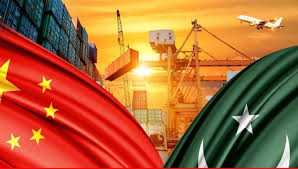

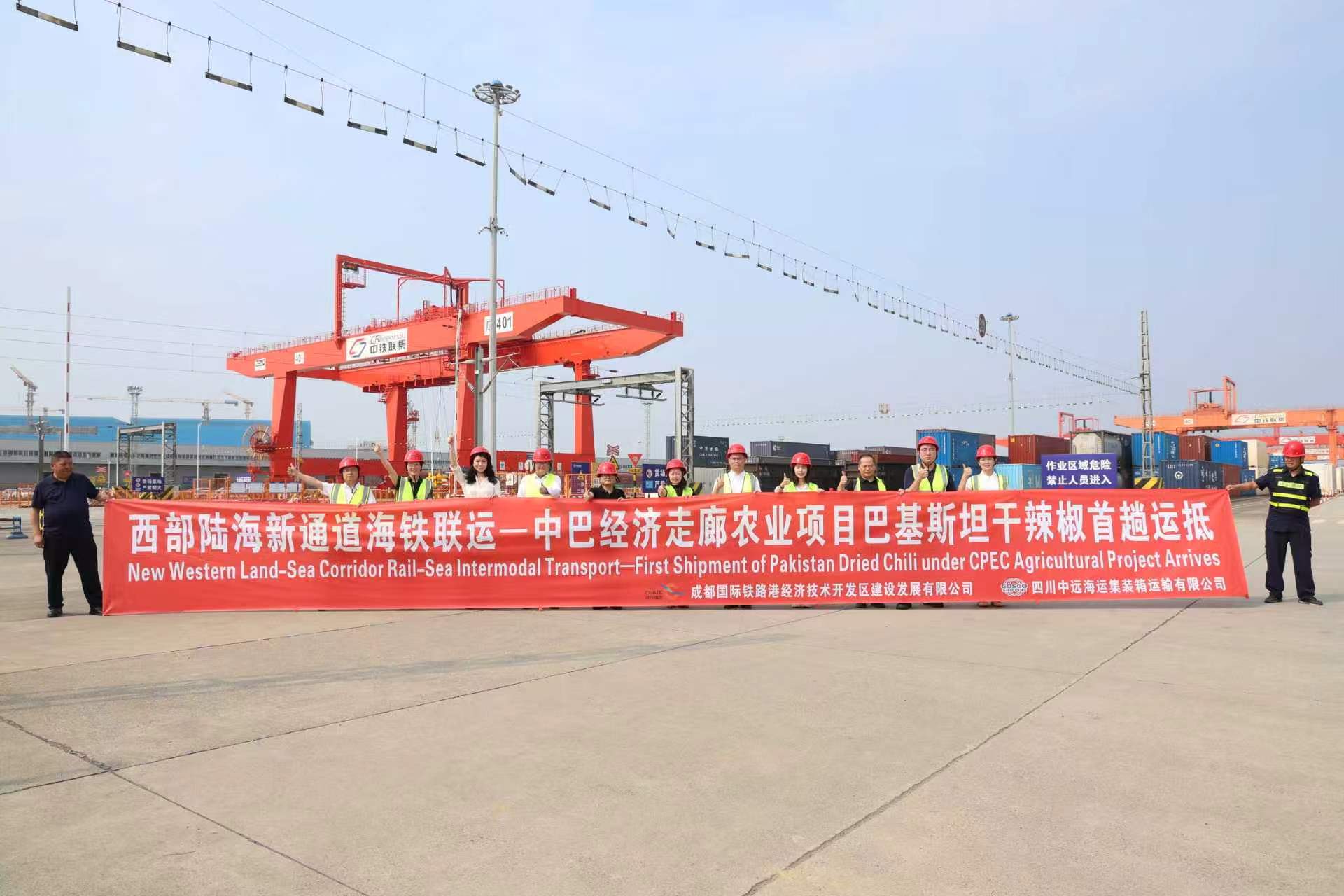
A new sea-rail route connecting Pakistan with Chengdu could create fresh opportunities for Pakistani agricultural exports in southwestern China.
The route currently focuses on dried chilies. However, its potential extends far beyond chili shipments. It could connect Pakistani farmers and exporters with major food-processing and consumer markets in the region.
New Route Cuts Transit Time
Pakistani chilies can enter China through Qinzhou Port in Guangxi. After customs clearance, cargo moves directly by rail to Qingbaijiang in Chengdu.
According to Li Jiarun, the route can reduce transit time by seven to 10 days compared with the traditional Qingdao route. It can also lower logistics costs by around 1,000 yuan per metric ton.
The savings come from shorter sea transport and fewer cargo transfers. As a result, exporters can move products more efficiently into southwestern China.
Growing Demand for Pakistani Chilies
China imported around 400,000 metric tons of dried chilies in 2025. Pakistan, India, and Myanmar were among the major suppliers.
Meanwhile, Sichuan and Chongqing have strong demand for chilies. The region’s famous hotpot culture and large food industry drive much of this consumption.
Traditionally, supplies often passed through northern and central Chinese distribution hubs. Cargo then moved south toward Sichuan and Chongqing.
The new route reduces this detour. It allows Pakistani chilies to move closer to their target markets after entering China.
Chengdu Offers More Than Logistics
Chengdu could become more than a transport destination for Pakistani agricultural products.
Qingbaijiang hosts logistics facilities, bonded warehouses, and temperature-controlled storage. These facilities can support the handling and distribution of agricultural goods.
Moreover, the longer-term plan connects transportation with trade, processing, warehousing, and distribution.
This approach could help Chengdu become a gateway for overseas agricultural suppliers entering southwestern China.
Chilies Could Open the Door for More Exports
The current chili trade serves as an important starting point. If the model succeeds, other Pakistani agricultural products could follow.
Potential growth will depend on several factors. These include stable supplies, product quality, inspection procedures, quarantine requirements, and market access.
In addition, Pakistani exporters will need greater familiarity with Chinese distribution networks.
New Opportunity for Pakistani Farmers
The emerging corridor gives Pakistani exporters another entry point into China. They will no longer have to rely mainly on established gateways in eastern and northern China.
Closer access to southwestern markets could connect Pakistani products with food manufacturers and consumers more directly.
Furthermore, Chengdu is exploring agricultural trade opportunities with other Belt and Road countries.
A Test for Future Agricultural Trade
The chili shipments represent more than a new logistics route. They provide a practical test of a wider Pakistan-China agricultural trade model.
If the corridor proves commercially successful, Chengdu could become an important distribution hub for Pakistani farm products.
At the same time, southwestern Chinese businesses could gain more direct access to agricultural supplies from Pakistan.
Read More Articles:
China, Pakistan Deepen Climate Agriculture Ties