

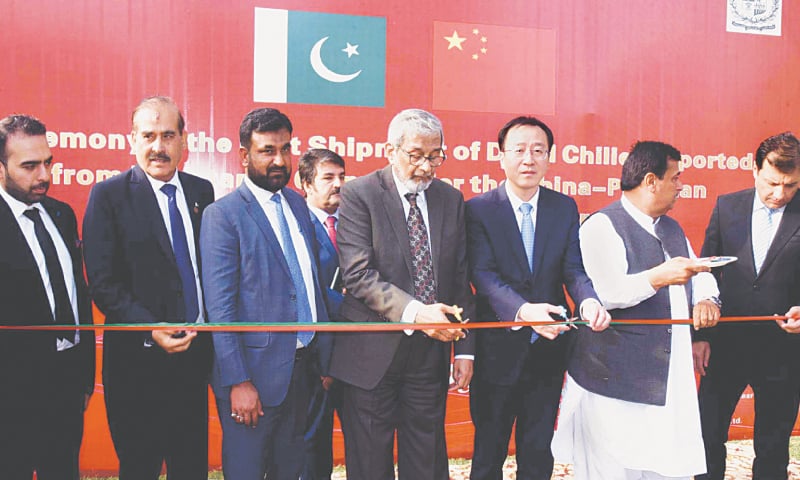
More than 80 metric tons of Pakistani dried chilies have arrived at Chengdu International Railway Port. The shipment opens a new logistics route for agricultural exports to southwest China.
The eight-container consignment entered China through Qinzhou Port in Guangxi. It then reached Chengdu through a sea-rail service under the New International Land-Sea Trade Corridor.
The shipment marks the first arrival under an agricultural cooperation project linked to CPEC. It also strengthens trade and agricultural ties between Pakistan and China.
New Route Cuts Costs and Transit Time
The new route provides a more direct way to transport Pakistani chilies to southwest China. Traditional routes often move imported chilies through northern ports before sending them to other markets.
By contrast, the new service connects Qinzhou Port directly with Chengdu. According to the Chengdu International Railway Port Economic and Technological Development Zone Construction and Development Co., Ltd., the route can cut logistics costs by about 1,000 yuan ($140) per metric ton.
It can also reduce transit times by seven to 10 days. Therefore, the route could make Pakistani agricultural exports more competitive in the Chinese market.
More Pakistani Chilies on the Way
Following the first shipment, more than 900 metric tons of additional Pakistani dried chilies are now being transported to China.
The service is also expected to move toward regular operations. This could create a more reliable export channel for Pakistani agricultural producers.
Chengdu Port Expands Trade Connectivity
Chengdu International Railway Port is using its transport network to expand international trade. The port connects the New International Land-Sea Trade Corridor with China-Europe freight train services.
Moreover, it provides facilities for cross-border logistics, bonded warehousing, distribution, and trade. These capabilities can support broader agricultural and industrial cooperation.
Growing Demand in Southwest China
Southwest China has a large and growing market for chilies. Sichuan and Chongqing are major consumption centers but have lacked a specialized large-scale distribution hub.
The imported Pakistani chilies will supply catering companies, hotpot restaurants, and condiment producers. They will also support manufacturers of products such as Pixian Douban.
Building an Integrated Supply Chain
The project connects several stages of the agricultural supply chain. These include cultivation in Pakistan, cross-border transportation, distribution, processing, and final consumption in China.
As a result, Pakistani producers can gain another channel to reach Chinese consumers. At the same time, southwest China can secure a more direct supply of imported chilies.
Boost to Pakistan-China Agricultural Trade
The arrival of Pakistani dried chilies represents another step in expanding agricultural trade with China. It also demonstrates how international transport corridors can support commercial cooperation.
Furthermore, the new route can strengthen connections between Pakistani farmers and China’s food-processing industry. Regular operations could create additional opportunities for agricultural exports under the broader Pakistan-China economic partnership.
Read More Articles:
Pakistan Engineers Complete Training in China