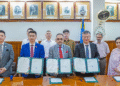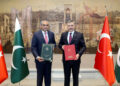

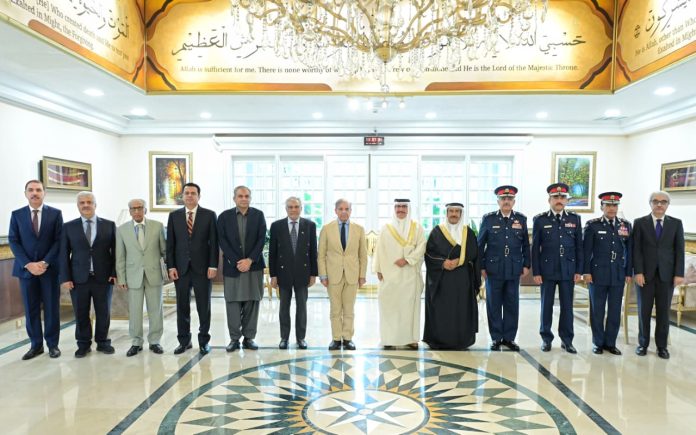
Pakistan and Bahrain on Wednesday agreed to strengthen bilateral cooperation across key areas, including counter-terrorism, anti-narcotics, immigration, and trade. The understanding was reached during a meeting in Islamabad between Interior Minister Mohsin Naqvi and his Bahraini counterpart, General Rashid bin Abdullah Al Khalifa.
Joint Working Group Formation
The two ministers announced the formation of a Joint Working Group (JWG) to institutionalise collaboration in multiple areas such as counter-narcotics, border security, coast guard operations, police training, and immigration matters. They also decided to sign memoranda of understanding (MoUs) on extradition, mutual legal assistance, and specialised battalion training.
Focus on Counter-Narcotics
Minister Naqvi highlighted the urgency of combating drug trafficking, calling it a threat to future generations. He praised Pakistan’s Anti-Narcotics Force (ANF) for record-breaking recoveries worth $146 million, despite resource constraints. He welcomed Bahrain’s decision to appoint a Drug Liaison Officer in Islamabad to enhance intelligence-sharing.
Bahrain’s Commitment to Stronger Ties
General Rashid bin Abdullah reaffirmed Bahrain’s commitment to advancing ties with Pakistan, describing the new initiatives as fresh momentum for bilateral relations. He emphasised that the establishment of the JWG and the signing of MoUs would strengthen institutional cooperation.
High-Level Engagements
During his visit, the Bahraini minister also held delegation-level talks with senior officials and later met President Asif Ali Zardari and Prime Minister Shehbaz Sharif. The prime minister reiterated Pakistan’s commitment to enhancing trade and investment relations, noting that visa processes for Bahraini businessmen are being expedited. He expressed hope that Bahrain would increase investments in various sectors of Pakistan’s economy.
The visit underscored the longstanding people-to-people ties, with over 120,000 Pakistanis contributing significantly to Bahrain’s development. Both countries agreed to move forward with a structured framework for deeper security and economic cooperation.
Related stories: