
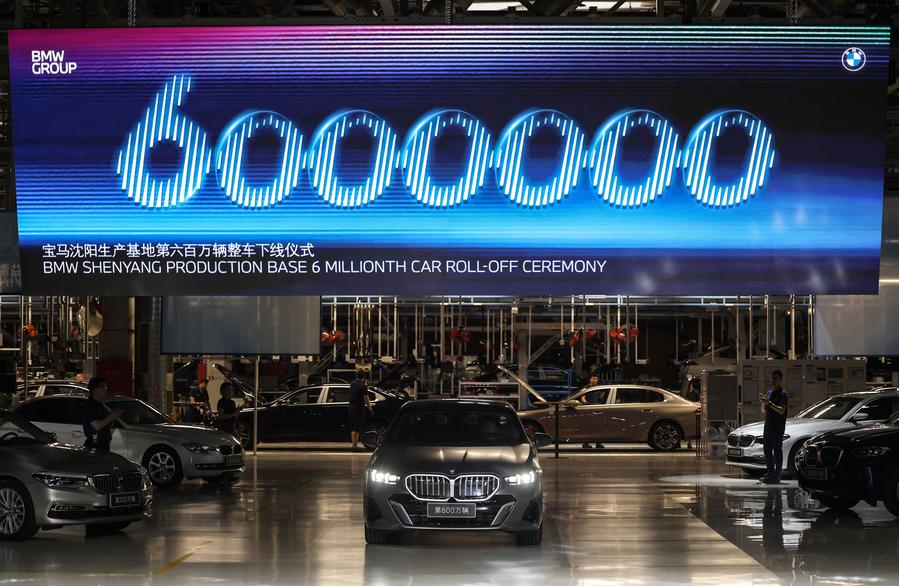
Facing steep U.S. tariffs and persistent policy uncertainty in transatlantic trade, German automakers are increasingly turning to China as a strategic growth hub. Industry leaders say the move is aimed at tapping into China’s regulatory stability, technological edge, and expanding consumer base, while accelerating the shift toward electrification.
Tariff Hikes Hit Profits Hard
Since April, U.S. tariffs on EU-made vehicles surged to 25%, slashing earnings across Germany’s auto giants. A recent U.S.-EU deal trimmed the rate to 15%, offering short-term relief, but automakers warn the cost burden remains heavy.
BMW, Mercedes-Benz, and Volkswagen all reported significant profit drops in the first half of 2025. BMW’s revenue fell 8.2% year-on-year, with net profits plunging 29%. Mercedes-Benz saw its net income drop from €6.1 billion to €2.7 billion, while Volkswagen’s sales revenue dipped slightly, but its Porsche division absorbed €400 million in additional tariff costs.
Analysts estimate the combined free cash flow of Germany’s top three automakers could shrink by €10 billion this year, weighed down by tariffs, rising energy costs, and slowing demand.
Structural Challenges Beyond Tariffs
The industry’s troubles run deeper than short-term trade disputes. U.S. duties on imported steel, aluminium, and components have inflated production costs across the supply chain, squeezing margins. German plants in the U.S., which produce hundreds of thousands of vehicles annually, are particularly exposed to sudden policy changes.
Volkswagen’s American operations alone faced an extra €1.3 billion in costs from tariffs in the first half of 2025. Audi reported losses of €600 million, while several automakers and suppliers, including Ford, Stellantis, and Bosch, have announced layoffs or plant closures in Europe.
Meanwhile, German brands are struggling to keep pace with U.S. and Chinese competitors in electric vehicle (EV) innovation, a challenge compounded by rising labour and energy expenses at home.
Turning East: China as a Strategic Anchor
With Western markets becoming less predictable, China is emerging as a key growth engine for German carmakers. Volkswagen CFO Arno Antlitz expressed confidence in expanding local production platforms and battery partnerships in China.
BMW recently teamed up with Chinese tech company Momenta to develop advanced driver-assistance systems tailored for local drivers. “This collaboration reflects our ‘In China, for China’ strategy, blending German engineering with China’s rapid innovation,” said Sean Green, CEO of BMW Group Region China.
Industry expert Ferdinand Dudenhoeffer believes China is “the future of the auto industry,” offering competitive battery technology and scaled manufacturing that European brands increasingly rely on.
Outlook: Navigating a Fragmented Trade Landscape
While the latest U.S.-EU tariff agreement offers temporary respite, trade remains a potent geopolitical lever, according to Michael Schumann of the German Federal Association for Economic Development and Foreign Trade. In his view, China may stand as one of the few pillars of stability in an increasingly fragmented global market.
As global trade realigns, Germany’s automotive sector is betting that deeper ties with China will not only offset transatlantic headwinds but also position its brands for long-term success in the EV era.
Related stories: