

China-US Trade Framework Puts Pakistan’s Export Strategy in Focus
The reciprocal tariff arrangement between Washington and Beijing highlights the changing global trade environment—and why Pakistan must strengthen value-added exports, industrial cooperation and CPEC 2.0.
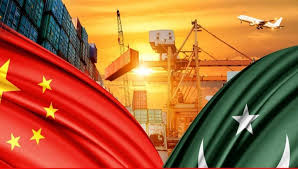
The China-US trade framework has introduced a new mechanism for managing trade between the world’s two largest economies. Covering approximately US$30 billion in goods in each direction, the arrangement focuses on selected non-sensitive products and aims to provide more favourable tariff treatment. While it does not resolve the wider economic differences between Washington and Beijing, it signals a more structured approach to bilateral trade.
For Pakistan, the development carries an important message. As its largest export markets remain concentrated in a limited number of destinations, changes in global trade arrangements can influence competition, supply chains and market opportunities. The country’s ability to respond will depend on improving export competitiveness, expanding value-added production and using industrial cooperation under China-Pakistan Economic Corridor (CPEC) 2.0 more effectively.
What the China-US Trade Framework Actually Changes
The US-China Board of Trade was established following President Donald Trump’s visit to Beijing in May 2026. Its purpose is to manage trade in non-sensitive products between the two economies. Following further consultations in September, both sides advanced a reciprocal arrangement covering goods valued at approximately US$30 billion on each side.
The product lists include American agricultural goods, seafood, wood products, cosmetics and medical devices. Chinese products include household appliances, toys and other consumer goods. According to China’s Ministry of Commerce, tariffs on around 90 per cent of the covered products are expected to be reduced to most-favoured-nation rates. These are the standard tariff rates applied under a country’s normal trade arrangements.
However, the announcement should not be mistaken for an immediate or comprehensive removal of tariffs. The two governments have said that implementation will follow their respective domestic legal procedures. The framework is therefore a targeted step towards easing trade conditions, rather than a resolution of all outstanding trade issues.
The arrangement also forms part of a wider effort to maintain economic engagement. In September, Washington and Beijing extended their existing trade truce until 10 January 2027, giving negotiators additional time to address outstanding issues. The extension and the Board of Trade arrangement are related developments, but they are separate measures.
Why the US Market Matters to Pakistan
The United States remains Pakistan’s leading export destination, making changes in the American market particularly relevant to the country’s trade outlook. According to State Bank of Pakistan data reported by the Associated Press of Pakistan (APP), Pakistan exported goods worth US$1.118 billion to the US during July and August 2026. This represented a modest increase of 0.53 per cent compared with the same period a year earlier.
The United Kingdom ranked second, with exports of US$413.801 million, while China stood third at US$397.758 million. The figures underline the importance of the American market to Pakistan’s export earnings, while also showing the potential to deepen commercial engagement with China.
For the full 2025–26 fiscal year, Pakistan’s exports of goods and services to the US reached US$6.125 billion, compared with US$6.031 billion in the previous year. APP, citing SBP data, reported growth of 1.55 per cent. However, Pakistan’s exports to the rest of the world declined by 4.63 per cent over the same period.
These figures point to a broader challenge. Maintaining access to major markets is important, but long-term export growth requires more than favourable trade conditions. Pakistan must improve product quality, production efficiency, standards compliance and the ability to supply international buyers consistently.
CPEC 2.0 and the Opportunity for Industrial Cooperation
This is where CPEC 2.0 can play a significant role. The next phase of Pakistan-China cooperation places greater emphasis on business-to-business engagement, industrial development, investment and productive sectors. Its potential contribution extends beyond infrastructure towards building stronger links between production, technology and international markets.
A joint consultative session held by the CPEC Secretariat and the Chinese Embassy on 16 April 2026 identified several areas for business-to-business cooperation. These included minerals, agriculture, pharmaceuticals, construction materials, jewellery and retail. Participants also discussed agricultural mechanisation, farmer training, halal meat exports, information and communications technology, seafood, aquaculture and value-added processing in Gwadar.
This approach builds on the broader industrial ambitions of CPEC 2.0, which are also central to Pakistan’s efforts to attract investment and strengthen its productive capacity. Read more about CPEC 2.0 and its evolving industrial cooperation agenda.
These discussions reflect areas of potential cooperation, rather than completed investments or operational projects. Their significance lies in the opportunity to connect Pakistani producers with Chinese technology, expertise, investment and established industrial networks.
For example, agricultural cooperation could help improve processing, storage and product consistency. Similarly, investment in seafood and aquaculture could support higher-value exports from Pakistan’s coastal economy. In minerals and construction materials, greater processing capacity could allow Pakistan to move beyond the export of less-processed commodities.
Such cooperation could strengthen Pakistan’s position in international supply chains. However, its success will depend on commercially viable projects, reliable infrastructure, skilled labour and consistent policy support.
China-Pakistan Trade and the Role of the FTA
Pakistan’s existing trade arrangements with China provide another foundation for expanding exports. The China-Pakistan Free Trade Agreement (CPFTA) Phase II, signed in April 2019, provides for the gradual liberalisation of 75 per cent of tariff lines by both countries. China’s tariff reductions are scheduled over ten years, while Pakistan’s are spread over fifteen years.
Under the agreement, China also immediately eliminated tariffs on 313 priority tariff lines of particular interest to Pakistani exporters. These cover a range of products, including textiles and garments, seafood, meat and animal products, prepared foods, leather, chemicals, plastics, footwear and engineering goods.Pakistan’s access to the Chinese market also forms part of its wider regional trade strategy. The country’s efforts to strengthen connectivity through Gwadar Port’s regional trade ambitions offer another important dimension to this strategy.
The agreement offers Pakistani businesses an established framework for accessing the Chinese market. Yet preferential tariff access alone does not guarantee higher exports. Businesses must be able to meet Chinese product standards, maintain supply volumes, compete on price and understand changing consumer demand.
The China-US framework also reinforces the importance of export diversification. Pakistan should not view changing trade conditions between major economies only through the lens of competition. It should also examine where its own producers can become more integrated into regional and international supply chains.
Value Addition Will Determine Pakistan’s Gains
Pakistan’s central challenge is to translate trade opportunities into higher domestic production and export earnings. This requires a shift towards value-added goods, stronger industrial capacity and more consistent quality standards.
Textiles provide a clear example. Expanding beyond basic textile products towards higher-value garments, technical textiles and specialised products could improve export returns. In agriculture, investment in processing, packaging, cold-chain facilities and certification could help producers reach more demanding markets. Similar opportunities exist in pharmaceuticals, seafood, engineering goods and mineral processing.
CPEC 2.0 can support this transition by encouraging joint ventures, technology transfer, industrial investment and stronger business links between Pakistani and Chinese companies. Gwadar and its associated industrial development also have the potential to support trade and processing activities, provided that infrastructure, logistics and commercial operations develop in parallel.
Nevertheless, these gains will require coordinated action. Government policy must support exporters through predictable regulations, efficient customs procedures and improved trade facilitation. Businesses, in turn, must invest in productivity, innovation, workforce skills and international certification.
The Next Test for Pakistan
The China-US trade framework reflects an evolving global trading environment in which major economies are seeking targeted arrangements to manage commercial relations. For Pakistan, the immediate impact remains uncertain. The arrangement does not automatically provide Pakistani exporters with new tariff concessions or guaranteed access to either market.
Its wider significance, however, is clear. Countries that strengthen their industrial capacity, diversify their products and build reliable supply chains will be better positioned to respond to changing trade conditions. The importance of improving regional connectivity is also reflected in developments surrounding Gwadar Port and its integration with wider trade networks.
Pakistan already has important foundations: access to major export markets, a trade agreement with China and an expanding agenda for industrial cooperation under CPEC 2.0. The priority now is to turn these frameworks into productive investment, competitive exports and sustainable economic activity.
Ultimately, Pakistan’s gains will depend less on the trade arrangements reached by other economies and more on how effectively it prepares its own industries to compete.