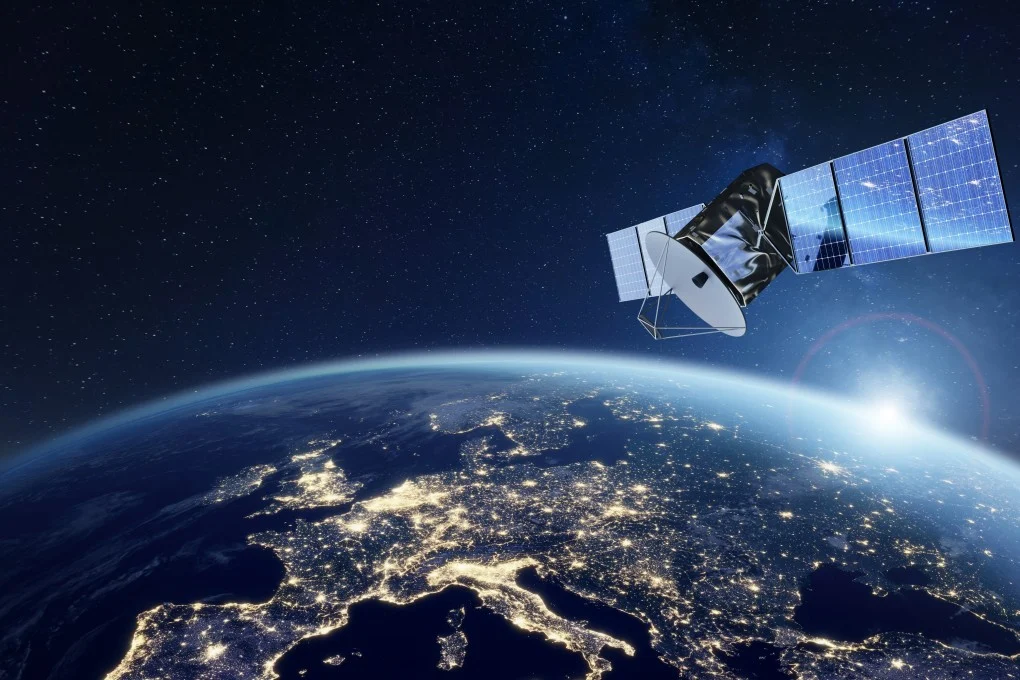
China has just hit a massive tech milestone. Satellite internet company Spacesail successfully completed direct-to-satellite voice calls using standard, unmodified everyday smartphones. The company reported that the connection remained smooth and stable throughout the trial, delivering high-quality voice performance that rivals standard ground-based 5G networks.
Crystal Clear 5G Quality
The successful field test proved that direct-to-cell technology works seamlessly in real-world conditions. The connection showed full signal strength and perfect compatibility with existing mobile infrastructure. This breakthrough paves the way for a future where space and terrestrial communications merge into one unified network.
The Rocket Powering the Breakthrough
This achievement follows the recent launch of a Zhuque-2E rocket. It carried the Spacesail DTC 01 test satellite into orbit, which engineers specifically designed to validate direct-to-cell technologies. This new satellite is built to support convergence with current 5G networks and upcoming 6G systems.
Expanding the Satellite Fleet
With this latest phase of development, the Spacesail Constellation has grown to approximately 200 satellites. This rapid expansion boosts the company’s ability to deliver reliable, global satellite communication straight to ordinary consumer devices. The network formally started deployment in August 2024, but the launch pace has recently skyrocketed. In May 2026 alone, Spacesail pulled off three launches in just 11 days.
The Race Against Starlink
While Spacesail is celebrating a major win, SpaceX’s Starlink still holds a massive lead in the orbital space race. Starlink had deployed approximately 9,600 satellites in orbit as of March 2026, which accounts for roughly three-quarters of all active satellites globally. Its approved constellation size is planned for up to 42,000 satellites.
Starlink’s broadband subscriber base reached 10.3 million as of the first quarter of 2026, covering 164 countries and territories. Its direct-to-cell service is already active in 30 countries with 7.4 million monthly active devices. However, its average revenue per user dropped to $66 in early 2026 due to aggressive expansion into lower-income global markets.
Read More Articles:
China’s Lijian-1 Launches 8 Satellites