


The Shenzhou-23 mission is the 40th flight of China’s crewed space program and the seventh crewed spacecraft during the space station’s application and development phase.
In-orbit rotation with the Shenzhou-21 crew, space science and application experiments, extravehicular activities and cargo transfers, debris protection device installation, external payload and equipment installation and retrieval, science education and public welfare activities, and space payload tests are among the crew’s primary goals. One crew member a year-long in orvit residency experiment.
Scientific exploration
With an emphasis on thorough investigation and validation, the Shenzhou-23 crew will oversee more than 100 new scientific and application projects in domains like space life science, space materials science, microgravity fluid physics, aerospace medicine, and novel aerospace technologies.
In order to develop a space embryology study system, from lower vertebrates to higher mammals, space life science initiatives will employ zebrafish embryos, mouse embryos, and “artificial embryos” grown from stem cells. This will advance systematic studies on scientific topics related to space life culture.
The crew will explore space-based manufacturing and performance control of sophisticated materials, as well as the creation of new materials such lightweight high-entropy alloys and high-performance rare-earth permanent magnetic alloys.
Pakistani astronauts hit the space
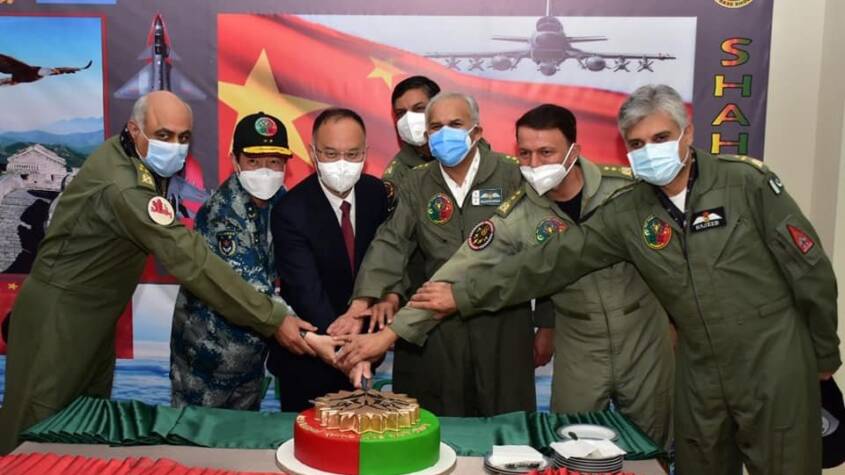
2 Pakistani astronauts are also on the mission. One of them will work as a payload specialist on a brief space mission, as scheduled. In compliance with the program, they are currently receiving professional technical training in spaceflight as well as basic training, with an emphasis on practical operation skills to guarantee mission readiness. Additionally, they will receive Chinese language instruction using a curriculum that emphasises both fundamental language proficiency and the specific command vocabulary needed to carry out aircraft missions.
This one-year orbit experiment marks a significant milestone in China’s space exploration. It will allow Chinese companies to collect important data on the reliability of long-term space missions and the impact of these missions on astronauts exposed to the space for an extended period.
Read more articles:
Pak-China Gallery Opens in Lahore