


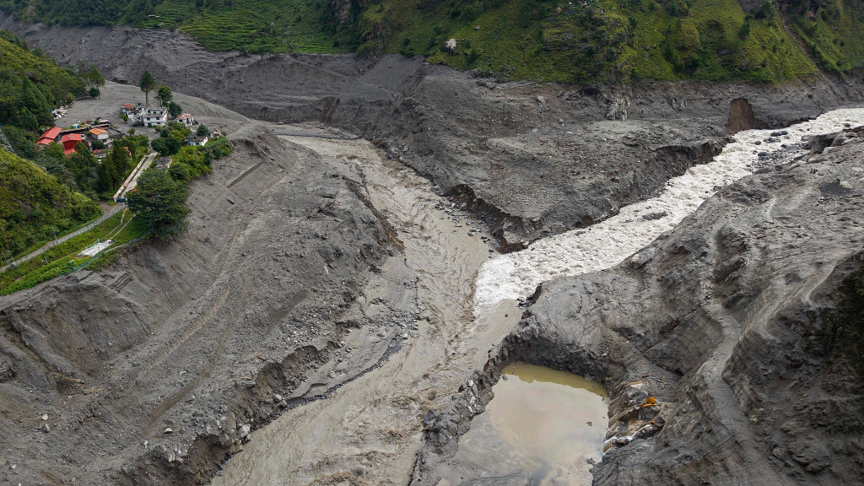
A devastating flood near the Nepal-China border has highlighted the growing need for cross-border disaster cooperation. The disaster swept away villages, people, and critical infrastructure.
As rescue operations continued, teams recovered survivors from heavily damaged structures. A Chinese man, Lu Haitao, was rescued alive from a hydropower tunnel. A 64-year-old Nepali woman was also found alive inside a mud-buried building.
The disaster has affected communities on both sides of the border. Nepal and China have therefore strengthened coordination to support rescue and recovery efforts.
China Provides Emergency Support
China quickly supported Nepal’s emergency response. Beijing deployed tunnel experts and specialists in forensic body identification.
Moreover, Chinese authorities provided satellite imagery, hydrological information, and meteorological data. This information helped Nepali teams assess damage and identify areas requiring urgent assistance.
Nepali Foreign Minister Shisir Khanal expressed gratitude for China’s support. He described Beijing’s assistance as highly proactive during the crisis.
Himalayas Face Growing Climate Risks
The disaster also highlights the growing climate risks facing the Himalayan region. Rising temperatures are increasing pressure on glaciers and raising the threat of floods and glacial lake outbursts.
Nepal has more than 2,000 glacial lakes. Authorities have identified 21 as potentially dangerous because of their physical characteristics and downstream settlements.
A flood originating in China’s Xizang region can quickly affect communities in Nepal. Therefore, countries across the Himalayas need stronger systems for monitoring and responding to shared environmental risks.
Satellite Data Supports Rescue Operations
Information has become a critical tool in modern disaster response. Nepal’s high-altitude monitoring network remains limited in some areas.
Chinese satellite and hydrological data provided additional support. The information helped rescuers understand the extent of the destruction and identify possible locations of trapped survivors.
On September 4, rescuers reached two men alive inside a hydropower project tunnel on the Trishuli River. Satellite mapping helped narrow the search area after the facility became buried under debris.
Cross-Border Cooperation Can Save Lives
Disasters of this scale require cooperation beyond national borders. Rescue teams need timely information, specialized equipment, technical expertise, and coordinated planning.
In addition, international assistance can help countries restore damaged infrastructure and monitor secondary risks.
China’s response demonstrates how technical cooperation can complement humanitarian assistance. It also shows how shared data can improve decision-making during fast-moving disasters.
Building a Regional Disaster Response System
The latest crisis offers important lessons for the Himalayan region. Countries facing shared climate risks can strengthen early-warning systems through joint monitoring and information sharing.
Furthermore, regular cooperation among disaster agencies could improve emergency preparedness. Joint training and rapid-response mechanisms could also reduce delays during future disasters.
A Model for Future Cooperation
The China-Nepal response demonstrates the practical value of cross-border cooperation. Climate-related disasters do not stop at political boundaries.
As Himalayan climate risks continue to grow, stronger coordination in early warning, satellite monitoring, hydrology, and emergency rescue will become increasingly important.
Ultimately, closer China-Nepal cooperation can help build a more effective regional mechanism for protecting communities from future climate disasters.
Read More Articles:
Rescue Continues After Xizang Border Mudslide