


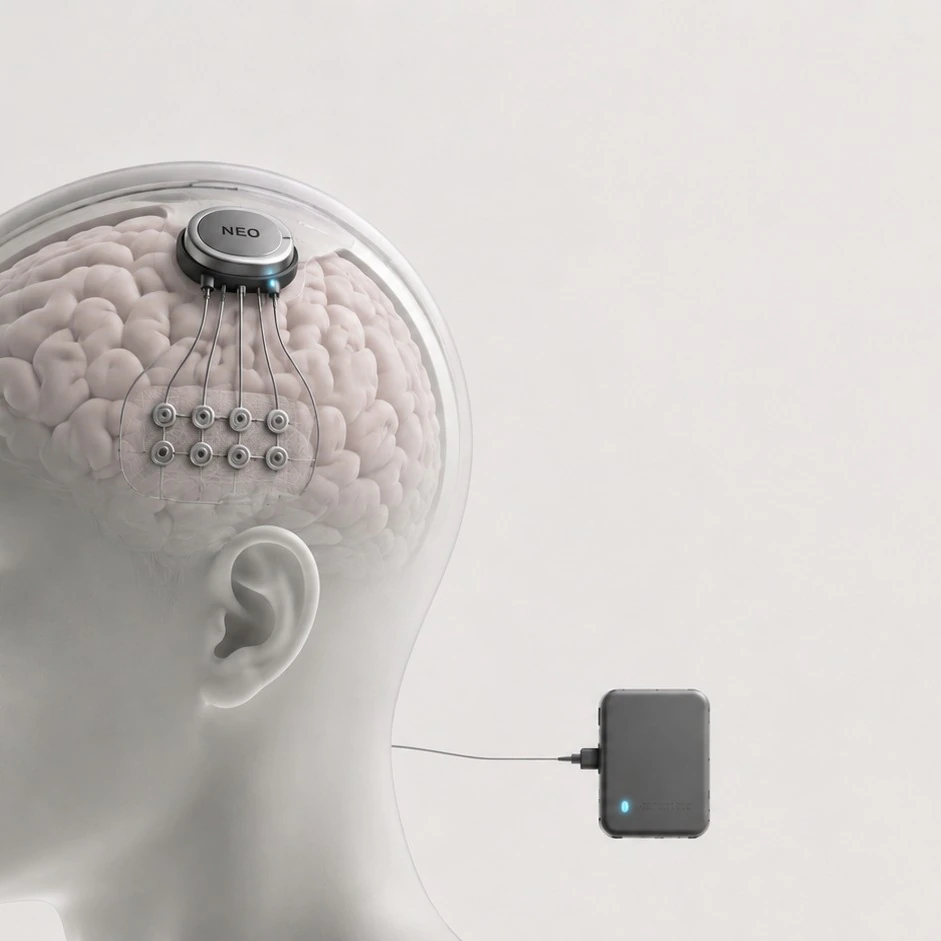
China has officially approved NEO, a coin-sized implant that is now the world’s first commercially available brain chip. The device was collectively developed by Tsinghua University and Shanghai-based Neuracle Technology. The device is designed to help patients with spinal cord injuries and paralysis. Following successful clinical trials, the less-invasive brain-computer interface (BCI) is now headed for mass production within China’s state-run healthcare system.
Outpacing Global Competition
With this launch, China has secured a strategic head start in the global neurotechnology race. By bringing a commercial BCI to the public ahead of highly publicized Western rivals like Neuralink, Beijing has set a new market benchmark. This rapid rollout highlights a determined effort to lead the emerging digital biology sector, a move that will likely shift investor confidence and shape future global regulations.
A New Era for Personalized Medicine
The arrival of NEO is expected to trigger a wave of investment in neurological research. In the future, accessible BCI technology could serve as a powerful tool for personalized medicine. Drug developers could use these implants to monitor real-time brain responses to new treatments or to enable highly precise drug delivery. Thus, it paves the way for new combination therapies that pair traditional medicine with direct neural stimulation.
Expanding Beyond Paralysis
While currently aimed at paralysis, the core technology behind NEO has broad potential. Doctors foresee using targeted neural modulation to manage other severe conditions, such as Parkinson’s disease, epilepsy, and chronic pain. However, as the technology adapts to treat a wider range of neurological disorders, it has the potential to drastically improve the quality of life for millions of patients worldwide.
Read More Articles:
Pakistan China Tech Collaboration Boosts 5G Access