
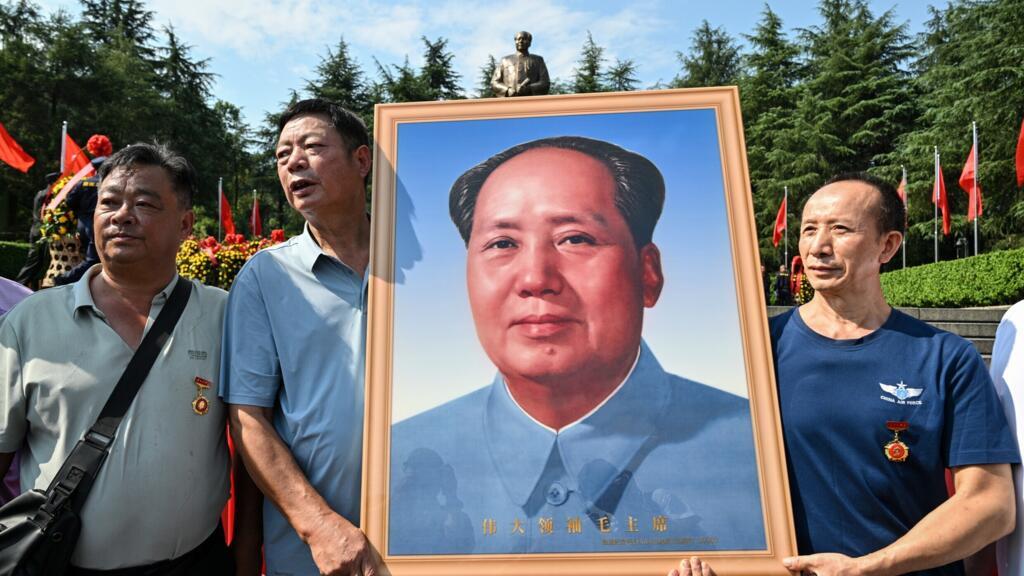
Young Chinese are increasingly turning to Mao Zedong for guidance on work, education, social pressure, and personal struggles. The trend comes 50 years after his death.
Mao died on September 9, 1976. His popularity remains visible among younger generations despite limited official attention to the anniversary.
Online influencers and followers now discuss his writings through social media, book clubs, and AI-narrated videos. Many also refer to him as “jiaoyuan,” meaning “teacher.”
Mao Gains Popularity Among Youth
For many young admirers, Mao represents resilience, courage, and dedication to ordinary people.
Some young Chinese read his works to find practical lessons for their daily lives. Others visit Mao-related sites and monuments before important events such as university exams.
In Changsha, university student Li Muqi said he visits Mao’s statue before final exams. He believes Mao’s spirit can encourage young people to make progress and achieve their goals.
Meanwhile, Mao-related books and merchandise continue to attract interest. The Selected Works of Mao Zedong reportedly topped the library loan list at Tsinghua University last year.
Economic Pressure Drives Interest
Economic uncertainty is another factor behind Mao’s renewed appeal.
China’s youth unemployment rate reached 21.3% in June 2023 among people aged 16 to 24. Although the methodology has since changed, the earlier figure reflected growing concerns about employment among young people.
Analysts say some young Chinese view Mao’s ideas on class and inequality as relevant to their current struggles.
Professor Mobo Gao of the University of Adelaide said young people facing economic pressure and limited opportunities may seek explanations in Mao’s theories.
Nationalism Also Shapes Mao’s Image
Mao’s renewed popularity also overlaps with growing nationalism.
Many young people admire his role in China’s industrial development and efforts to strengthen the country against foreign pressure. His writings have also resurfaced during periods of tension between China and the United States.
Social media users have cited Mao’s concept of the “paper tiger” and his writings on prolonged conflict when discussing trade disputes and geopolitical tensions.
As a result, Mao has become both a historical figure and a symbol of national strength for some young Chinese.
A Different View of Mao
However, younger admirers do not always engage deeply with Mao’s controversial legacy.
Historian Rana Mitter noted that many young people focus on Mao’s ideas about resilience and leadership while paying less attention to the violence associated with his rule.
The Cultural Revolution remains particularly complex. Some young people have limited knowledge of the period and its consequences.
Historian Rebecca Karl said some younger Chinese interpret the Cultural Revolution differently from the mainstream historical narrative.
Beijing Maintains a Careful Approach
China’s government officially recognizes both Mao’s achievements and serious mistakes.
A 1981 Communist Party resolution credited Mao with major contributions to modern China while strongly criticizing the Cultural Revolution.
Under President Xi Jinping, official discussions have placed greater emphasis on Mao’s historical achievements. At the same time, authorities continue to restrict interpretations that challenge the established assessment.
Therefore, Mao’s renewed popularity remains largely an online and cultural phenomenon rather than an organized political movement.
Why Mao Still Matters to Young Chinese
Mao’s return to youth culture reflects wider debates about inequality, social justice, nationalism, and China’s economic direction.
For many young people, his writings offer a way to understand problems they face today. Others see him mainly as a symbol of national independence and strength.
The trend is unlikely to become a major political movement, analysts say. Nevertheless, Mao continues to provide an alternative framework for young Chinese navigating a rapidly changing society.
Read More Articles:
Chengdu Opens New Route for Pakistan Farm Exports