
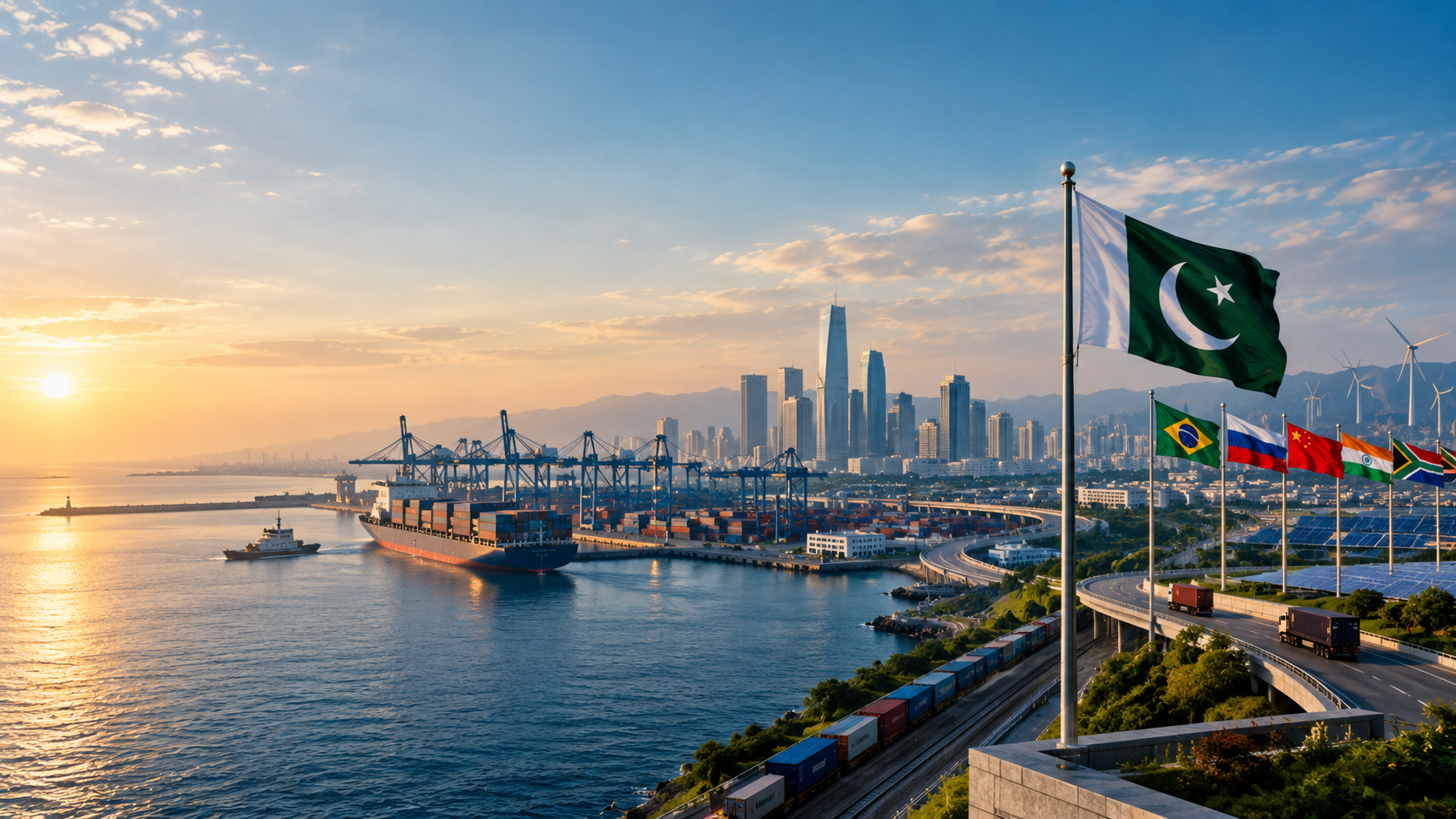
BRICS and Pakistan have a growing relevance to discussions about economic diversification, development finance and long-term investment. As Pakistan faces substantial external financing requirements and seeks funding for infrastructure, energy and industrial development, engagement with BRICS-linked institutions could widen its options. However, access to financing is not automatic. It will depend on institutional arrangements, the quality of proposed projects and Pakistan’s ability to turn investment into sustainable economic growth.
For Islamabad, the opportunity lies in diversifying its economic partnerships rather than replacing existing lenders. With substantial external financing requirements and pressure to maintain economic stability, Pakistan needs capital that strengthens productive capacity, expands exports and supports long-term growth. BRICS could become one part of that strategy, provided diplomatic engagement translates into practical economic outcomes.
BRICS and Pakistan’s Development Finance Challenge
Pakistan’s external financing requirements remain substantial. The International Monetary Fund’s April 2026 report projected gross external financing requirements of approximately US$18.8 billion for 2026–27 and US$29.9 billion for 2028–29. These estimates cover external obligations and financing needs, including debt repayments and projected current-account pressures. They are projections, not amounts Pakistan must necessarily borrow from a single lender. These projections are detailed in the IMF’s April 2026 country report.
The figures underline why Pakistan needs a broad network of financial partners. Multilateral institutions, bilateral lenders, private investors and export-generating businesses all have roles to play. Dependence on a narrow range of financing sources can leave the economy exposed when borrowing conditions tighten or repayments fall due.
BRICS-related institutions could potentially widen the channels available for development projects. However, development finance cannot automatically resolve immediate foreign-exchange shortages or eliminate existing debt. Its longer-term contribution would be to support investments that improve productivity and strengthen Pakistan’s capacity to earn foreign exchange.
The New Development Bank: A Potential Financing Channel
The New Development Bank (NDB), established in 2015 by Brazil, Russia, India, China and South Africa, is a multilateral development bank created to mobilise resources for infrastructure and sustainable development.
For BRICS and Pakistan, the New Development Bank offers a potential avenue for diversifying development finance, subject to the institution’s membership and financing requirements.
The bank finances projects across areas such as clean energy, transport, water management, urban development and digital infrastructure. During its first decade, it approved approximately US$43 billion across 140 projects on a gross basis. At 31 December 2025, its portfolio comprised 115 projects with US$35.6 billion in NDB financing, after accounting for cancellations and fully repaid loans. The bank’s infrastructure-financing portfolio illustrates the range of development projects it supports.
These figures demonstrate that the NDB has developed into an operating development-finance institution. They do not, however, mean that Pakistan can automatically access its resources.
BRICS membership and NDB membership are separate processes. The bank has its own admission arrangements, and financing decisions depend on eligibility, institutional approvals and individual project assessments. Pakistan’s potential access should therefore be treated as a possibility requiring confirmation, not an established entitlement. The distinction is reflected in the New Development Bank’s membership and admission arrangements.
What BRICS Could Mean for Pakistan’s Economy
Pakistan faces infrastructure and investment needs across energy, transport, water management, urban services and climate resilience. It also needs capital for industrial zones, digital connectivity, renewable energy and logistics.
These sectors require long-term financing that can be difficult to secure through commercial borrowing alone. If Pakistan becomes eligible for NDB support, projects in these areas could potentially fit the bank’s development mandate.
Potential areas of cooperation include:
- Renewable-energy generation and electricity transmission.
- Urban water, sanitation and public transport.
- Climate-resilient infrastructure.
- Digital networks and logistics.
- Industrial infrastructure that supports manufacturing and exports.
The key consideration is project quality, not the political symbolism of joining a new grouping. Projects need realistic cost estimates, transparent procurement, credible repayment or revenue plans and measurable development benefits.
Pakistan would also need to compare any proposed financing with options available from existing development banks and bilateral partners. New finance is valuable when it improves the country’s choices, not simply when it adds another borrowing channel.
Local-Currency Financing and Exchange-Rate Risks
Local-currency financing is another area worth watching. The NDB has identified the use of local currencies as a strategic priority, alongside efforts to diversify its funding and lending arrangements.
For Pakistan, this issue has direct economic significance. When an infrastructure loan is denominated in a foreign currency but project revenues are earned in rupees, depreciation can increase the domestic cost of servicing the debt. That mismatch can strain project finances and, where the government bears the risk, public budgets.
Financing in local currency could reduce some of this exposure. However, it would not automatically make borrowing cheaper or eliminate currency risks. The availability and cost of such arrangements depend on capital-market depth, investor confidence, inflation, interest rates and financial regulation.
Pakistan would need stronger domestic financial markets and credible macroeconomic management to benefit from alternative financing instruments. The relevant questions are whether a loan is affordable, whether its repayment structure is sustainable and whether the project can generate sufficient economic value.
BRICS, Pakistan and the Search for Alternative Finance
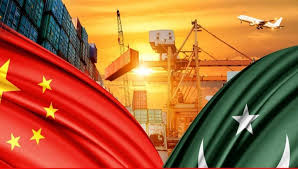
BRICS-related financing could potentially complement Pakistan-China cooperation under the China-Pakistan Economic Corridor (CPEC). The corridor has focused on energy, transport and connectivity, while CPEC 2.0 places greater emphasis on industrial cooperation, agriculture, technology, minerals and business-to-business investment.
These sectors require capital that supports productive activity, not infrastructure construction alone. Industrial facilities, logistics networks and renewable-energy projects can contribute to growth when they operate efficiently, attract businesses and generate sustainable returns.
The NDB could provide an additional multilateral channel for eligible projects if Pakistan meets the bank’s requirements. This would not mean replacing Chinese investment or existing development partners. Instead, Pakistan could seek a broader mix of financing sources where projects qualify and where institutions can contribute effectively.
A CPEC-linked project would not automatically qualify for NDB funding. Each proposal would need to satisfy the relevant institution’s financing criteria, safeguards and approval procedures. Pakistan’s priority should be to prepare projects that are commercially credible and deliver clear benefits for the wider economy.
Why BRICS Cannot Replace the IMF
Debates about BRICS sometimes centre on reducing dependence on Western-led financial institutions. Diversifying financial partnerships may offer strategic advantages, but the economic functions of these institutions differ.
The IMF provides balance-of-payments support and works with governments on economic stabilisation programmes. Development banks such as the NDB primarily finance longer-term infrastructure and sustainable-development projects. They are not interchangeable sources of funding.
Pakistan should therefore not treat BRICS as a substitute for the IMF. Stabilisation arrangements, development lending, private investment and domestic economic reform address different parts of the country’s financial challenge.
A more realistic strategy would maintain access to necessary stabilisation support while expanding investment partnerships and improving the conditions for business growth. This includes predictable regulations, stronger public institutions, competitive exports and more effective management of public debt.
Project Preparation Will Determine the Outcome
Access to finance is only one part of the development challenge. Countries must also prepare projects that lenders can assess and implement effectively.
Development institutions examine financial viability, procurement arrangements, environmental and social safeguards, implementation capacity and repayment prospects. Weak proposals can delay investment even when funding is available.
Pakistan would benefit from stronger coordination between federal and provincial agencies, better project appraisal and clearer implementation timelines. Investors also need confidence that regulations will remain predictable and approved projects will not face avoidable administrative delays.
The same principle applies to private capital. Investment announcements do not guarantee construction, commercial operation or employment. Investors need credible revenue models, transparent rules and a clear understanding of project risks. Stronger project preparation could therefore improve Pakistan’s ability to attract finance from the NDB and other development institutions alike.
A Wider Financial Network, Not a Shortcut
BRICS is also exploring broader economic cooperation beyond the NDB. The September 2026 New Delhi Declaration acknowledged work on more efficient cross-border payments, interoperability between payment and messaging channels, and discussions about trade settlements and investment using local currencies. These initiatives remain areas of cooperation and development; they should not be portrayed as a fully operational alternative payment system for Pakistan.
For Islamabad, better financial connectivity could eventually support trade and investment with participating economies. Yet such arrangements require regulatory coordination, compatible banking systems and confidence among businesses and financial institutions. They would not, by themselves, resolve Pakistan’s foreign-exchange constraints.
The strongest argument for engagement with BRICS is diversification. Pakistan needs investment that expands electricity supply, improves transport, strengthens manufacturing, supports exports and creates productive employment. Its success will depend on whether new partnerships help deliver these outcomes.
The Real Opportunity for Pakistan
BRICS could contribute to Pakistan’s economic future, but its value should be measured through tangible results rather than diplomatic symbolism. The NDB’s established infrastructure-financing portfolio and focus on sustainable development make it relevant to Pakistan’s long-term investment needs. Access to its resources, however, is not automatic.
Pakistan’s priority should be to build a stronger financial network in which bilateral partners, multilateral development banks, private investors and domestic institutions support well-prepared projects. That requires credible economic policies, sound debt management and institutions capable of turning financing into completed infrastructure and productive businesses.
For Pakistan, engagement with BRICS would be most valuable if it helps deliver stronger power systems, modern transport, industrial facilities, water projects, digital networks and jobs. Diplomatic access would be only the beginning. Ultimately, BRICS and Pakistan will matter most if economic engagement leads to viable projects, productive investment and lasting benefits for the wider economy. The real measure of success would be stronger productive capacity and lasting economic growth.
Related Articles
CPEC 2.0 Industrial Growth: Can Pakistan Create Jobs?
Explore how industrial investment under CPEC 2.0 could support manufacturing, strengthen local supply chains and create employment in Pakistan.
Pakistan-China Talks on Green Finance
Discover how green finance and sustainable investment fit into the wider Pakistan-China economic partnership.
CPEC 2.0 Mining: Can Pakistan Turn Minerals Into Wealth?
Examine the investment, processing and industrial development needed to turn Pakistan’s mineral resources into greater domestic economic value.