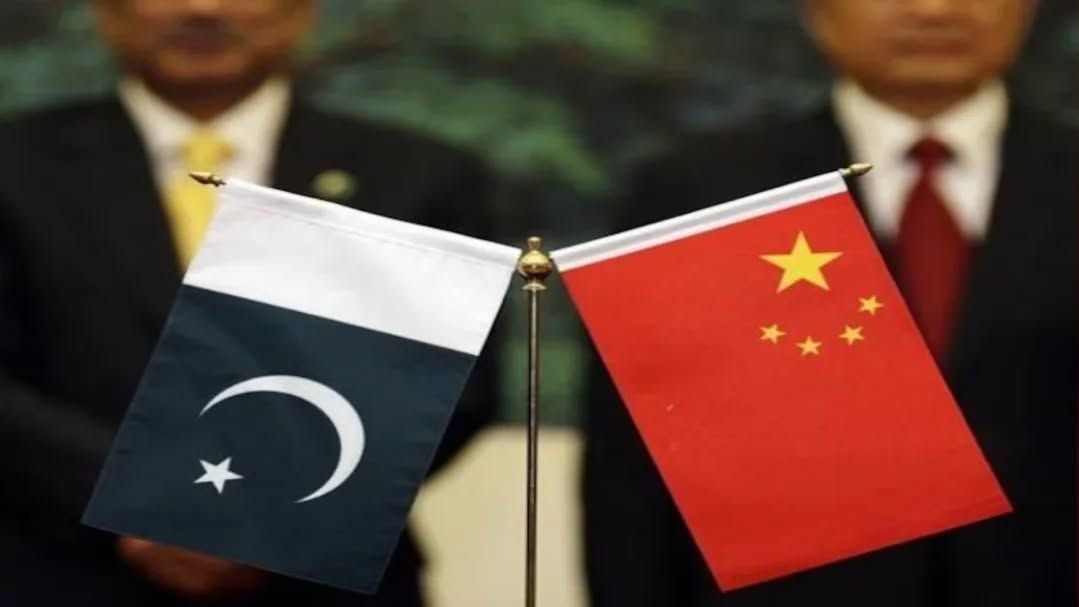
The Pakistani community in China is undergoing a gradual transformation. For decades, its most familiar face has been that of an international student pursuing higher education. However, that picture no longer tells the whole story.
Today, Pakistanis in China include researchers, entrepreneurs, traders, engineers and business professionals. Many are also building long-term careers and professional networks. As a result, the relationship between education and professional development is taking on a new dimension.
According to the Consulate General of Pakistan in Chengdu, nearly 29,000 Pakistani students were officially recorded in China as of December 2025. Around 6,000 of them received different forms of scholarships. This makes Pakistan one of the major contributors to China’s international student population.
However, students represent only one part of the growing Pakistani presence in China. Increasing professional engagement and business activity are creating a more diverse community.
Pakistani Students Continue to Build Academic Links
Education remains a major foundation of Pakistan-China relations. Chinese universities attract thousands of Pakistani students across different academic disciplines.
The Embassy of Pakistan in Beijing reported around 27,000 Pakistani students in China in 2024. Approximately 7,000 received scholarships during that period. Later, the Chengdu consulate recorded nearly 29,000 students by December 2025.
These figures highlight the continued importance of educational exchanges between the two countries. Pakistani students pursue degrees in engineering, medicine, computer science, agriculture, business and other fields.
Moreover, Chinese universities provide opportunities for research and international academic collaboration. These experiences can help graduates develop professional connections beyond their university years.
However, the changing Pakistani community in China raises another important question: What happens after graduation?
Pakistani Researchers Are Building Careers in China
For some Pakistani graduates, completing a degree marks the beginning of a longer professional journey.
Muhammad Salman Nasir provides a notable example. According to Xinhua, he first arrived in China in 2017 for higher education. He later completed doctoral and postdoctoral studies at Xi’an Jiaotong University and Shanghai Jiao Tong University.
Today, Nasir works as an associate researcher at the State Key Laboratory of Engines at Tianjin University. His research focuses on clean energy and advanced technologies.
His work includes hydrogen production, carbon dioxide utilization, plastic waste recycling and renewable energy systems.
Furthermore, his professional journey reflects the opportunities that international academic collaboration can create. China has become more than an education destination in his case. It has also provided a platform for research and career development.
Such examples highlight the potential of stronger academic connections between Pakistan and China. They also demonstrate how international education can support long-term professional cooperation.
Pakistani Entrepreneurs Are Expanding Their Businesses
Alongside researchers, Pakistani entrepreneurs are establishing businesses in Chinese commercial centres.
Yiwu, in Zhejiang Province, offers an interesting example of this trend. The city is internationally known for its wholesale markets and global trade networks.
Pakistani entrepreneur Ali Kamran established a business presence in Yiwu while pursuing his PhD at Zhejiang University. In July 2025, he received a business licence for his company.
His company became Yiwu’s 10,000th foreign-funded business entity. This milestone also highlighted the city’s growing attraction for international entrepreneurs.
Kamran established a trade services company and a foreign trade company in 2025. He also developed a cosmetics brand.
His experience illustrates how academic opportunities and entrepreneurship can develop alongside each other. It also shows how Pakistani nationals can participate in China’s international business environment.
Moreover, such ventures can create connections between Pakistani entrepreneurs and Chinese suppliers, manufacturers and international markets.
Keqiao Shows the Diversity of Pakistani Professionals
Another important example comes from Keqiao, a major textile centre in Zhejiang Province.
According to Zhejiang government reporting in May 2026, more than 500 Pakistani residents live permanently in the district. In addition, Keqiao receives over 20,000 short-term Pakistani business visitors every year.
These figures represent the local Pakistani presence rather than the entire community in China.
Nevertheless, the range of professional activities in Keqiao offers a clear picture of its changing character.
Pakistani businessman Fida Muhammad has worked in textile foreign trade in the district for nearly 30 years. His fluency in Chinese and knowledge of the local market have supported his long-term business activities.
Meanwhile, Arbab Muhammad Tayyab has taken a different professional path. A former surgeon, he now works as an international mediator. He helps resolve disputes involving foreign residents and businesses.
Since 2018, nine foreign mediators in Keqiao have helped settle more than 210 international disputes.
Researcher Azim Uddin represents another dimension of the community. He operates a laboratory focused on composite materials and 3D printing technology. His work includes medical materials and textile filter membranes.
These examples show that Pakistanis in China are contributing to several professional sectors. Their activities now extend beyond education and traditional trading.
Professional Networks Are Creating New Opportunities
As the Pakistani community expands, institutional support is also becoming more organised.
In January 2026, the Embassy of Pakistan in Beijing organised a job fair for Pakistani students and professionals. The initiative connected Pakistani talent with Chinese enterprises.
According to the Press Information Department, nearly 2,000 people participated online and in person. A total of 372 Pakistani candidates registered. Nearly 100 also participated in initial on-site interviews.
The participating Chinese state-owned enterprises represented sectors such as energy, infrastructure and engineering.
Importantly, the embassy described the initiative as a pilot project. Its purpose was to identify Pakistani professionals for opportunities in Chinese overseas projects.
Therefore, the initiative does not establish that all participating candidates secured employment in China. Instead, it demonstrates an effort to connect Chinese enterprises with skilled Pakistani talent.
The embassy also strengthened professional networking through its Pakistan Professionals and Students Forum.
In May 2026, it hosted the third edition of the forum under the theme “STEM Connect: Innovation, Mentorship, and Collaboration.”
The event brought together Pakistani students, researchers, academics and professionals from across China. Participants joined seven mentorship groups covering artificial intelligence, computer science, engineering, agriculture, materials science and energy.
Furthermore, the forum encouraged research collaboration, professional mentorship and career development.
These initiatives reflect a growing emphasis on professional identity and cooperation within the Pakistani community.
Mandarin Skills Are Becoming a Professional Advantage
Language plays an important role in this changing relationship.
For Pakistani students and professionals, learning Mandarin can improve communication and workplace integration. It can also help them understand Chinese business practices and professional culture.
The January 2026 job fair highlighted the value of combining technical education with Chinese-language proficiency and cultural understanding.
This combination can benefit Chinese enterprises working in Pakistan and other international markets.
For example, a Pakistani professional who understands both Chinese business practices and Pakistan’s local environment can help companies manage communication and coordination.
Similarly, traders with strong Mandarin skills can develop better relationships with suppliers and business partners.
Therefore, language proficiency can become an important form of professional capital. It can strengthen the role of Pakistanis as links between the two economies.
Opportunities Also Come With Legal and Practical Challenges
Despite these opportunities, building a career in China is not automatic after graduation.
International students must follow the country’s employment, residence and immigration requirements. Their student status does not automatically provide permission to work or establish a business.
The Consulate General of Pakistan in Chengdu also advises Pakistani students to follow Chinese regulations. Its guidance specifically warns against unauthorised employment and business activities during student status.
However, China has separate procedures for eligible international graduates seeking employment.
For example, Shanghai’s official guidance outlines a work-permit route for qualifying foreign university graduates. Applicants must meet specific conditions, including relevant academic qualifications and a confirmed employer.
This distinction is important for students planning their professional futures.
Some graduates return to Pakistan after completing their studies. Others pursue research, join international projects or establish businesses. Meanwhile, some seek opportunities in other countries.
Consequently, there is no single path for Pakistani graduates in China. Their experiences depend on qualifications, career goals and available opportunities.
A Geographically Diverse Pakistani Community
The Pakistani presence in China also extends across several cities and economic centres.
Beijing attracts students, researchers and professionals because of its universities and diplomatic institutions. Similarly, Tianjin has become an important location for Pakistani researchers.
Meanwhile, Yiwu and Keqiao attract traders, entrepreneurs and business visitors through their international markets.
Other commercial centres, including Guangzhou, also provide opportunities for Pakistani business communities.
This geographical diversity reflects the different reasons Pakistanis choose to live and work in China.
Students follow universities and academic programmes. Researchers seek laboratories and scientific opportunities. Entrepreneurs explore markets and supply chains.
Likewise, traders establish connections with manufacturers and international buyers.
As a result, the Pakistani community does not revolve around one city or a single professional sector.
Beyond Education: A New Dimension of Pakistan-China Relations
The changing Pakistani community in China represents an important development in bilateral people-to-people relations.
Nearly 29,000 Pakistani students were officially recorded in China at the end of 2025. However, alongside this student population, researchers, entrepreneurs, traders and professionals continue to expand their presence.
Their experiences demonstrate the growing connections between education, research, business and professional development.
Moreover, these networks can contribute to stronger economic and institutional links between Pakistan and China.
For Pakistan, the long-term value of this development lies in the skills, experience and professional relationships that its citizens build abroad. These connections can support research collaboration, trade, investment and knowledge exchange.
The traditional image of a Pakistani student travelling to China for a degree and returning home remains relevant. However, it no longer describes every experience.
For an increasing number of Pakistanis, China is also becoming a place to establish businesses, pursue research and develop professional careers.
The next challenge will be to turn these growing connections into sustainable opportunities. Stronger institutional support and professional cooperation can help achieve that goal.
Ultimately, the changing Pakistani community in China reflects a broader evolution in Pakistan-China relations. The partnership is growing not only through governments and economic projects, but also through the people who build lasting connections between the two countries.
Read More Articles :
Pakistan Highlights SCO Cooperation on Sustainable Development