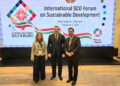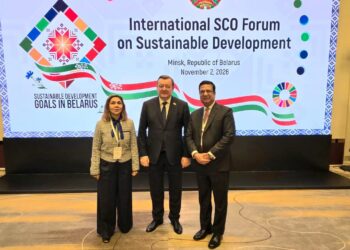

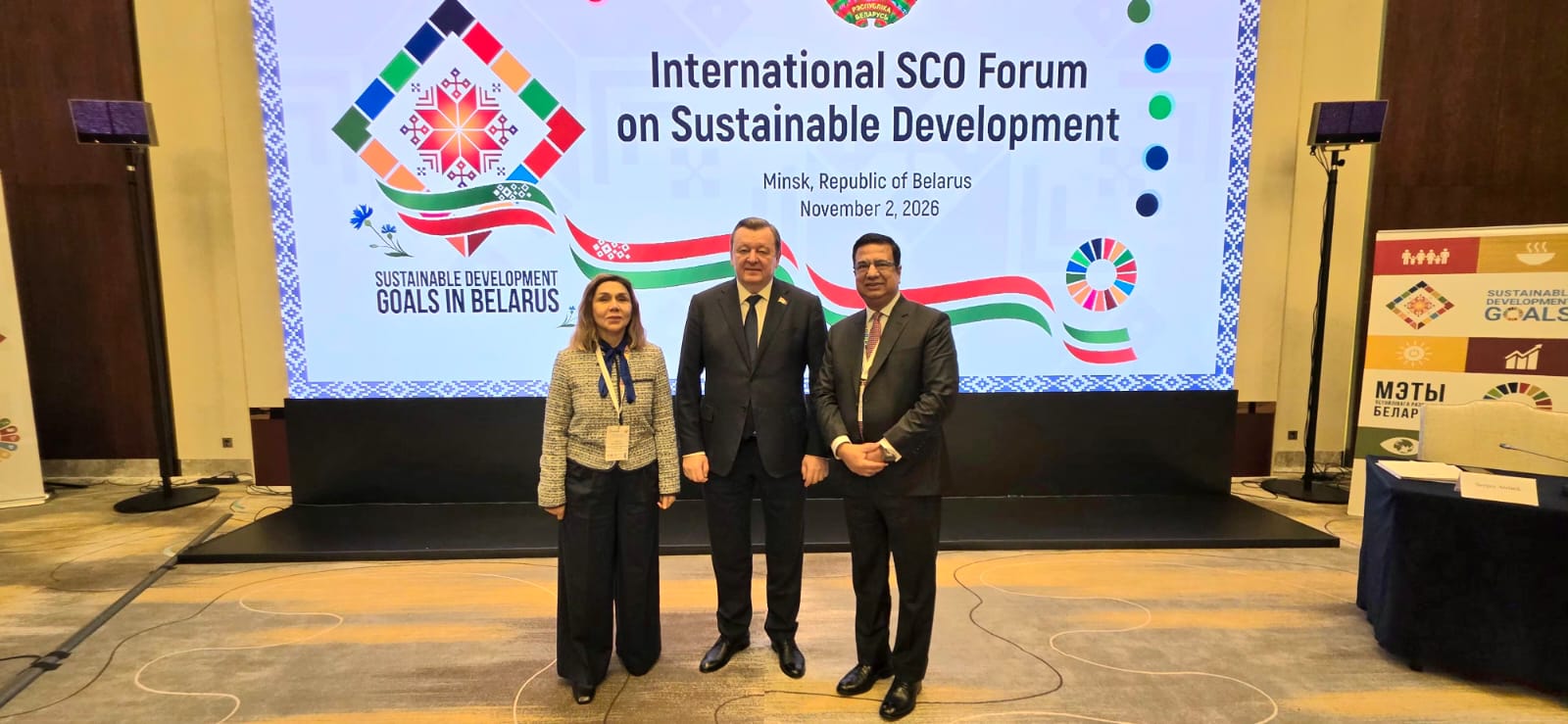
Pakistan has highlighted the importance of regional partnerships and practical cooperation at the International Shanghai Cooperation Organization (SCO) Forum on Sustainable Development, held in Minsk, Belarus, on November 2.
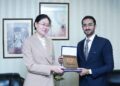
Khalid Taimur Akram, Executive Director of the Pakistan Research Center for a Community with Shared Future (PRCCSF), participated in the international gathering, which brought together more than 250 representatives from SCO member states and international institutions.
The participants included national coordinators for the United Nations Sustainable Development Goals (SDGs), representatives of the SCO Secretariat, UN agencies, diplomatic missions, development partners, researchers, academics and business leaders.
Organised by Belarus’s Ministry of Foreign Affairs with support from the United Nations Development Programme (UNDP) in Belarus, the forum provided a platform to discuss regional development priorities and ways to accelerate progress towards the UN 2030 Agenda.
Pakistan Calls for Practical Outcomes from Regional Cooperation
Speaking to Gwadar Pro, Akram stressed that regional dialogue and shared commitments must translate into practical initiatives and measurable development results.
He identified several priority areas for stronger cooperation among SCO countries, including expanding trade and investment links, strengthening knowledge exchange, promoting technology partnerships and developing sustainable infrastructure.
He also highlighted youth empowerment and people-to-people connectivity as important elements of long-term regional development.
According to Akram, closer cooperation across these areas could help countries address shared economic, technological, environmental and social challenges while creating new opportunities for sustainable growth.
His remarks reflected the importance of connecting regional policy discussions with practical cooperation among governments, businesses, research institutions and communities.
SCO Secretary-General Highlights Sustainable Development Priorities
SCO Secretary-General Nurlan Yermekbayev also attended the forum and addressed its plenary session.
He described sustainable development as an important area of the organisation’s work, highlighting opportunities for member states to expand cooperation in healthcare, education, energy, environmental protection, climate action, green development, science and innovation.
Yermekbayev noted that the SCO’s development strategy for 2026–2035 and its sector-specific cooperation documents provide a framework for advancing these priorities.
He also highlighted the alignment between the organisation’s development objectives and the United Nations 2030 Agenda.
The Secretary-General discussed an initiative proposed by Russia to establish an SCO Council on Sustainable Development. He said the SCO Secretariat was ready to facilitate discussions and consultations on the proposal and support its implementation if member states reached a consensus.
A dedicated session during the forum examined the proposed council’s possible structure, functions and coordination arrangements. The discussions involved national SDG coordinators, representatives of national regulatory bodies and the SCO Secretariat.
The proposed mechanism could provide a platform for sharing expertise, coordinating national approaches and supporting joint sustainable-development initiatives across the region. However, the initiative remained under discussion and was not announced as an established council.
Business Sector’s Role in Achieving Sustainable Development Goals
The business community also featured prominently in the forum’s discussions, particularly during a thematic session on sustainable-development regulation and the private sector’s contribution to achieving the SDGs.
The session was moderated by Maria Karas, Executive Director of the UN Global Compact Network Belarus.
She highlighted the importance of transparent regulatory frameworks, environmental responsibility and social standards in supporting sustainable economic development.
Participants discussed how businesses and financial institutions could integrate environmental, social and governance (ESG) principles into their strategies and contribute to wider development objectives.
Representatives from Belarusian businesses and financial institutions shared examples of their sustainability initiatives.
Andrei Vushev, Deputy Chairman of the Board of Sber Bank, discussed the financial sector’s role in supporting the SDGs and integrating ESG principles into long-term business strategies.
Olga Bezvoditskaya of the cosmetics manufacturer MODUM presented the company’s approach to incorporating sustainable-development goals into its business operations.
Pavel Solovyov of telecommunications company A1 also outlined its environmental strategy, including a target to obtain 50 percent of its energy from renewable sources by 2027.
These discussions highlighted the importance of involving the private sector in translating international sustainability commitments into business practices and measurable results.
UNDP Emphasises Green and Digital Transformation
The participation of UNDP and other international development partners reinforced the importance of multilateral cooperation in advancing sustainable development.
In remarks delivered at the forum, UNDP Resident Representative in Belarus Renfei Liu said progress towards the SDGs remained uneven despite significant development achievements across SCO member states.
He pointed to economic uncertainty and rapid technological change as challenges affecting livelihoods and development prospects.
Liu stressed that no single country had all the solutions needed to achieve sustainable development. He called for stronger international partnerships through which countries could exchange expertise, technology and practical experience.
He also identified green transition and digital transformation as two interconnected priorities shaping the future of sustainable development.
Digital technologies, including artificial intelligence and data-driven systems, can improve public services, increase productivity and create opportunities for businesses. However, their growing energy requirements and environmental footprint also require attention.
Liu warned that gaps in digital access, skills and governance could leave some communities and countries behind.
He therefore called for approaches that combine digital development with sustainable energy, innovation and environmental protection.
UNDP’s remarks also highlighted the importance of integrating the SDGs into national planning and policymaking rather than treating them as separate international commitments.
Regional Connectivity and Inclusive Growth Remain Key Priorities
The forum placed regional connectivity, economic cooperation and human capital development among the important foundations of sustainable growth.
The SCO brings together ten member states with a combined population exceeding 3.4 billion people, representing more than 42 percent of the world’s population.
This scale creates significant opportunities for trade, investment, technological partnerships and cross-border economic cooperation. However, differences in national development priorities and economic systems also make coordination and knowledge-sharing important.
Participants discussed how stronger regional partnerships could support inclusive economic growth and help countries benefit from their complementary strengths.
Infrastructure development, innovation, digital connectivity and cooperation among businesses and research institutions were identified as areas with considerable potential.
The discussions also highlighted the importance of ensuring that economic progress improves living standards and creates opportunities across different communities and regions.
Post-2030 Development Agenda Also Comes into Focus
With the 2030 deadline for the current UN Sustainable Development Agenda approaching, the forum also provided an opportunity to consider priorities for the next phase of international development cooperation.
UNDP’s Renfei Liu noted that discussions on the global development framework beyond 2030 are expected to begin in 2027.
He stressed that member states should shape the next agenda through broad consultations and regional consensus, with a continued commitment to leaving no one behind.
For SCO countries, closer coordination could help identify common priorities while respecting their different national circumstances and development approaches.
The discussions in Minsk therefore covered both immediate development challenges and the longer-term institutional cooperation needed to sustain progress beyond 2030.
Pakistan Seeks Stronger Engagement Across the Eurasian Region
For Pakistan, participation in the Minsk forum provided an opportunity to share its perspective on sustainable development and strengthen engagement with SCO member states and international development partners.
Akram’s contribution highlighted areas where Pakistan and other countries across the Eurasian region could expand cooperation, particularly in trade, investment, technology, infrastructure, youth development and people-to-people exchanges.
Such partnerships can support broader regional connectivity while helping countries address common development challenges.
The forum concluded with renewed calls for coordinated action, stronger institutional partnerships and practical cooperation to advance the Sustainable Development Goals.
Its discussions reinforced a central message: achieving sustainable development requires more than policy commitments. It depends on effective partnerships, knowledge-sharing, investment and coordinated initiatives that deliver tangible benefits for people across the SCO region.
Read More Articles:
Ishaq Dar and Iran’s Araghchi Discuss Regional Peace
Pakistani Cadets Win Silver at China’s International Army Cadets Week