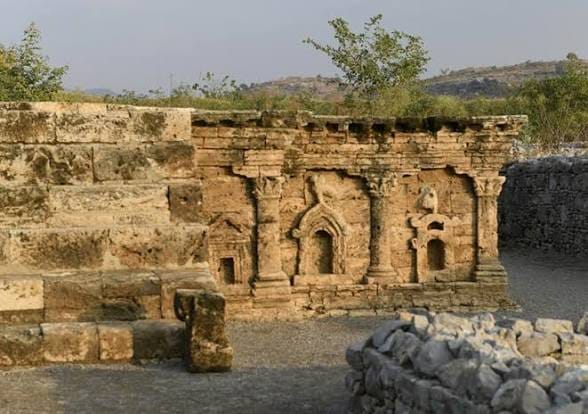
Khyber Pakhtunkhwa (KP) is strengthening cultural cooperation with China through digital preservation projects, museum partnerships and international exhibitions aimed at protecting and promoting its rich Gandharan heritage.
The provincial Directorate General of Archaeology and Museums is working with Chinese institutions to document historical artefacts through digital cataloguing, three-dimensional (3D) scanning and digital modelling. The collaboration includes a digital heritage partnership with China’s Tsinghua University and plans to organise further exhibitions of Gandharan art in different parts of China.
The initiative comes as Pakistan seeks to protect thousands of archaeological sites and valuable collections from looting, illegal excavation and antiquities smuggling.
Fawad Khan, Assistant Director at the KP Directorate General of Archaeology and Museums, discussed the province’s preservation efforts in an interview with China Economic Net on the sidelines of the ninth Silk Road (Dunhuang) International Culture Expo.
He said the directorate manages 15 museums and thousands of archaeological sites across the province. The Peshawar Museum alone holds approximately 10,000 Gandharan sculptures, highlighting the scale of the province’s cultural heritage.
Tsinghua University Partnership Introduces Digital Preservation Technology
A key part of the cooperation is the partnership between the KP Directorate General of Archaeology and Museums and Tsinghua University, established in March 2025.
According to an announcement published on the provincial archaeology directorate’s website, the collaboration aims to introduce advanced digital technologies into heritage documentation and preservation.
The project uses 3D scanning, digital modelling and visual archiving tools to document artefacts and historical sites across the province.
These technologies can create detailed digital records of sculptures, architectural remains and other archaeological objects. Such records provide researchers with opportunities to examine historical materials without repeatedly handling fragile original artefacts.
Digital archives can also make collections more accessible to researchers, students and the wider public. They provide a way to preserve information about historical objects and support future research, education and virtual exhibitions.
The provincial directorate said the partnership would help align heritage management in Khyber Pakhtunkhwa with international practices in digital archaeology and cultural preservation.
Pakistan and China Strengthen Cooperation Against Antiquities Smuggling
Protecting archaeological treasures from illegal trade remains another important priority for Pakistan and China.
Fawad Khan identified looting, illegal excavation and antiquities smuggling among the major challenges facing the province’s archaeological sector.
To address these issues, Pakistan and China have developed a broader framework for cooperation in protecting cultural property.
In 2022, the two governments signed an agreement to prevent the theft, clandestine excavation and illicit import and export of cultural property. The agreement provides a basis for cooperation against the illegal movement and trade of historical artefacts.
The partnership was further strengthened in October 2025, when Pakistan’s Federal Minister for National Heritage and Culture, Aurangzeb Khan Khichi, and China’s Cultural Counsellor Chen Peng signed an agreement to strengthen exchanges and cooperation in cultural heritage.
The 2025 agreement reaffirmed both countries’ commitment to protecting and promoting their historical legacies. It also built on the 2022 framework for preventing illicit trafficking of cultural property.
These arrangements provide a foundation for closer cooperation between relevant institutions, including efforts to protect archaeological collections, exchange expertise and strengthen the preservation of cultural assets.
Gandharan Art Reaches Chinese Audiences Through International Exhibitions
Alongside digital preservation, Pakistan and China have used cultural exhibitions to introduce Gandharan civilisation to wider international audiences.
One of the most significant initiatives was the exhibition titled Gandhara Heritage along the Silk Road: A Pakistan-China Joint Exhibition, which opened at the Palace Museum in Beijing on March 15, 2023.
The exhibition brought together 203 sets of cultural artefacts, including 173 objects from seven Pakistani museums and 30 from the Palace Museum.
The Pakistani collections came from the National Museum of Pakistan, Taxila Museum, Peshawar Museum, Islamabad Museum, Dir Museum, Swat Museum and Hund Museum.
The exhibits included Buddhist sculptures, stone carvings, depictions of Buddha’s life, architectural components of stupas, gold and silver objects and jewellery.
Dating from different historical periods, the collections demonstrated the artistic diversity of Gandharan civilisation and its connections with other cultures along the ancient Silk Road.
The exhibition also highlighted the historical relationship between Gandhara and regions that are now part of western China. Some objects held by the Palace Museum originated from the ancient Gandharan region and reached western Tibet through historical cultural and trade routes.
The Beijing exhibition later travelled to other Chinese cities, including Shenzhen, where the collections were displayed at Shenzhen Museum in December 2023. The exhibition continued to introduce Chinese visitors to the historical influence and artistic significance of Gandharan culture.
Fawad Khan said the provincial directorate was planning further exhibitions at museums in different parts of China to promote Gandharan heritage and strengthen cultural exchanges.
Gandhara’s Historical Links with the Silk Road
Gandhara was an important ancient cultural and commercial region centred largely around present-day northwestern Pakistan, including the Peshawar Valley, Swat and Taxila.
Its location along historical trade routes made it a meeting point for different civilisations, artistic traditions and religious influences.
Gandharan art developed through interactions between South Asian, Central Asian and Mediterranean cultures. Its sculptures and architectural traditions reflected a distinctive combination of Buddhist themes and artistic influences associated with ancient Greek and Roman traditions.
The region also played an important role in the spread of Buddhism across Central Asia and towards China.
Fawad Khan highlighted the historical connections between Gandhara and Chinese cultural centres, including Dunhuang, Kucha and the Kizil Caves. He linked these connections to the movement of Buddhism, trade and artistic traditions along the Silk Road.
These historical exchanges provide an important cultural foundation for contemporary Pakistan-China cooperation. They also offer opportunities for joint archaeological research, exhibitions and academic exchanges.
Research and exhibitions can help audiences understand how ancient communities exchanged religious ideas, artistic techniques and commercial goods across the Eurasian region.
China-Pakistan Cooperation Supports Heritage Preservation
Fazal ur Rahman, Executive Director of the Pakistan Council on China, described cultural heritage preservation as an important area of cooperation between the two countries under the broader China-Pakistan relationship.
He said China’s experience and technological capabilities in heritage preservation could help Pakistan improve the protection and promotion of its historical collections.
The collaboration offers opportunities to combine Pakistan’s archaeological resources and historical expertise with Chinese capabilities in digital documentation, modelling and museum presentation.
Beyond technology transfer, cooperation can also support professional training, research partnerships and greater international visibility for Pakistan’s archaeological sites and museum collections.
Cultural heritage initiatives also complement the wider objectives of the China-Pakistan Economic Corridor (CPEC), which includes cooperation beyond infrastructure and economic development.
By promoting historical connections and cultural exchanges, both countries can strengthen people-to-people relations and introduce their shared heritage to younger generations.
International Research Partnerships Expand Digital Archaeology
Pakistan’s efforts to document Gandharan heritage also extend beyond its cooperation with China.
According to Fawad Khan, the provincial archaeology directorate has worked with Germany’s Ruhr University Bochum on digitally cataloguing Gandharan sculptures held at the Dir Museum.
An Italian archaeological mission has also maintained a long-standing presence in the province, contributing to archaeological research and the study of its historical sites.
These partnerships demonstrate the value of international academic cooperation in preserving archaeological collections and improving research standards.
Digital cataloguing can help institutions maintain organised records of artefacts, including their historical background, physical characteristics and museum locations. Combined with 3D scanning, it can provide researchers with more detailed documentation for comparative studies and conservation work.
For Khyber Pakhtunkhwa, cooperation with international universities and archaeological organisations offers an opportunity to strengthen institutional expertise and improve access to its cultural collections.
Gandharan Heritage Offers New Opportunities for Cultural Diplomacy
The growing cooperation between Pakistan and China highlights the role of cultural heritage in strengthening bilateral relations.
Pakistan’s Gandharan collections represent an important part of its historical identity and connect the country with wider developments in Asian art, Buddhism and ancient trade networks.
Through digital preservation, joint exhibitions and research partnerships, Pakistan can protect these historical resources while making them more accessible to international audiences.
For China, the collaboration provides opportunities to deepen cultural exchanges with Pakistan and highlight historical connections that developed through the ancient Silk Road.
As the two countries expand cooperation in heritage preservation, their efforts could also contribute to international research, museum development and the protection of cultural property against illegal trafficking.
The partnership therefore extends beyond the preservation of individual artefacts. It creates opportunities to document a shared history, strengthen academic ties and promote the cultural links that have connected Pakistan and China for centuries.
Read More Articles:
Pakistani Astronaut to Join China’s Shenzhou-24 Mission