
Chinese President Xi Jinping has said that China’s economic growth should be viewed as an opportunity for Europe rather than a source of concern. He called on China and European countries to prioritise cooperation and settle trade differences through dialogue and negotiation.
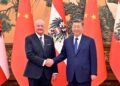
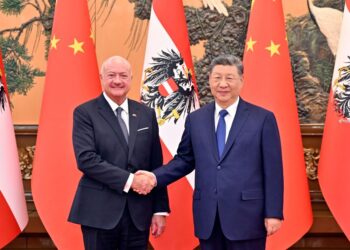
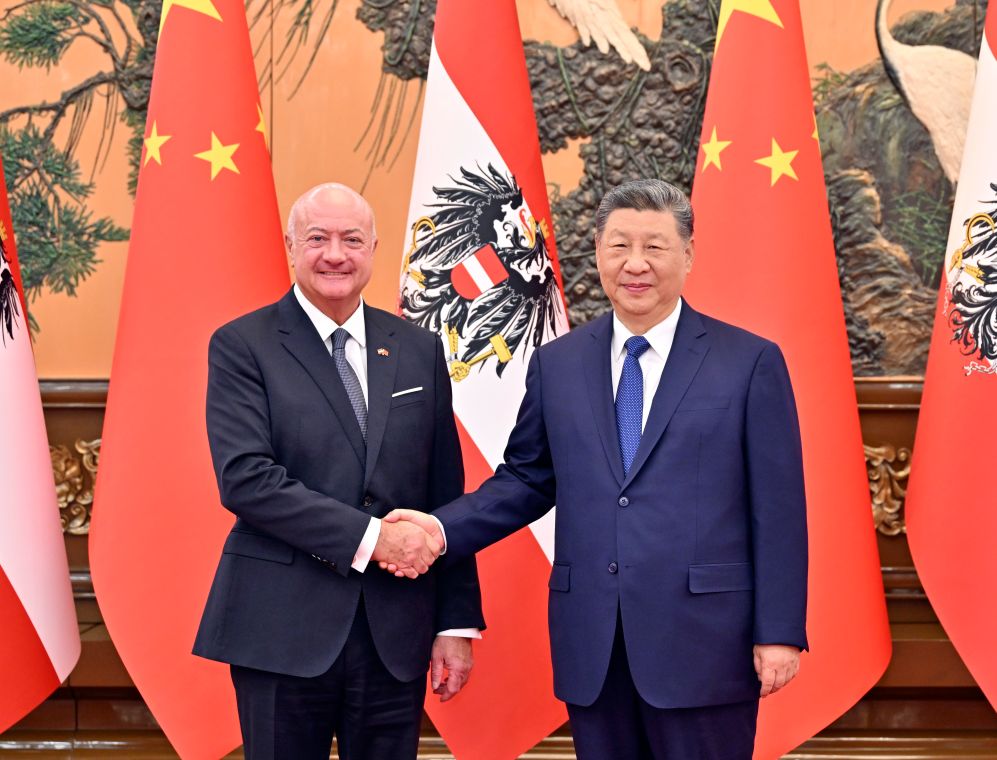
Xi made the remarks on Friday, November 6, during a meeting with Austrian Chancellor Christian Stocker at the Great Hall of the People in Beijing. Stocker was visiting China as part of an official trip focused on strengthening bilateral economic and political relations.
“A developing and growing China is not the source of Europe’s problems but a partner and companion that can help Europe address them,” Xi said.
He stressed that cooperation between China and Europe could create mutual benefits and support common development, particularly amid growing international uncertainty and economic tensions.
Xi Calls for Dialogue to Resolve Trade Disputes
Xi noted that unilateralism and protectionism were gaining momentum despite the broader trend towards international cooperation.
He said China and Austria should work together to uphold genuine multilateralism, support free trade and contribute to a fairer global governance system.
The Chinese president also urged both sides to strengthen political trust and maintain regular high-level exchanges. He said better communication could reduce misunderstandings and establish a stronger foundation for future cooperation.
Xi described trust and friendship as valuable features of China-Austria relations, noting that the two countries had maintained friendly ties despite differences in their political systems, histories, cultures and stages of development.
He added that continued engagement would help both countries strengthen their partnership and address shared international challenges.
China Offers New Opportunities in Technology and Industry
Xi highlighted China’s economic priorities under its 15th Five-Year Plan, covering the period from 2026 to 2030.
He said China would focus on developing emerging industries, upgrading traditional industrial sectors and expanding market access, particularly in the services sector.
Describing the next phase of China’s economic opening as “China Opportunity 2.0”, Xi said it would create opportunities not only through market access but also through innovation and technological development.
China is ready to expand practical cooperation with Austria in several emerging sectors, including:
- New energy vehicles (NEVs)
- Artificial intelligence
- Digital economy
- Green development
- Advanced industrial technologies
Xi said cooperation in these areas could create new drivers of economic and trade growth while supporting industrial modernisation in both countries.
He also called for greater cultural and educational exchanges, easier movement of people and stronger connections between the two populations.
Austria Supports Stronger Strategic Partnership with China
Chancellor Christian Stocker welcomed closer cooperation and reaffirmed Austria’s commitment to strengthening its friendly strategic partnership with China.
He said the two countries had maintained relations based on trust and mutual support throughout the 55 years since establishing diplomatic ties.
Stocker also reiterated Austria’s adherence to the one-China policy.
He said Vienna was ready to expand cooperation with Beijing in trade, investment, science, technology and innovation. He also highlighted opportunities to strengthen cultural, tourism and other people-to-people exchanges.
On relations between China and the European Union, Stocker said Austria supported their further development. He called for both sides to address economic and trade differences through candid dialogue and negotiation.
The Austrian chancellor also expressed his country’s willingness to work with China on multilateral cooperation, sustainable development, climate change and other global challenges.
Trade Imbalance Remains a Key Issue
Stocker’s visit also highlighted the importance of addressing the trade imbalance between Austria and China.
According to Austria’s Federal Chancellery, China is an important economic partner, with approximately 650 Austrian companies operating through around 900 establishments in the country.
However, bilateral trade remains uneven. Austria imported goods worth approximately 17.5 billion euros from China in 2025, while its exports to the Chinese market reached around 5 billion euros.
The Austrian government estimates that untapped export potential for Austrian businesses in China could reach 5.4 billion euros by 2030.
Stocker travelled with around 50 representatives from Austrian businesses, including companies active in engineering, manufacturing, technology and industrial equipment. His government said the visit aimed to help Austrian businesses explore new opportunities and strengthen existing commercial partnerships.
The Austrian side also emphasised the need for fair competition and balanced economic relations as trade cooperation expands.
China and Austria Sign Cooperation Documents
During Stocker’s visit, the two countries also took steps to expand practical cooperation.
Chinese Premier Li Qiang held separate talks with the Austrian chancellor on Friday. Li called for stronger economic engagement and highlighted opportunities in new energy, artificial intelligence, the digital economy and advanced manufacturing.
He also said China was willing to import more high-quality Austrian products and support the expansion of bilateral trade. In return, he called for a fair and non-discriminatory business environment for Chinese companies investing in Austria.
Following their meeting, Li and Stocker witnessed the signing of cooperation documents covering economic and trade matters, social security and other areas.
The discussions reflected a shared interest in strengthening business links and creating more opportunities for companies in both countries.
China-Austria Relations Mark 55 Years
The meetings took place as China and Austria mark the 55th anniversary of diplomatic relations in 2026.
Since establishing diplomatic ties, the two countries have developed cooperation across trade, investment, science, technology, education and culture.
The year also marks 60 years of official economic relations between the two countries. Austria’s first trade office in Beijing opened in 1966, providing an early foundation for commercial engagement.
Both governments have expressed interest in building on these longstanding connections and expanding cooperation into emerging industries.
Xi’s latest remarks underline China’s position that stronger engagement with European countries can support economic growth, technological innovation and international cooperation.
For Austria, closer ties with China offer opportunities to expand exports, attract investment and strengthen its position in one of the world’s largest markets. Both sides have indicated that dialogue and mutual benefit will remain important to managing differences and advancing their partnership.
Read More Articles:
Xi Jinping Votes in Beijing Local Election
KP and China Join Hands to Preserve Gandharan Heritage
Pakistan Highlights SCO Cooperation on Sustainable Development