
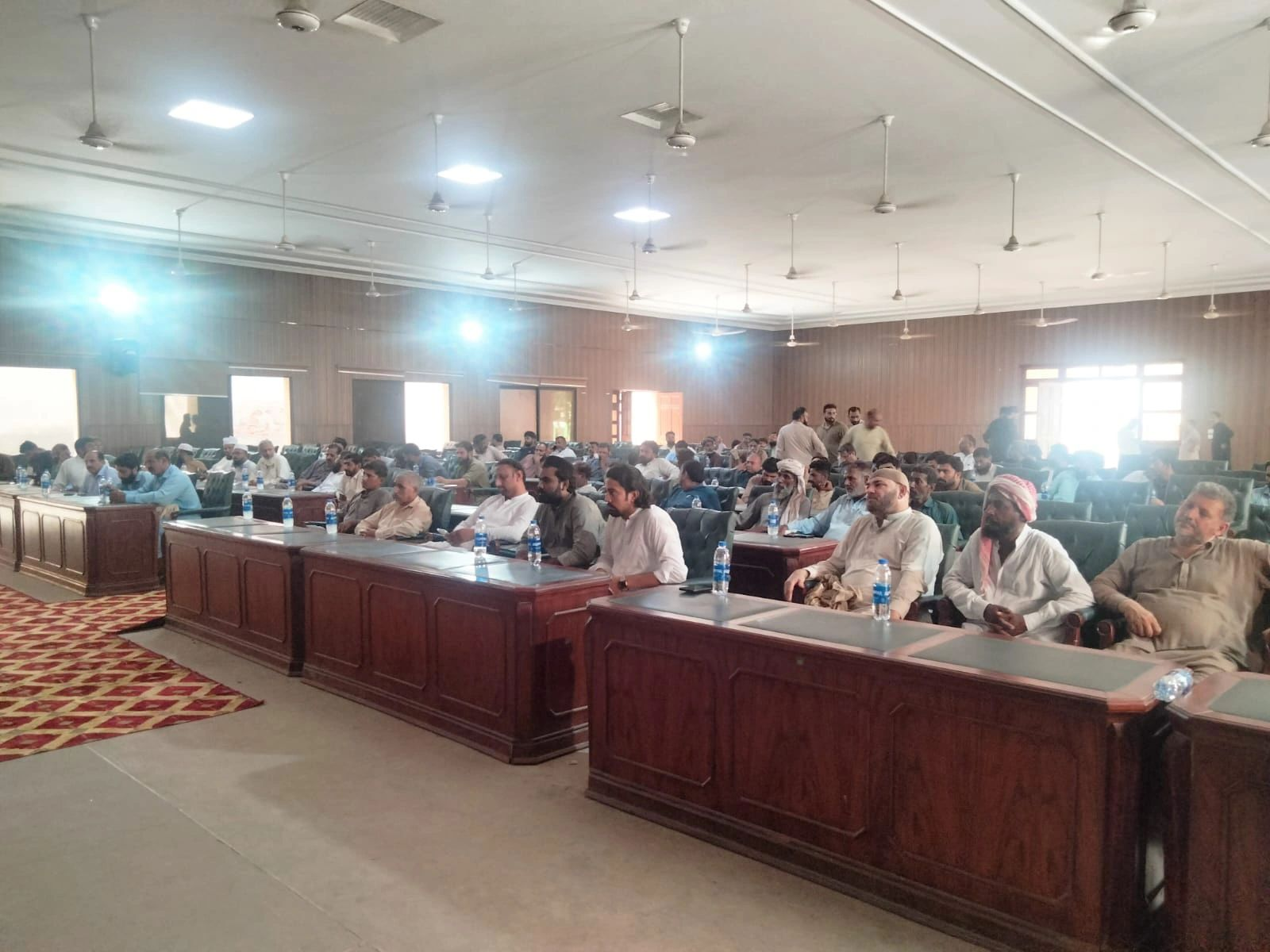
The Trade Development Authority of Pakistan (TDAP) has completed a five-day seminar series to help farmers meet China’s new maize import requirements and improve sesame production through good agricultural practices.
The training sessions took place from July 27 to 31 in Okara, Sahiwal, Khanewal, Vehari, and Layyah. Farmers, exporters, agricultural experts, and government officials participated in the program.
TDAP organized the seminars with support from the Punjab Agriculture Department, the Directorate of Plant Protection, the Maize & Millet Research Institute, and the Nuclear Institute for Agriculture and Biology (NIAB).
Focus on China’s New Maize Protocol
The seminars focused on implementing the China maize export protocol, which introduces stricter phytosanitary and quality standards for Pakistani maize exports.
Experts explained China’s import requirements and guided participants on meeting the new standards.
In addition, they discussed aflatoxin control, Khapra beetle monitoring, and proper pre- and post-harvest practices.
Officials said these measures will reduce the risk of export shipments being rejected and improve access to China’s agricultural market.
Improving Sesame Production
The program also promoted good agricultural practices (GAP) to improve sesame production.
Experts introduced high-yielding and climate-smart sesame varieties. They also explained methods to increase productivity and improve product quality.
Furthermore, participants learned techniques to strengthen food safety and meet international quality standards.
Value Addition for Higher Exports
TDAP encouraged farmers and exporters to focus on value-added products instead of exporting raw commodities alone.
Experts recommended better processing, grading, packaging, and branding to increase export earnings.
Moreover, they said value addition can improve Pakistan’s competitiveness in international markets.
Strengthening Agricultural Extension Services
Another key objective was to build the capacity of district agricultural extension officers.
The program provided updated technical knowledge so field officers can train farmers on export-oriented production methods.
As a result, officials expect wider adoption of international standards and better compliance throughout the production cycle.
Supporting Agricultural Exports
TDAP said the initiative will help Pakistani farmers meet China’s import requirements while improving the quality of maize and sesame exports.
Consequently, stronger compliance with international standards is expected to expand Pakistan’s agricultural exports and strengthen trade with China.
Read More Articles:
Geological Corridor Brings Cretaceous to Life