
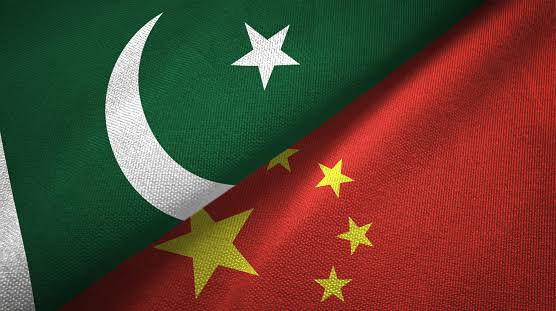
When Pakistan-China relations are discussed, the conversation usually turns to trade, infrastructure, defence or diplomacy. Literature rarely gets the same attention.
Yet books have been crossing the Pakistan-China border for decades. Chinese readers have encountered Pakistani poetry, short stories and novels through translation, while Pakistani readers have gained access to Chinese literature in Urdu.
The exchange is becoming more organised as well. A joint translation project now aims to publish 100 major works from Pakistani and Chinese literature, giving literary exchange a scale that goes beyond occasional book launches.
From Iqbal to Faiz
Pakistan’s literary presence in China is not new. Allama Muhammad Iqbal was among the earliest major Pakistani literary figures introduced to Chinese audiences. His poetry began appearing in Chinese literary publications in the 1950s, giving Chinese readers access to a writer whose work combined philosophy, spirituality and questions of identity.
The connection continued decades later. In 2021, a Chinese-language booklet containing selected verses of Iqbal was launched at the Pakistani Embassy in Beijing. The event brought together Chinese academics of Urdu literature and students from the Urdu department at Beijing Foreign Studies University and formed part of celebrations marking 70 years of Pakistan-China diplomatic relations.
Faiz Ahmed Faiz has also become an important part of that literary bridge. Professor Zhang Shixuan, better known by his literary name Intikhab Alam, translated Faiz’s complete Nuskha Hye Wafa into Chinese. The translation was launched at the Pakistani Embassy in Beijing in 2021 as part of the 70th-anniversary celebrations.
These projects show that Pakistani literature in China is not limited to contemporary commercial publishing. Some of the country’s most influential poets are being introduced through carefully produced translations by Chinese scholars who have spent years studying Urdu.
A 100-Book Project Changes the Scale
The biggest development is the formal China-Pakistan Classic Translation and Publication Project.
Under the wider mutual translation programme, Pakistan and China agreed to translate and publish major literary works from both countries. Reporting in 2023 described the Pakistan-China project as involving 100 books, while an earlier agreement had envisaged publishing 50 important works over five years. The larger project subsequently produced its first batch of titles for Chinese and Pakistani readers.
The first Chinese publication batch was unveiled at the 29th Beijing International Book Fair in June 2023. Five Pakistani titles were published in Chinese, alongside five Chinese works selected for the Pakistani side.
The Pakistani selection was deliberately broad. It included Pakistani Literature, Selected Pakistani Literature, Sorrows of Sarasvati, I Can Still Live Like the Wind: An Anthology of Pakistani Women’s Writing and Zeenat. The books were published in China by different publishing houses, including Yilin Publishing House and China Intercontinental Press.
Ten Languages in One Collection
One of the most interesting examples is Pakistani Literature (Year 1994, Vol. 2-3).
The collection contains more than 30 short stories selected by the Pakistan Academy of Letters. More importantly, those stories represent 10 Pakistani languages, including Urdu, Punjabi, Sindhi and Pashto. The collection was later listed among Tencent’s good books of 2023.
That detail matters because Pakistan’s literary identity is much broader than Urdu alone. Regional languages carry their own histories, social experiences and cultural traditions, yet international readers often encounter Pakistan through a much narrower set of voices.
For Chinese readers, a multilingual collection can therefore provide a more complicated picture of the country. The stories cover ordinary lives and different social settings rather than presenting Pakistan only through politics or international affairs.
Another title in the project, I Can Still Live Like the Wind, brings together the work of more than 60 Pakistani women writers. That gives Chinese readers access to another part of Pakistan’s literary landscape that could easily be missed in a narrower selection of famous male poets.
The Exchange Works Both Ways
The relationship is not simply about Pakistani books travelling to China.
Chinese literature has also been translated into Urdu. In 2025, three Chinese works; Afsha-e-Raaz (Decoded), Darya-e Hulan ki Kahanian (Tales of Hulan River) and Main Hua Mulan Hoon (I Am Hua Mulan), were launched in Urdu through the Pakistan Academy of Letters.
The publishing exchange is also moving beyond major literary classics. At the 2025 Beijing International Book Fair, Pakistani publisher Ferozsons said it had already translated around 45 Chinese children’s illustrated books into Urdu through cooperation with Chinese publishers, including CITIC Press Group. The books cover subjects such as weather, seasons, food and Chinese culture.
That is significant because children’s literature reaches an audience very different from university scholars or serious literary readers. A child reading an Urdu translation of a Chinese story may encounter Chinese culture long before they encounter it through diplomacy or history.
Literature Is Becoming Part of Cultural Diplomacy
The literary exchange has also gained an institutional dimension.
Pakistan Academy of Letters has signed two memorandums of understanding with Chinese partners. By early 2025, the academy said three Chinese books had been translated into Urdu, with two more planned, while China had published translations of five Pakistani books.
The two countries are also using literary events to keep the exchange visible. In April 2026, during the 75th anniversary year of Pakistan-China diplomatic relations, the Pakistan Academy of Letters participated in a World Book Day event focused on book friendship, cultural harmony and academic exchange.
And the exchange is still producing new material. On September 10, 2026, the Chinese edition of Islamabad: The Biography was launched in Beijing. The book was presented as a way of introducing Chinese readers to the history, development and cultural character of Pakistan’s capital.
That is a useful example of how the literary relationship is moving beyond older canonical writers. Chinese readers can now encounter Pakistan through poetry, fiction, regional literature, women’s writing and books about contemporary Pakistani places and society.
What Does Pakistan Look Like Through These Books?
There is no single answer.
For one reader, Pakistan may appear through Iqbal’s philosophical poetry. For another, it may be Faiz’s political and humanist verse. Someone else may encounter Pakistan through a short story written in Punjabi or Sindhi, a woman’s perspective, or a book about Islamabad.
That diversity is one of literature’s greatest advantages as a form of cultural exchange. A news report usually focuses on an event. A novel or short story can spend pages on a family, a village, a relationship or an ordinary person’s ambitions.
Translation also creates its own challenges. Moving literature between Urdu, regional Pakistani languages, Chinese and sometimes intermediary languages requires choices about meaning, tone and cultural context. Earlier research on Iqbal’s reception in China has shown how translation can influence the way concepts in his poetry are understood by foreign readers.
That means the next stage of the Pakistan-China literary relationship should not simply focus on producing more books. It should also invest in skilled translators, direct language-to-language translation, regional Pakistani literature and stronger links between publishers and writers.
A Different Kind of Pakistan-China Connection
The economic and political relationship between Pakistan and China is measured in projects, investments and agreements. Literary exchange is harder to measure, but that does not make it insignificant.
A Chinese reader discovering Faiz or a Pakistani short-story writer is encountering Pakistan through imagination rather than a policy document. A Pakistani child reading a Chinese story in Urdu is doing the same in the opposite direction.
The foundation is already there: a 100-book translation project, five Pakistani titles in its first Chinese batch, more than 30 stories from 10 Pakistani languages in one collection, and dozens of Chinese works reaching Pakistani readers through Urdu.
The opportunity now is to make that exchange wider and more contemporary.
If more Pakistani literature reaches Chinese readers, Pakistan can be understood through more than its strategic importance. It can be seen through its languages, cities, villages, families, humour, conflicts and hopes. And Pakistan can learn to see China in much the same way.
That is where literature becomes more than a cultural side story. It becomes a quieter form of Pakistan-China diplomacy.
Read More Articles:
Why Chinese Beauty Brands Are Finding a New Market in Pakistan
Pakistan’s New Regional Role: What the Middle East Crisis Means for Islamabad
A Changing South Asia: Why China-India Engagement Matters for Pakistan?