

A high-level US delegation met with Pakistani officials in Islamabad on Friday to explore cooperation in critical minerals and mining, aiming to build secure and transparent global supply chains for American industries amid concerns over China’s dominance in the sector.
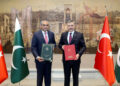
The delegation, led by Robert Louis Strayer II, President of the Critical Minerals Forum (CMF), held discussions with Finance Minister Muhammad Aurangzeb and other officials. Talks focused on strengthening supply-chain security, ensuring responsible investment, and advancing sustainable mineral development in Pakistan.
Strayer emphasised that the CMF seeks to reduce reliance on Chinese-controlled mineral resources by developing partnerships in emerging markets. He said the forum targets rare and niche metals such as copper and antimony while promoting technology transfer, intellectual property protection, and private-sector confidence.
He praised Pakistan’s STEM talent and strategic potential, noting that the country could emerge as a future hub for critical mineral processing and innovation. Accompanying the delegation, US Chargé d’Affaires Natalie Baker reaffirmed Washington’s support for American commercial engagement and highlighted the need for strong regulatory frameworks to attract investors.
Minister Aurangzeb welcomed the initiative, inviting the US to present a structured collaboration framework and highlighting Pakistan’s ongoing legal and regulatory reforms to facilitate responsible investment. He also underscored Pakistan’s balanced foreign relations, maintaining renewed ties with the US, an enduring partnership with China, and growing cooperation with Saudi Arabia.
Aurangzeb described the mineral sector as a “transformational opportunity” capable of shifting Pakistan from a consumption-driven to an export-led economy, helping reduce dependence on multilateral financing.
According to the Atlantic Council, critical minerals are vital for advanced technologies in energy, defence, and manufacturing, yet supply chains remain fragile and heavily concentrated in China. Strayer reiterated that Beijing’s dominance, built on state subsidies, vertical integration, and lower compliance standards, poses a strategic challenge for global supply security.
However, he cautioned that the high uncertainty of production costs and volatile mineral prices continues to deter new investment, emphasising the need for stable, transparent policies to attract international stakeholders.
Related stories: