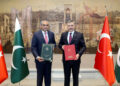


The State Bank of Pakistan (SBP) has partnered with the International Finance Corporation (IFC), the private sector arm of the World Bank Group, to expand local currency financing and strengthen private sector growth in Pakistan.
IFC to Invest Directly in Pakistani Rupees
Under an International Swaps and Derivatives Association (ISDA) agreement, the IFC can now invest directly in Pakistani rupees. This step will help manage currency risks more effectively and increase funding for key economic sectors.
SBP Governor Jameel Ahmad said the partnership would open new financing opportunities for local businesses and support long-term economic stability. “Promoting private sector growth is essential for Pakistan’s sustainable development,” he added.
Tackling Currency Volatility
Meanwhile, IFC Vice President and Treasurer for Treasury and Mobilisation, John Gandolfo, said currency volatility poses major risks to developing economies. “Access to local currency financing has never been more important. This initiative is a catalyst for Pakistan’s economic growth,” he noted.
Economists agree that the agreement will help firms reduce exposure to exchange rate fluctuations. Many companies in developing economies borrow in US dollars but earn in local currency, a mismatch that often threatens financial stability.
“Liquidity Without Volatility”
Financial expert Faisal Mamsa, CEO of Tresmark, praised the deal, calling it “liquidity without volatility.” He said it was a practical move that could deliver lasting benefits for local businesses.
The SBP said IFC will continue to use innovative financial tools to meet the growing demand for local currency financing in emerging markets. The collaboration will also strengthen foreign exchange liquidity, promote private sector expansion, and reinforce Pakistan’s economic resilience.
ADB, World Bank Strengthen Global Lending
In a related move, the Asian Development Bank (ADB) signed a $3 billion sovereign exposure exchange agreement with the World Bank. The deal aims to boost the lending capacity of multilateral development banks for developing countries.
Related stories: