

Pakistan has called on the United Nations to strengthen global mechanisms for the peaceful settlement of disputes following renewed hostilities between the United States and Iran that disrupted ongoing diplomatic efforts.
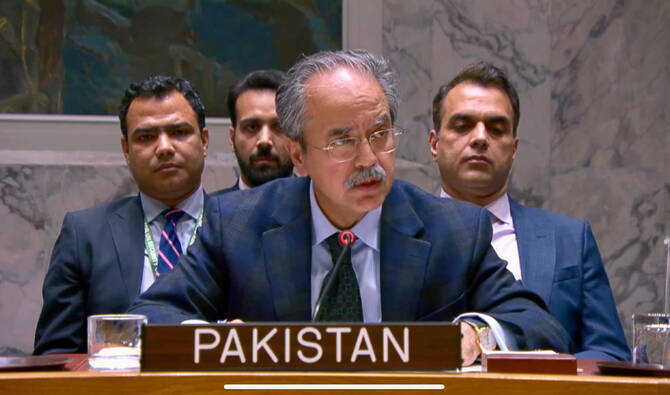
Speaking during a United Nations Security Council debate, Pakistan’s Permanent Representative to the UN, Asim Iftikhar Ahmad, said diplomacy remains the most effective path to resolving conflicts and preventing further escalation.
Pakistan Highlights Diplomatic Efforts
Ambassador Ahmad said Pakistan’s mediation efforts had helped bring the United States and Iran to the negotiating table, demonstrating the value of sustained diplomatic engagement.
“The Islamabad MoU was a clear demonstration of what determined diplomacy can achieve,” he told the 15-member Security Council. He added that diplomatic channels were opened, dialogue resumed, and efforts shifted toward a peaceful resolution.
However, he expressed regret over the renewed outbreak of hostilities, saying it had interrupted the diplomatic process and exposed the region to renewed instability.
Call for Stronger UN Action
Pakistan urged the United Nations to strengthen preventive diplomacy and improve the implementation of peaceful dispute-settlement mechanisms under the UN Charter.
Moreover, Ambassador Ahmad stressed that when negotiations encounter setbacks, the international community should respond with greater diplomatic engagement rather than abandon dialogue.
He reaffirmed Pakistan’s commitment to supporting peaceful conflict resolution through continued mediation and constructive engagement.
Resolution 2788 as a Framework
The ambassador made the remarks during a Security Council debate on implementing UN Security Council Resolution 2788, which Pakistan introduced during its presidency of the Council last year.
The resolution encourages early diplomatic engagement, mediation, negotiation, arbitration, and sustained follow-up to prevent disputes from escalating into armed conflict.
Furthermore, Ahmad said the UN Charter already provides adequate tools for peaceful dispute resolution. He argued that the challenge lies in their delayed, selective, and inconsistent implementation.
Preventing Future Conflicts
According to Pakistan, the Security Council often becomes involved only after conflicts have intensified, reducing opportunities for compromise and increasing humanitarian suffering.
Therefore, Ambassador Ahmad urged the Council to use Resolution 2788 as a practical framework for conflict prevention rather than allowing it to remain only a statement of principle.
He emphasized that the Council’s greatest success would be preventing crises before they escalate into violence.
Diplomacy Remains Essential
Concluding his remarks, Ahmad said rising conflicts around the world demonstrate the urgent need for stronger diplomacy and international cooperation.
He stressed that lasting peace cannot be achieved through military means alone and called for renewed commitment to dialogue, mediation, and peaceful negotiations.
Read More Articles:
Asim Munir Vows Relentless War on Terror