
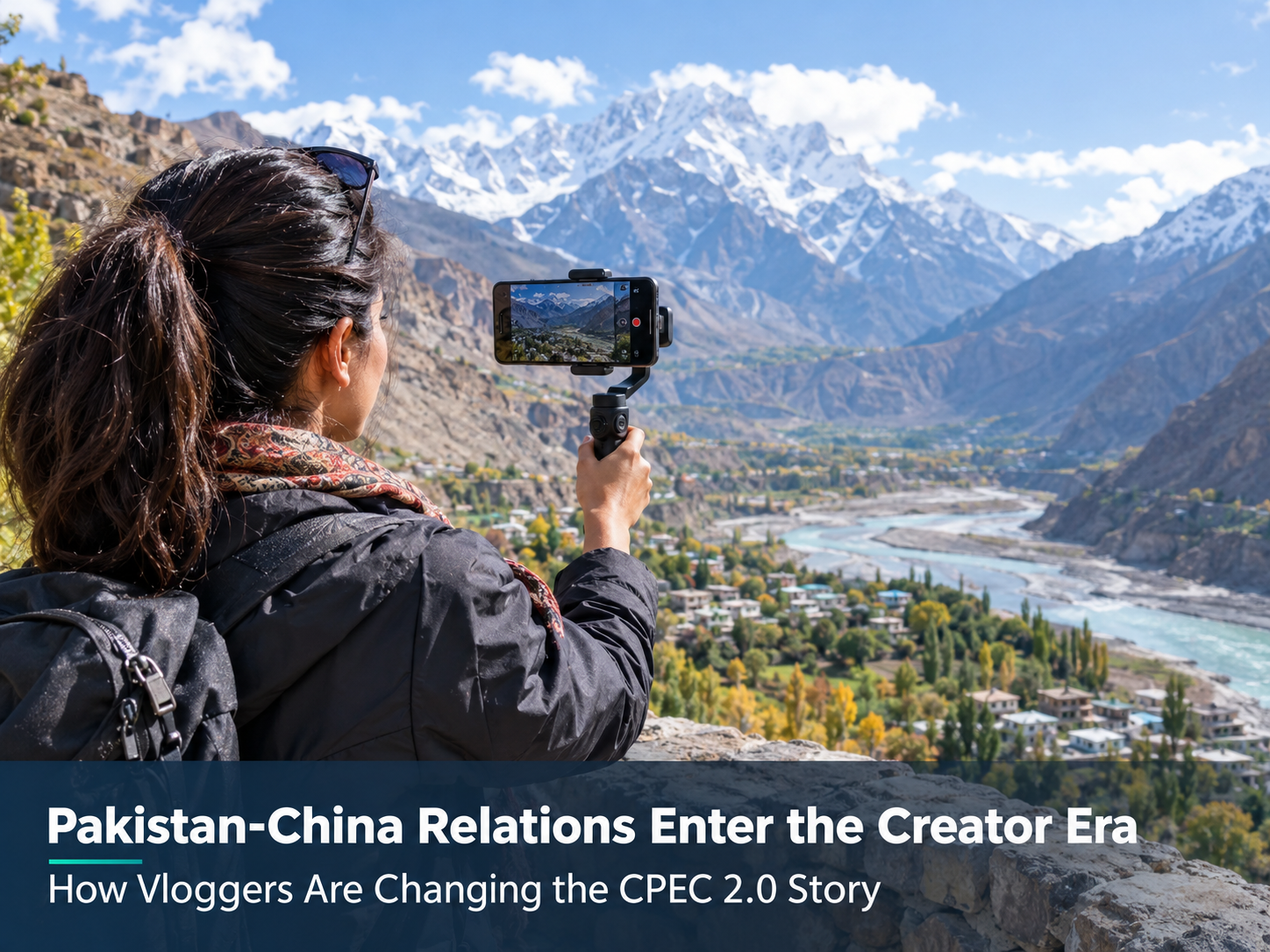
Pakistan-China vloggers are creating a new way for audiences to understand the relationship between the two countries. Through travel videos, cultural encounters and glimpses of everyday life, Pakistani creators in China and Chinese creators in Pakistan are bringing people-to-people connections into online conversations. Their content offers a perspective that official statements and diplomatic announcements rarely provide: how people live, interact and experience each other’s societies.
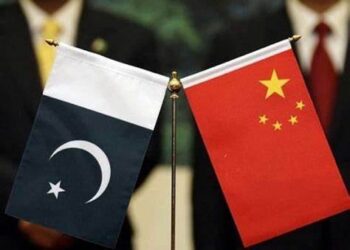
As Pakistan and China mark 75 years of diplomatic relations in 2026, this shift is becoming more relevant. CPEC 2.0 is expanding the partnership’s economic ambitions, while digital creators are adding another layer to how the two countries are understood. Pakistan-China vloggers are not replacing diplomats or professional journalists. They are, however, changing how audiences encounter the relationship, bringing its cultural and human dimensions into everyday online conversations.
How Pakistan-China Vloggers Are Making China More Accessible
Pakistani creator Mahzaib Abbasi offers one example of this changing media landscape. According to the Associated Press of Pakistan (APP), Abbasi began producing China-related videos in late 2020. She moved to China in 2016 and later studied Chinese in Beijing. Her content has covered local culture, food, travel and daily life, introducing audiences to experiences that rarely feature in formal diplomatic communication. The growing reach of Pakistan-China vloggers shows how individual creators can bring cross-cultural experiences to audiences far beyond traditional media networks.
APP reported in May 2026 that Abbasi had produced 368 vlogs and built a YouTube following of more than 210,000. One video documenting Eid celebrations in Lanzhou reportedly reached one million views in less than a week. The figures illustrate the potential reach of individual creators, although audience size alone cannot establish whether viewers’ attitudes or knowledge have changed.
The appeal lies partly in the questions these videos answer. What is everyday life in China like? How do students navigate university life? Where can Muslim visitors find halal food? What do transport, shopping and accommodation look like in practice? These are personal, practical questions that official statements rarely address.
Such content can make an unfamiliar country feel more accessible. It can also help viewers identify opportunities in education, tourism and cultural exchange. Yet each vlog remains one person’s account, shaped by their interests, access and experiences. It should not be treated as a complete picture of Chinese society.
Chinese Vloggers in Pakistan: Friendship, Framing and Geopolitics
The exchange also runs in the opposite direction. Chinese nationals living or working in Pakistan have posted videos on Douyin, China’s domestic short-video platform, showing interactions with Pakistani residents, local food and everyday surroundings. Some have attracted substantial engagement by presenting encounters as spontaneous glimpses of friendship between the two countries. Chinese vloggers in Pakistan also shape how international audiences encounter local communities, cultural traditions and the wider bilateral relationship.
A peer-reviewed study by Davide Giacomo Zoppolato and Karen Culcasi, published in Geopolitics in 2025, offers a more critical reading of this trend. Examining Chinese vloggers’ videos about Pakistan, the researchers found that seemingly casual interactions could reproduce wider geopolitical narratives about China’s role in Pakistan’s development. They describe this process as “unofficial geopolitics”: individuals using personal storytelling to circulate ideas that also appear in formal political discourse.
The study does not mean that every Chinese creator is producing propaganda or that all friendly encounters are staged. It does show why online content deserves closer scrutiny. A creator decides whom to film, which details to include, what to omit and how to edit the final story. Those choices can influence whether a country appears complex and diverse or is reduced to a narrow set of images.
Some videos may encourage curiosity and connection. Others may portray Pakistanis through unequal or paternalistic narratives, with the visiting creator positioned as the person who explains, helps or solves problems. Recognising this possibility does not invalidate the entire medium; it encourages audiences to consider who is telling the story and whose perspective is missing.
From the Karakoram Highway to Everyday Digital Diplomacy
Travel content provides a particularly visible meeting point between digital storytelling and the wider CPEC narrative. The Karakoram Highway, Hunza, Passu, Sost and Khunjerab can appear in official communications as infrastructure, border crossings or strategic links. In a vlog, they become places experienced through journeys, meals, conversations and encounters with local communities.
That shift in presentation matters. Infrastructure reporting explains what a road connects and why it matters economically. A travel video can show what the journey looks like and how visitors experience the places along it. Neither form replaces the other; each answers a different question.
For CPEC 2.0, these perspectives could help audiences discover Pakistan’s tourism potential and learn more about China-Pakistan connectivity. The relationship’s next phase is intended to extend cooperation into areas including industry, agriculture, minerals, technology, human-resource development and business-to-business partnerships, according to the CPEC Secretariat’s August 2026 progress review.For CPEC 2.0, creator-led storytelling could help introduce new audiences to Pakistan’s tourism destinations, economic opportunities and cultural connections with China.
However, visibility should not be confused with measurable economic impact. A popular video does not, by itself, prove that tourism has increased, an investment decision has changed or trade has expanded. Those outcomes require separate evidence. The more defensible argument is that creator content can introduce people to places, industries and opportunities they might otherwise overlook.
Traditional Media and Digital Creators Are Developing Side by Side
The growth of creator-led content is occurring alongside formal media cooperation, not instead of it. On 5 September 2026, Pakistan Broadcasting Corporation was selected as one of 16 founding members of the Asia-Pacific Media Partnership Organizing Committee, launched at the Asia-Pacific Media Forum in Shenzhen. Radio Pakistan reported that the initiative would promote dialogue, coordinated communication, technological innovation and practical cooperation among regional media organisations.
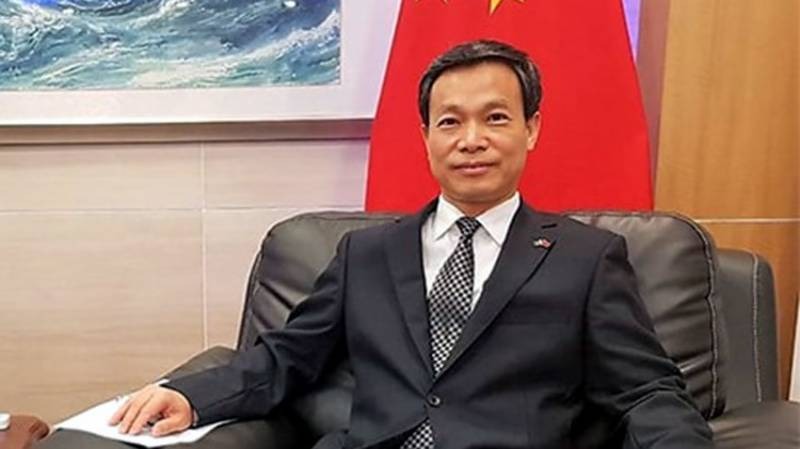
A more directly relevant development took place on 16 September, when Chinese Consul General Sun Yan attended the inauguration of The Daily CPEC Studio at Rashid Latif Khan University. The Chinese Consulate General in Lahore said the studio would contribute to coverage of Pakistan-China cooperation and the development of young journalism talent. The event reflects continuing institutional interest in media as a channel for cross-cultural communication.
These initiatives operate differently from personal vlogs. Newsrooms are expected to verify claims, provide context and distinguish reporting from opinion. Creators often prioritise personality, accessibility and audience engagement. Both can contribute to public understanding, but their responsibilities and methods are not interchangeable.
For publishers, the challenge is not to imitate influencers at the expense of verification. It is to communicate complex developments in formats audiences can access while maintaining accuracy and editorial independence.
How Digital Creators Are Shaping Pakistan-China Relations
CPEC 2.0 involves more than agreements between governments. Its commercial ambitions depend on companies finding partners, students understanding educational opportunities, tourists learning about destinations and communities becoming familiar with one another. Digital content by China-Pakistan vloggers can help make those connections more visible, particularly when creators explain local context rather than relying on stereotypes.
A Pakistani entrepreneur researching a Chinese industrial city, for example, may encounter a creator’s video before consulting trade reports or contacting potential partners. A Chinese viewer may discover Pakistani food, landscapes or cultural traditions through a travel vlog. Such exposure can prompt further questions, but it is only a starting point — not a substitute for due diligence, professional advice or reliable information.
The most useful content will combine personal experience with transparency. Creators should distinguish what they have witnessed from what they cannot verify, while audiences should be alert to selective editing, sponsorship and political framing. Media organisations can contribute by checking viral claims, providing context and amplifying credible local perspectives.
The same standard should apply regardless of whether a video presents Pakistan or China positively or negatively. Credibility comes from evidence and context, not from whether a story supports a preferred narrative.
The Next Chapter Needs More Than Views
After 75 years of diplomatic relations, Pakistan and China are communicating through more channels than ever. Governments continue to negotiate, businesses explore investment, journalists report on policy, and creators bring everyday experiences to audiences across borders.
Vloggers cannot measure the success of CPEC 2.0, settle questions of trade policy or replace independent reporting. Their contribution is different: they can make a distant society more visible, introduce unfamiliar places and create opportunities for conversation. They can also reinforce stereotypes or simplify complex realities.
The future value of this creator era will depend on what happens beyond the view count. If online storytelling encourages audiences to ask better questions, seek reliable information and engage with people across cultural boundaries, it can complement the institutional relationship. If it becomes only a contest to produce the most flattering or sensational image, its contribution will be limited.
The story of Pakistan-China relations is still shaped by diplomacy, infrastructure and economic decisions. Increasingly, it is also being told through phones and social platforms. The opportunity is not simply to make the relationship more visible, but to make that visibility more informed, balanced and meaningful.
Related Stories
- Short Videos Portray Strong Bond Between Pakistan and China — How short-form videos can bring cultural exchange and youth engagement into Pakistan-China relations.
- 9th CPEC Media Forum Strengthens Pakistan-China Cooperation — A look at formal media collaboration and its role in the CPEC 2.0 narrative.
- CPEC Builds Pakistan-China Cultural Bridge — How digital communication, education and cultural exchange are strengthening people-to-people connections.
- Pakistan-China Cultural Ties Enter New Era — Exploring the growing role of cultural cooperation in the wider bilateral relationship.