

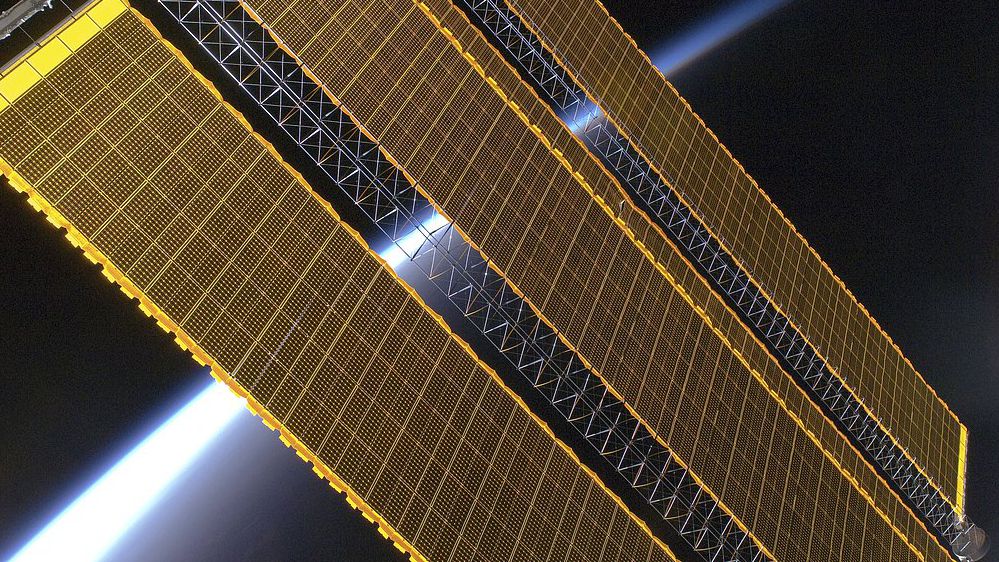
Chinese private aerospace company GalaxySpace has introduced a groundbreaking fully rollable, flexible solar panel designed to tackle one of satellite launch’s oldest challenges: oversized hardware exceeding rocket fairing limits.
Unveiled during a two-day tech conference in Yibin, the innovation enables solar arrays to roll up like scrolls for launch and unfurl in orbit to over 10 meters long and nearly two meters wide. Despite covering 20 square meters, roughly the size of a conference room, the panel can compact down to the size of a water bottle.
This cutting-edge design significantly reduces satellite volume and weight while delivering four times the energy density of traditional rigid panels. As a result, it’s especially useful for launch missions involving multiple stacked satellites and for expanding the longevity of low-Earth orbit (LEO) internet constellations.
Since its founding in 2018, GalaxySpace has launched 25 satellites, including the world’s first high-frequency LEO millimeter-wave satellite and China’s first flat, stackable satellite featuring flexible solar panels.
In February, the company also demonstrated direct-to-cell communication using its LEO broadband test constellation, establishing live connectivity between Beijing and Thailand via a local ground station.
GalaxySpace’s intelligent satellite production facility in Nantong is capable of producing 100 to 150 medium-sized satellites annually. The smart assembly line integrates robotics and digital manufacturing, allowing human-machine collaboration for satellite construction ranging from 100 to 2,000 kilograms.
With this innovation, GalaxySpace further cements its status as a leading satellite internet solution provider and one of China’s first commercial space unicorns.
Related Posts