
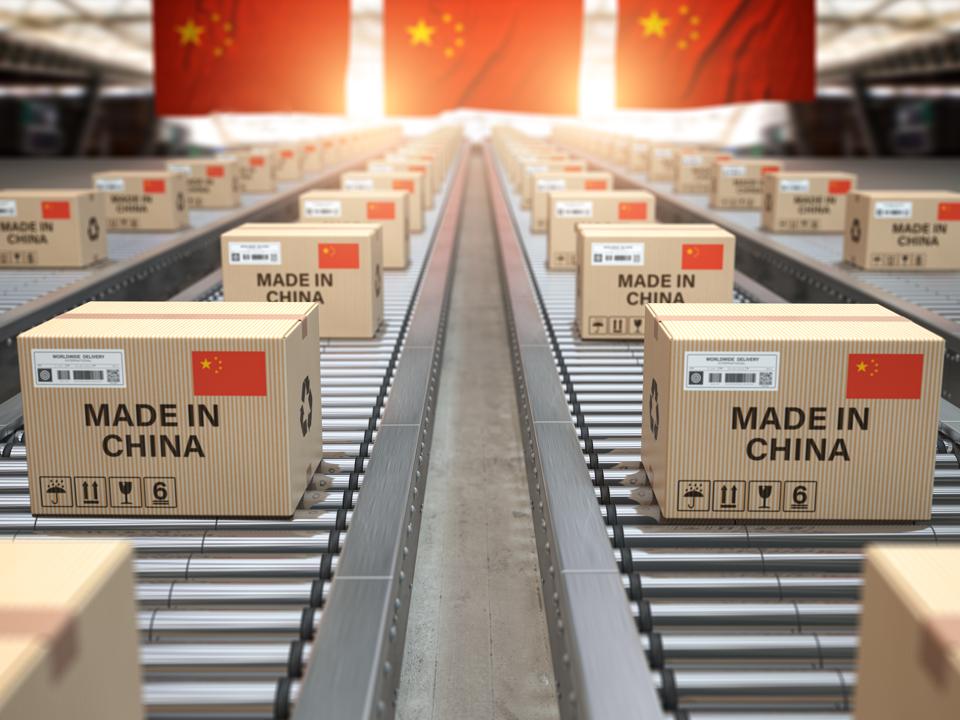
China’s factories are turning out more steel, solar panels, batteries and electric vehicles than buyers at home or abroad can currently absorb. Economists have documented this gap for years. In 2026, it is getting harder for Beijing to manage without friction.
China’s trade surplus hit a record $1.2 trillion in 2025, according to Federal Reserve data. A trade surplus that large usually reads as strength. That surplus also reflects Chinese factories producing well beyond what Chinese consumers buy, with the difference increasingly sold abroad, often at prices few foreign competitors can match.
The Scale of the Mismatch
Clean energy technology shows the clearest gap between what China can produce and what the world currently needs.
China had the capacity to make eight times more electrolysers, used in hydrogen production, than it actually shipped globally in 2021. By 2024, that ratio had grown to 18 times annual global shipments. China now holds close to 60 percent of global electrolyser manufacturing capacity.
Steel tells an older version of the same story. China produced just over one billion metric tons of steel in 2023 and exported around 90 million tons of it. The OECD projected global steel overcapacity at 644 million tons for 2025, more than the combined output of every OECD country.
Electric vehicles make the pattern visible to ordinary buyers. Chinese EV exports topped 2.5 million units in 2025, roughly double the year before. Industry estimates suggest China holds enough spare capacity to double its EV and lithium battery exports again from where they stand now.
The pattern extends well beyond these headline sectors. A European Parliament study found 51 percent of surveyed firms expect overcapacity in chemicals, 55 percent in industrial machinery, 56 percent in pharmaceuticals and 62 percent in automotive.
Why It Keeps Happening
China’s overcapacity problem is not new. It traces back to market reforms in the 1990s and resurfaced badly after the 2014 to 2016 construction stimulus. What is different in 2026 is how many sectors are affected at once, and how loudly trading partners are pushing back.
China’s growth model has long leaned on investment heavy industrial expansion, backed by state subsidies, cheap credit and procurement rules favoring domestic manufacturers. That combination builds capacity fast. It does less to match that capacity with actual demand, especially when Chinese households, squeezed by a weak property market, are not spending enough to absorb what factories can make.
When domestic demand falls short, exports have traditionally filled the gap. That path is narrowing. Tariffs are climbing, not just from Washington but from the European Union and other partners responding to what they call subsidized Chinese goods undercutting local industry.
Chinese solar manufacturers show the strain directly. They posted financial losses in 2024 and 2025 despite record export volumes, evidence that even strong global demand for renewable technology is not enough to absorb China’s oversupply at prices that turn a profit.
Where the Excess Goes Now
As Western markets grow more resistant, China has redirected more of its excess output toward the Global South.
Weak demand at home and rising barriers in the West have pushed Chinese exporters further into developing markets, often at heavily subsidized prices. For Beijing, the logic is straightforward: keep factories running, support employment and maintain utilization even when domestic demand is weak.
What that means for the countries receiving the goods is less settled. Some analysts argue cheap, subsidized Chinese products genuinely help developing economies by providing cheaper infrastructure, electronics and manufactured goods than they could otherwise afford. Others argue the same flood of subsidized goods undercuts the ability of these countries to build their own manufacturing base, competing directly against the industrialization many of them are trying to achieve.
Pakistan sits inside that tension. It is simultaneously courting Chinese manufacturing investment under CPEC’s second phase while trying to shield domestic industries, textiles especially, from being undercut by cheap Chinese imports. Pakistani cotton and textile associations have already flagged concerns this year about under invoiced Chinese yarn and fabric entering local markets at prices domestic producers cannot match. China’s overcapacity problem is the backdrop those specific complaints are playing out against.
Not Every Case Is the Same
One complication is that not everything labeled “overcapacity” reflects wasteful overproduction.
In fast growing sectors like electric vehicles and batteries, global demand is expanding quickly enough that today’s spare capacity could become necessary supply within a few years. China’s semiconductor production offers a partial counterexample too. Several assessments show fab utilization rates matching or exceeding global averages, suggesting less evidence of deliberate market flooding in that specific sector than critics sometimes claim.
Economists still disagree over how much of China’s overcapacity reflects unfair subsidy and how much reflects genuinely superior competitive scale. Whatever the cause, the volume of Chinese manufactured exports is large enough to reshape competitive dynamics in whichever market absorbs them.
What Beijing Is Trying, and What It Hasn’t Fixed
China has floated several remedies, including boosting domestic consumption, pushing manufacturers toward higher value output and expanding outbound investment so Chinese firms build factories abroad instead of shipping finished goods from home.
Each comes with its own problem. Chinese households remain cautious spenders. Quality upgrades do not fix a shortfall in demand. Outbound investment takes years to meaningfully shift where production happens.
For now, exports remain the easiest lever to pull, even as each pull draws more tariffs and more scrutiny from trading partners who increasingly see China’s overcapacity as their problem too, not only Beijing’s. Who ends up buying what China can produce, and at what cost to the industries competing against it, is still being worked out one trade dispute at a time.
Read More Articles:
Pakistan and China Move to Expand Free Trade Deal