

Historic Display of Defence Power
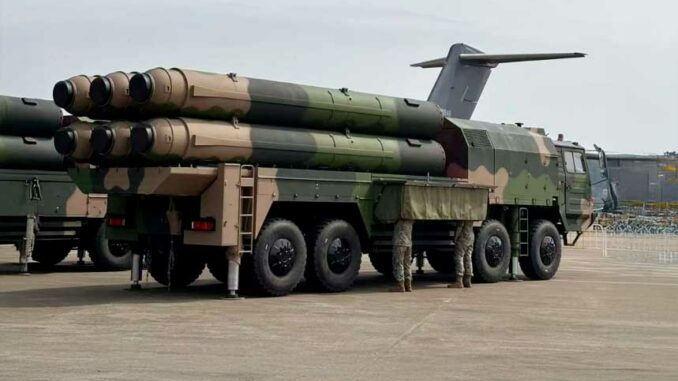
At Beijing’s V-Day military parade marking the 80th anniversary of victory against Japanese aggression and the World Anti-Fascist War, China showcased a comprehensive air defence and antiballistic missile formation. Six advanced systems made their debut, underscoring the country’s growing strategic deterrence capabilities.
Six Missiles, Multi-Layer Protection
The reviewed systems, HQ-11, HQ-20, HQ-22A, HQ-9C, HQ-19, and HQ-29, form a multi-course, multi-layer interception network. Together, they provide short, medium, and long-range defence against threats ranging from combat aircraft and drones to ballistic missiles.
Capabilities and Distinct Roles
HQ-11 & HQ-22A: Focused on terminal and medium-range air defence, capable of intercepting aircraft, drones, and cruise missiles.
HQ-20: Strengthens high-altitude interception and enhances anti-jamming resilience.
HQ-9C: A new design with faster deployment and point defence capabilities, also intercepting short to medium-range ballistic missiles.
HQ-19: First revealed in 2024, this backbone system enables regional high-altitude interception of ballistic targets.
HQ-29: The largest missile on display, capable of mid-course interception outside the atmosphere. Unlike silo-based systems, its mobile launch platform ensures flexible deployment.
Strategic Significance
Military expert Zhang Xuefeng noted that this collective debut makes China one of the few nations with a complete antiballistic missile system. The capability strengthens both defence and deterrence, expanding China’s options against strategic threats while maintaining its defensive nuclear stance.
Commitment to Defence, Not Aggression
The Defence Ministry reiterated that all missile interception tests are defensive in nature and not aimed at any country. The systems demonstrate China’s ability to safeguard sovereignty while contributing to strategic stability.
Related stories: