
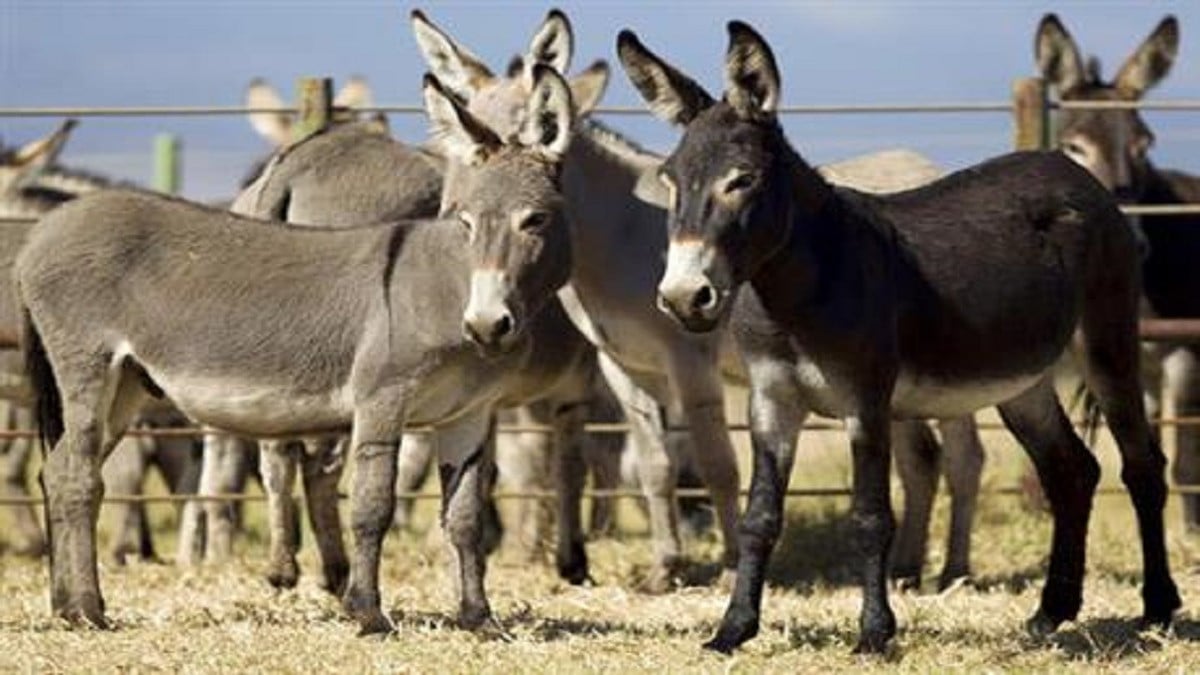
Two Chinese firms have formally applied for licenses to export donkey meat and byproducts from Pakistan, in what marks the country’s first regulated effort to enter the niche but high-demand trade with China. The applications, submitted to the Ministry of National Food Security and Research, are currently under review, ministry officials confirmed.
The proposed trade will be routed exclusively through Gwadar, Balochistan, where a designated slaughterhouse has already been built and approved for operations. However, exports cannot begin until all regulatory requirements and bilateral clearances with China are finalised.
Ministry officials emphasised that donkey meat preparation outside the Gwadar facility will not be permitted. This strict restriction aims to prevent domestic distribution and ensure full oversight of the supply chain.
One of the companies, Hengyang, has already signed a protocol with Pakistani authorities. Once regulatory clearance is granted, Hengyang will begin exporting donkey meat and bones, potentially opening a new stream of foreign exchange earnings for Pakistan.
Illegal Slaughterhouse Operation Uncovered in Islamabad
The formal licensing effort comes just days after a major raid on an illegal donkey meat operation on the outskirts of the federal capital. The Islamabad Food Authority (IFA) raided a facility in Tarnol on July 27, where they recovered 1,000 kilograms of donkey meat and rescued 40 live donkeys.
A foreign national and a local watchman were arrested during the operation. According to Islamabad Deputy Commissioner Irfan Memon, the raid followed a week-long intelligence operation. Authorities suspect the meat may have been intended for foreign clients within Pakistan or even abroad, but investigations are ongoing.
Memon confirmed that no donkey meat has been found in any of the city’s restaurants in the past two years. The IFA continues to conduct unannounced inspections at eateries across the capital to ensure food safety standards are met.
China’s Growing Demand for Donkey Products
China remains one of the world’s largest markets for donkey meat and skins, driven largely by demand for e-jiao, a traditional medicinal gelatin made from donkey hides. According to The Donkey Sanctuary, an estimated 5.9 million donkey skins are needed annually to sustain the e-jiao industry, putting global donkey populations under pressure.
The northern Chinese province of Shandong, which produces 90% of e-jiao, considers the product part of its national cultural heritage. With growing demand and declining domestic supplies, China is increasingly turning to countries like Pakistan to fill the gap.
A slaughterhouse in Gwadar reportedly began production earlier this year to serve this demand, though large-scale exports are still pending formal clearances. Pakistan’s Bureau of Statistics reported a steady rise in the country’s donkey population, now estimated at 6.047 million, up by over 100,000 from last year.
Officials remain optimistic that if strictly regulated, the legal export of donkey meat and byproducts could bring economic benefits to Pakistan while eliminating illegal and unethical practices.
Related posts