


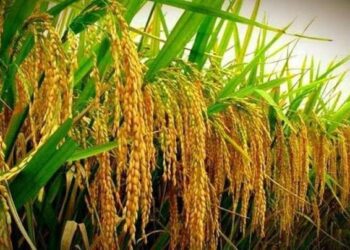
Chinese scientists have developed a revolutionary longevity rice variety, capable of regenerating for a second-year harvest, marking a breakthrough in sustainable agriculture. The innovation revives a dormant trait from the wild ancestors of rice, allowing the plant to survive winter and regrow from its roots.
The research, led by geneticists Han Bin and Wang Jiawei from the Chinese Academy of Sciences’ Center for Excellence in Molecular Plant Science, identified a key genetic region, EBT1, which silences aging signals in the rice plant. Combined with two prostrate growth genes, the new G43 line produces about 70 secondary tillers, far exceeding traditional annual rice yields.
This development allows rice to behave like a perennial crop, providing a sustainable solution for farmers and enhancing food security. Experts say the innovation deepens understanding of plant evolution and opens new avenues for improving perennial rice varieties globally.
Related stories: