

A Pakistani soil scientist spent part of this month at a Beijing research institute. He continued a collaboration that began in 2019. On its own, the visit looks routine. However, it also points to a broader trend. China-Pakistan scientific cooperation on agriculture is becoming more steady and structured.
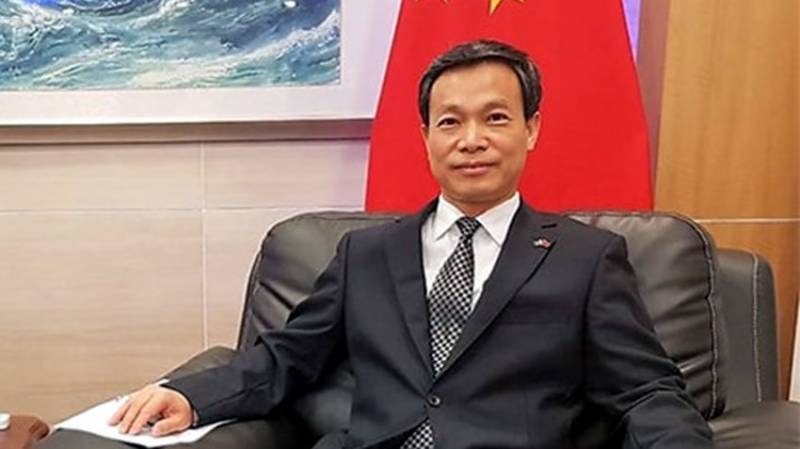
Muhammad Zia-ur-Rehman, a professor at the University of Agriculture Faisalabad, visited the Chinese Academy of Agricultural Sciences as a foreign expert. He has worked with a Chinese research team there since 2019.
This visit came as several joint proposals moved through review. One proposal has already reached the shortlist in China. Others remain under review in Pakistan. The Pakistan Science Foundation and the Punjab Agriculture Research Board are assessing them.
Several other initiatives have also moved forward in 2026.
New Research Partnerships
In July, Pakistan’s Ayub Agricultural Research Institute signed a cooperation agreement with China’s Shaanxi Aerospace Breeding Engineering Technology Center.
The agreement covers agricultural innovation, germplasm exchange and aerospace breeding technology. Chinese researchers use this technique to expose crop seeds to space-flight conditions. The process can trigger genetic mutations and help produce more resilient varieties.
Meanwhile, a Belt and Road joint laboratory for arid-region agriculture opened in Shaanxi province in July. Chinese and Pakistani institutions will use the laboratory to study drought-resistant crops and precision irrigation.
Earlier, in February, Pakistani officials met with a China-based biotech firm. They discussed soil restoration in Pakistan’s climate-stressed regions. The talks focused on salinity and declining soil fertility.
Beyond agriculture, the China-Pakistan Joint Research Center on Earth Sciences has also expanded. It now includes five university-based centres since 2025.
In June, Islamabad hosted a disaster-risk workshop. The event trained researchers in glacier hazard monitoring. It also brought together Chinese and Pakistani specialists working on issues such as landslide modelling and investment de-risking.
The Scale of the Problem
Pakistan’s agriculture sector faces growing pressure.
The country regularly ranks among the world’s most climate-vulnerable nations for food production. Cotton yields in Punjab fell sharply between 2022 and 2023. Some assessments estimate a decline of 40 to 50 percent. Heat and water shortages contributed to the drop.
Other research suggests that a 2°C rise in temperature could reduce wheat yields by almost one-third.
Agriculture still accounts for more than 20 percent of Pakistan’s GDP. Therefore, falling yields affect more than farmers. They can reduce rural incomes, increase food prices and weaken export volumes.
The underlying problems are familiar. Soil degradation, salinity and water shortages continue to affect farms. At the same time, changing rainfall patterns are disrupting planting schedules.
However, the research response is now becoming broader and more organized.
Where This Fits Into CPEC 2.0
This cooperation also fits into the wider shift in China-Pakistan economic relations.
CPEC’s roadmap for its second phase includes green development among its priority areas. Growth and connectivity remain other major priorities.
Pakistan’s 2026-27 development budget also includes CPEC-linked funding for university research consortiums. The government has separate allocations for projects in Gwadar.
As a result, agricultural and climate research now has a more formal place within the CPEC framework. This marks a change from the corridor’s earlier infrastructure-heavy phase.
However, CPEC has not yet produced the agricultural outcomes that this research aims to support.
The logic behind the partnership is straightforward.
China brings advanced agricultural science and research infrastructure. Pakistan offers diverse agro-ecological conditions. It also has decades of field research in many stressed environments.
These strengths can complement each other.
Zia-ur-Rehman made a similar point. He said the strengths of the two sides are complementary rather than overlapping.
Inputs, Not Yet Outcomes
Most of these initiatives remain at the early stages.
Research partnerships and funding proposals are inputs. Framework agreements and new laboratories are also part of the process. They could eventually produce drought-resistant seeds or better soil-management methods.
However, they are not yet results in a farmer’s field.
Zia-ur-Rehman’s proposal has reached the shortlist in China. It has not yet received final approval. Meanwhile, Pakistani proposals remain under review by domestic funding bodies.
The Shaanxi aerospace breeding agreement is also a framework. It has not yet produced a crop variety for farmers.
Similarly, the arid-region laboratory is still building research capacity. It has not yet produced proven results for Pakistan’s agricultural sector.
Still, this does not make the cooperation meaningless.
Long-term agricultural research often takes years to produce measurable results. Early-stage partnerships can provide the foundation for future breakthroughs.
However, the honest answer remains clear. Joint research has not yet proven that it can make Pakistani agriculture more resilient.
The groundwork is underway. Its success will depend on several factors.
First, funding bodies must approve and support the pending proposals. Second, researchers need enough time to develop and test new technologies. Finally, Pakistan’s agricultural institutions must have the capacity to apply the results.
What to Watch Next
Several indicators could show whether this cooperation is producing concrete results.
First, the shortlisted and pending proposals need to secure funding.
Second, the aerospace breeding partnership should produce varieties that reach field trials in Pakistan.
Third, the arid-region laboratory should publish research that Pakistani agricultural extension services can use.
Finally, CPEC-linked funding for university research consortiums should continue through future budget cycles.
For now, China and Pakistan have built a genuine and expanding scientific relationship. Zia-ur-Rehman’s six-year collaboration provides one example.
The partnership is growing as Pakistan faces a climate challenge that will not wait for research timelines.
Read More Articles:
Rawalpindi Ring Road Nears Completion