

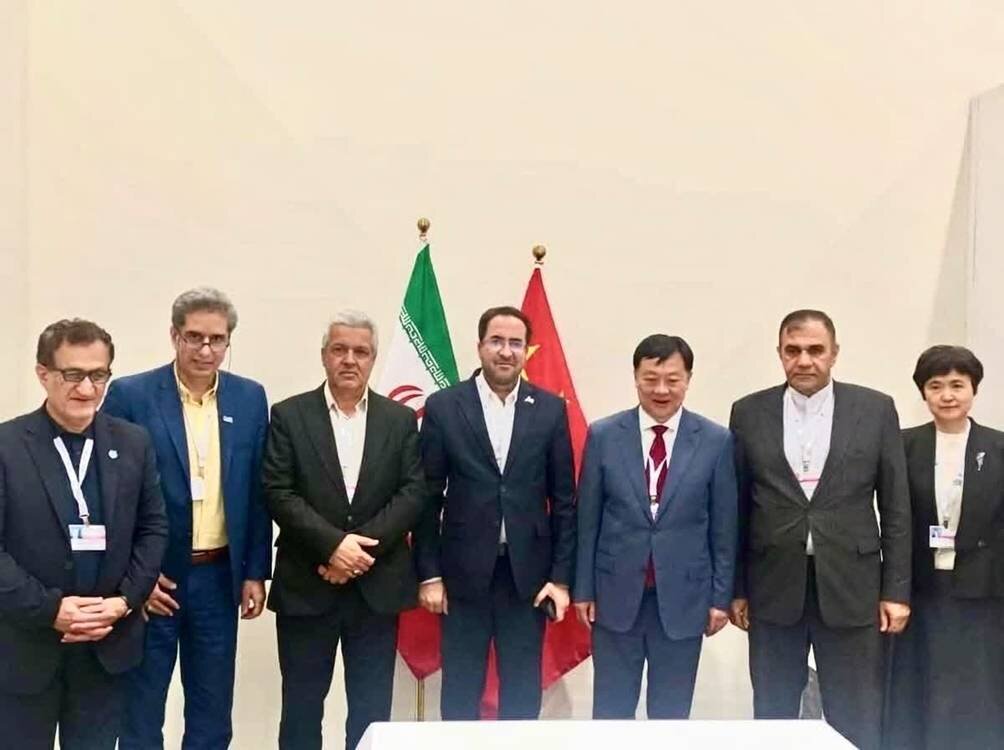
Iran and China have discussed expanding bilateral cooperation in natural resource management, forestry, watershed protection and climate change during high-level talks on the sidelines of the 31st United Nations Climate Change Conference (COP31) in Antalya, Türkiye.
Reza Aflatoni, head of Iran’s Natural Resources and Watershed Management Organization (NRWO), met Liu Guohong, head of China’s National Forestry and Grassland Administration (NFGA), to explore ways to strengthen cooperation and update an existing bilateral agreement.
According to Iran’s ISNA news agency, the discussions focused on facilitating cooperation among relevant institutions, organizations and enterprises in both countries. The two sides also explored opportunities for joint research, technical exchanges and training programmes.
Iran and China seek to update 2014 agreement
The discussions build on a memorandum of understanding initially signed between Iran and China on April 22, 2014.
The agreement established a framework for strategic, scientific, technical, operational, educational and economic cooperation in several areas of natural resource management.
These include forestry, pastures, watershed management, environmental protection, conservation, sustainable resource utilization, desertification control and climate change adaptation.
The framework also promotes the exchange of knowledge, experience and technology while requiring both parties to comply with their respective laws, regulations and international obligations.
During the latest meeting, officials discussed updating the existing cooperation framework to address current environmental challenges and identify additional areas for collaboration.
Joint research, training and forest protection
Joint research projects and human resource development featured prominently in the discussions.
Both countries considered expanding professional training, strengthening technical capabilities and supporting the exchange of expertise between their relevant organizations.
Forest and rangeland fire management was another major priority. The proposed cooperation includes joint monitoring and assessment, improving fire management practices and sharing experience in preventing and responding to wildfires.
Other areas include biodiversity conservation, genetic resources, seedling production, afforestation, timber cultivation and the management of pests and diseases.
The two sides also discussed land restoration, sustainable land allocation and improving the use of natural resources.
Climate change and carbon sequestration
Climate change adaptation and carbon sequestration formed another important part of the talks.
Iran and China discussed implementing carbon sequestration projects in desert, forest and rangeland ecosystems. They also considered exchanging experience on climate adaptation and mitigation measures.
The proposed cooperation includes monitoring and evaluating the effects of climate change on natural resources. Both sides also highlighted the importance of measurement, reporting and verification (MRV) systems to assess the progress and results of environmental projects.
Sustainable water management, resource conservation, green technologies and innovation were also included among the key discussion areas.
These priorities reflect the broader need to protect ecosystems, restore degraded land and improve the resilience of natural resources against climate-related pressures.
South-South cooperation and international partnerships
The meeting also explored opportunities to expand cooperation through South-South partnerships and international initiatives.
Both countries discussed using the technical and institutional capabilities of international organizations, including the Food and Agriculture Organization of the United Nations (FAO) and the United Nations Development Programme (UNDP).
Such partnerships could support knowledge-sharing, technical assistance, research activities and capacity-building programmes.
Iran and China have previously worked together on forest and dryland rehabilitation. In October 2023, an Iranian delegation visited China under an FAO-supported programme to study sustainable forest management, reforestation and climate-resilient approaches to restoring dryland ecosystems.
The programme included exchanges with Chinese experts and visits to restoration sites in Saihanba and Kubuqi. It also examined practical approaches to fire management, early-warning systems and sustainable water use.
Focus on long-term sustainable resource management
The latest discussions indicate both countries’ interest in strengthening an established environmental partnership through research, technical cooperation and institutional exchanges.
The proposed areas of cooperation cover several interconnected challenges, including water conservation, forest degradation, desertification, biodiversity loss and climate change.
However, the latest meeting focused on discussing and updating the existing cooperation framework. No specific funding commitments, project launch dates or completed revisions to the memorandum were detailed in the available reports.
Further progress will depend on how the two sides translate the discussions into practical projects and sustained institutional cooperation.
Read More Articles:
Shenzhou-24 Logo Features Pakistan’s National Flower
China Offers 61 Scholarships to Pakistani Students
China’s Shenzhou-24 Mission to Carry First Pakistani Astronaut to Space Station