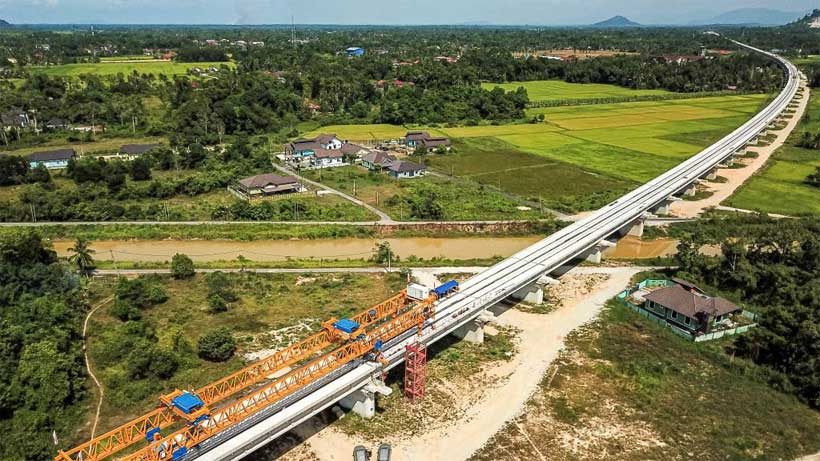
The Belt and Road Initiative (BRI) has evolved significantly since its launch in 2013. What began as a major infrastructure and connectivity initiative has expanded into a broader framework for economic cooperation, trade, development, and modernization.
Meanwhile, China introduced the Global Civilization Initiative (GCI) in 2023. The initiative focuses on dialogue, mutual learning, cultural diversity, and peaceful coexistence.
Together, the BRI and GCI connect physical infrastructure with cultural understanding. The BRI builds roads, ports, energy systems, and trade networks. The GCI seeks to build trust and stronger relationships between societies.
From Physical Connectivity to Human Connectivity
The BRI focuses on policy coordination, infrastructure, trade, financial cooperation, and people-to-people exchanges. These areas have helped participating countries improve connectivity and strengthen supply chains.
Over time, however, the initiative has also developed a broader economic role. It increasingly supports industrial cooperation, technology, agriculture, and high-quality economic development.
Major projects such as Gwadar Port in Pakistan and Hambantota International Port in Sri Lanka demonstrate the importance of physical connectivity.
These facilities can also create opportunities for cultural and commercial interaction. People from different countries meet through trade, investment, tourism, education, and business.
The Global Civilization Initiative
The GCI complements this physical connectivity with a focus on civilizational dialogue.
It promotes mutual learning, inclusiveness, and respect for cultural diversity. In addition, it encourages societies to seek common ground while respecting their differences.
The initiative has supported platforms such as the Conference on Dialogue of Asian Civilizations, the China-Africa civilizational dialogue, the China-ASEAN People-to-People Exchange Year, and the Liangzhu Forum.
These platforms provide opportunities for governments, institutions, academics, and communities to engage with one another.
Building Corridors of Understanding
The concept of a “Corridor of Hearts” provides a useful way to understand the relationship between the BRI and GCI.
The BRI creates physical corridors for goods, energy, investment, and people. Meanwhile, the GCI seeks to create stronger cultural and social connections along those routes.
As a result, connectivity can extend beyond infrastructure. It can encourage greater understanding between different cultures and civilizations.
Cooperation Beyond Cultural Differences
BRI partner countries have diverse histories, religions, cultures, and political systems. Yet many face common challenges.
These include poverty reduction, agricultural development, women’s empowerment, employment, healthcare, and community development.
Therefore, cooperation in these areas can provide practical opportunities for mutual learning. Shared development goals can also strengthen relationships between participating societies.
Economic Benefits of Greater Connectivity
The economic potential of the BRI has attracted considerable international attention.
The World Bank has estimated that the initiative could increase trade among participating economies by 4.1 percent while reducing global trade costs. It has also identified potential GDP gains for developing economies in East Asia and the Pacific.
These potential benefits depend on effective implementation, sound institutions, and sustainable investment. Stronger cultural understanding can also help businesses and communities work across borders.
Rejecting the Clash of Civilizations
The GCI presents dialogue and mutual learning as alternatives to confrontation between civilizations.
Its approach emphasizes that cultural and religious differences do not have to produce conflict. Instead, societies can learn from one another while maintaining their individual identities.
Furthermore, inclusiveness can help reduce prejudice and social estrangement. Dialogue can create space for cooperation even when countries have different traditions and worldviews.
Mediation and Peaceful Cooperation
The establishment of the International Organization for Mediation (IoMed) adds another dimension to international cooperation. Pakistan is among its founding members.
Mediation provides countries with another mechanism for addressing disputes through dialogue and peaceful negotiation.
In this context, mediation can complement broader efforts to strengthen communication, cooperation, and peaceful relations among states.
Pakistan’s Role in the BRI-GCI Partnership
Pakistan strongly supports both the BRI and GCI. The country views these initiatives as important platforms for economic connectivity, cultural exchange, and regional cooperation.
The China-Pakistan Economic Corridor (CPEC) remains a major component of Pakistan’s engagement with the BRI. Its next phase is expected to place greater emphasis on industrialization, agriculture, technology, investment, and development.
Moreover, Pakistan’s participation in IoMed provides another avenue for promoting peaceful dispute resolution.
From Corridors of Trade to Corridors of Culture
The future of connectivity could extend beyond roads, ports, and commercial networks.
Policymakers could explore new forms of cultural cooperation among BRI partner countries. These could include cultural centers, educational exchanges, interfaith initiatives, youth programs, and community partnerships.
Such initiatives could create what may be described as “Corridors of Cultural Unity.”
The concept could give greater grassroots relevance to the BRI and GCI. It could also encourage communities to interact directly rather than relying solely on government-to-government engagement.
Strengthening People-to-People Connections
Long-term international partnerships depend not only on infrastructure and investment. They also require trust between people.
Expanded cultural exchanges, student programs, professional networks, and community initiatives could strengthen this foundation.
The proposed “Corridor of Families or Hearts” offers one possible concept for deeper social connections. However, such initiatives should always remain voluntary, respectful of local laws, and based on genuine community interaction.
A Shared Vision for the Future
The BRI and GCI represent two complementary dimensions of international cooperation. The BRI provides physical and economic connectivity, while the GCI emphasizes dialogue, cultural understanding, and coexistence.
Together, they offer a framework that links development with human relationships.
As global challenges become increasingly interconnected, cooperation across cultures and regions will remain essential. Stronger economic links, combined with dialogue and mutual respect, can help build a more connected and peaceful international community.
The central message is simple: roads can connect countries, but understanding connects people.
Read More Articles:
CPEC and the Future of Economic Corridors