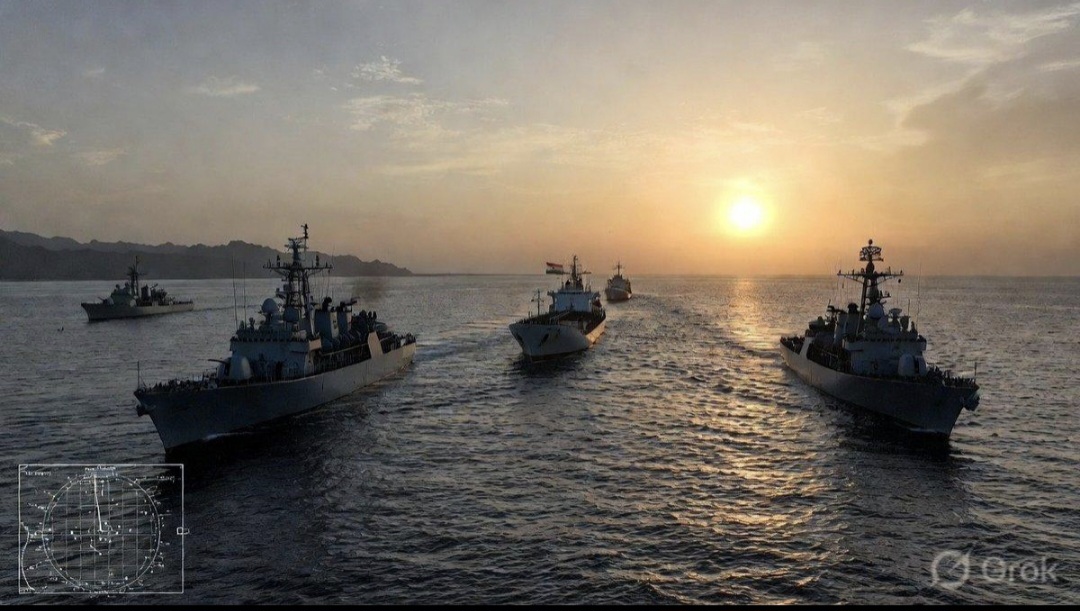
India-Pakistan maritime tensions have intensified following a collision between Indian and Pakistani naval vessels in the northern Arabian Sea on 15 September 2026. Both governments lodged diplomatic protests, with each accusing the other side of unsafe conduct. Although the incident did not develop into a wider military confrontation, it has renewed concerns about maritime security, regional stability and the risks of naval encounters between the two nuclear-armed neighbours.
The location adds to its significance. The Arabian Sea connects South Asia with the Gulf and the wider Indian Ocean, carrying commercial shipping and energy supplies while serving as an important operating area for regional navies. For Pakistan, maritime stability is closely linked to Karachi, Port Qasim and Gwadar, including the connectivity ambitions associated with the China-Pakistan Economic Corridor (CPEC).
The immediate question is who was responsible for the collision. The wider issue is whether established maritime rules and communication channels can prevent such encounters from escalating.
India-Pakistan Maritime Tensions: What Happened at Sea?
The incident occurred on the evening of 15 September 2026. India said a Pakistani naval vessel approached an Indian warship conducting a routine surveillance mission at high speed, resulting in a collision. Indian officials described the conduct as unsafe and unprofessional.
Pakistan disputed India’s account. Islamabad said the encounter occurred during its SEASPARK-26 naval exercise in Pakistan’s exclusive economic zone and accused the Indian vessel of aggressive manoeuvres. Pakistan also lodged a formal protest, describing the incident as a violation of international law and the bilateral agreement governing military exercises and movements.
Indian reporting identified the Pakistani vessel as PNS Hunain and said it sustained damage, while the Indian warship remained operational. These details should be attributed to the available reporting rather than treated as a jointly confirmed account.
The competing claims make it difficult to assign responsibility independently. What is clear is that the collision prompted diplomatic action from both capitals, demonstrating how a single encounter can become politically sensitive when relations are already tense. These India-Pakistan maritime tensions highlight the importance of establishing the facts through diplomatic channels before competing accounts deepen the dispute.
What the 1991 India-Pakistan Agreement Says
Both governments referred to the 1991 Agreement on Advance Notice on Military Exercises, Manoeuvres and Troop Movements. Signed in New Delhi on 6 April 1991, the agreement was designed to reduce the risk of military misunderstandings between India and Pakistan.
Article 10 states that the countries’ naval ships and submarines should not approach within three nautical miles of one another while operating in international waters, with the aim of preventing accidents. The agreement also establishes notification arrangements for certain military exercises and movements.
India argued that Pakistan’s conduct contravened this provision. Pakistan, in turn, cited the agreement in its protest against the Indian vessel. Determining whether the provision was breached requires a careful assessment of the circumstances, including the vessels’ movements, the location of the encounter and the applicable rules. The competing allegations alone do not establish legal responsibility.
The agreement remains relevant more than three decades after its signing. Its purpose is not simply to regulate military activity but to reduce the chance that an encounter, misinterpreted manoeuvre or navigational error will trigger a wider crisis.
India-Pakistan Maritime Tensions and Regional Trade
The Arabian Sea is part of a wider maritime network linking the Persian Gulf, Gulf of Oman, South Asia, the Gulf of Aden and the Indian Ocean. It supports the movement of energy supplies, manufactured goods and other commercial cargo between regional and international markets.
Pakistan’s dependence on maritime transport makes the security of these routes an economic concern. According to the Pakistan Council for Shipping, nearly 90 per cent of the country’s trade moves by sea. The institution cited this dependence in its discussion of government plans to improve port efficiency and strengthen the shipping sector.
Disruptions in important shipping corridors can lead to delays, higher insurance premiums and additional security requirements. Prolonged instability may also affect energy deliveries and commercial planning. These consequences are not automatic after a single naval collision, but sustained tensions can increase uncertainty for shipping operators and businesses.
India also has substantial maritime interests along its western coastline. Its access to the Gulf and the wider western Indian Ocean makes the Arabian Sea important for commercial shipping, energy security and naval operations. Both countries therefore have practical reasons to preserve predictable navigation and avoid unnecessary escalation. Managing India-Pakistan maritime tensions is therefore important not only for naval security but also for maintaining confidence in the region’s commercial shipping routes.
Pakistan’s Ports and the CPEC Connection
Pakistan’s maritime infrastructure gives the Arabian Sea particular strategic and economic importance. Karachi Port and Port Qasim handle established commercial traffic, while Gwadar is being developed as a major component of Pakistan’s regional connectivity ambitions.
Gwadar features in CPEC’s wider infrastructure plans, and its progress as a commercial port is explored in The Daily CPEC’s analysis of Gwadar’s development. The CPEC Secretariat identifies the Eastbay Expressway as a key road connection linking Gwadar Port and its free zone with the national highway network, facilitating the movement of import, export and transit goods. Pakistan and China have also outlined wider maritime cooperation under their 2025–2029 Maritime Action Plan, which includes plans to strengthen Gwadar’s role in regional connectivity.
That makes reliable maritime access relevant to Pakistan-China economic cooperation. Port infrastructure can support trade only when shipping services, inland transport, logistics and commercial activity operate effectively. Regional instability could complicate this environment if it persists, although the extent of any economic effect would depend on the nature and duration of a disruption.
There is, however, no established evidence that CPEC infrastructure was directly involved in the 15 September collision. The connection is strategic rather than operational: Pakistan’s ambitions for Gwadar and regional trade depend partly on a stable maritime environment.
Maritime Tensions and Opportunities for Cooperation
The collision was not the only recent development involving the two countries at sea. On 5 May 2026, Pakistan Navy assisted the Indian merchant vessel MV Gautam after a technical failure left it stranded in the Arabian Sea while travelling from Oman towards India. According to Reuters, the Pakistani vessel provided food, medical assistance and technical support to help stabilise the situation and protect the crew.
The episode illustrates a different dimension of maritime relations. Even when diplomatic and security ties are strained, emergencies at sea can require practical responses focused on human safety rather than political differences.
Such cooperation does not remove the underlying disputes between India and Pakistan. It does, however, demonstrate why established procedures and professional conduct matter. Naval forces operate in an environment shared with commercial vessels, and their actions can affect the safety of people well beyond the immediate encounter. Pakistan also promotes multinational maritime cooperation through initiatives such as the AMAN-25 multinational naval exercise, which brought participating countries together to discuss shared maritime security challenges.
Reducing India-Pakistan Maritime Tensions
A collision does not, by itself, establish an intention to escalate military tensions. Yet disputed encounters can generate public pressure, diplomatic protests and competing narratives, particularly between states with a history of conflict.
The 1991 agreement provides one framework for reducing the risk of accidents. Consistent observance of its provisions, reliable communication channels and clear procedures for naval activity can help prevent misunderstandings from developing into larger confrontations.
The next steps should centre on clarifying the circumstances of the collision, addressing the competing allegations through appropriate diplomatic channels and reinforcing practical safeguards at sea. A transparent assessment would also help distinguish navigational error, unsafe manoeuvring and any deliberate action.
For Pakistan, maritime security is connected to trade, energy access and the development of Gwadar under CPEC. India likewise depends on secure maritime routes for its commercial and strategic interests. Neither country benefits from an avoidable crisis disrupting the waters on which both rely.
Reducing India-Pakistan maritime tensions will require both sides to respect established safety arrangements, maintain communication and investigate disputed encounters responsibly.
The significance of the September encounter therefore extends beyond the collision itself. In a region where economic connectivity and military competition share the same maritime space, predictable conduct and effective de-escalation remain essential to regional stability.
Related Articles
- Gwadar Port: Is CPEC’s Flagship Port Finally Becoming a Trade Hub? — An assessment of Gwadar’s commercial activity and its potential role in regional trade.
- Pakistan’s Direct Shipping Line to Europe Launched — How maritime connections can improve shipping capacity and support Pakistan’s exports.
- AMAN-25 Multinational Exercise Kicks Off — A look at international naval cooperation and maritime security in the Indian Ocean region.
- Pakistan Condemns Houthi Red Sea Attack — Why threats to commercial shipping matter for regional security and freedom of navigation.