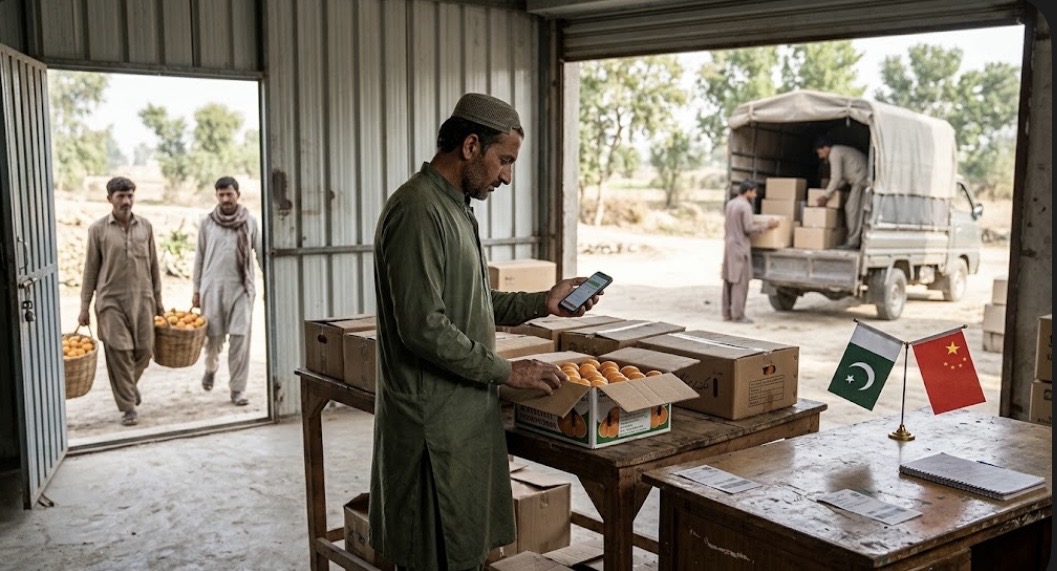
A farmer may grow high-quality fruit. An artisan may create distinctive handicrafts. A small rural business may produce goods that customers in other cities want to buy. Yet reaching those customers can be difficult when transport is expensive, product quality varies, and distribution networks are limited.
Digital marketplaces can help bridge this gap. However, listing a product online does not guarantee sales or higher incomes.
China’s rural e-commerce experience offers valuable lessons for Pakistan. Its development involved more than online shopping platforms. Local service centres, logistics networks, digital training, and cooperation between public institutions and private companies also played important roles.
For Pakistan, the challenge is not simply to copy Chinese e-commerce platforms. Instead, it is to identify which supporting systems could work under local conditions.
The main lesson is clear: rural e-commerce works best when online access is supported by reliable delivery, consistent product quality, and affordable services for small producers.
China’s Rural E-Commerce Model Went Beyond Online Sales
China introduced several initiatives to connect rural communities with wider consumer markets.
One prominent example was Alibaba’s Rural Taobao programme, launched in 2014 in collaboration with government partners. It aimed to improve rural access to goods and services while helping farmers sell agricultural products to urban consumers.
According to the World Bank, the programme included four major components: village- and county-level service networks, improved logistics, entrepreneurship training, and rural financial services.
Each component addressed a different challenge.
Village service centres helped residents who lacked the skills or resources to manage online transactions independently. Logistics networks connected rural communities to wider distribution systems. Training supported online selling, while financial services helped rural residents participate in the digital economy.
This approach highlights an important point: internet access alone cannot make rural e-commerce successful.
Producers also need to find customers, prepare orders, receive payments, and deliver products in good condition. If any of these steps fails, online access may not translate into better business outcomes.
Source: World Bank, E-commerce Development Experience from China.
Logistics Determines Whether Online Orders Become Real Sales
Moving products from remote villages to customers can be expensive. This is especially true when individual producers handle small orders independently.
For example, a delivery vehicle travelling a long distance to collect only a few parcels may not be commercially viable. These costs can make online selling less profitable for rural businesses.
China’s rural e-commerce initiatives have used county-level distribution networks and village delivery arrangements to address such challenges.
The Universal Postal Union’s 2025 discussion of rural delivery in China describes continued efforts to improve coordination between China Post and Cainiao. These efforts include logistics technology and more efficient last-mile delivery.
However, rural logistics remains challenging even in China, where e-commerce is highly developed.
Pakistan could explore a similar approach by establishing shared collection points. Producers could bring their goods to these locations for inspection, packaging, and consolidation before shipment.
Such facilities would not need to be established everywhere at once. Instead, initial projects could target areas where producers make similar products or generate enough orders to support regular collections.
For instance, fruit growers could coordinate shipments during harvest season. Artisans could use shared facilities to prepare orders for urban retailers. Small food businesses could combine deliveries where regulations and product requirements allow.
These are potential applications for Pakistan, not evidence of an existing programme that has already achieved these results.
Pakistan’s Small Producers Face Multiple Barriers
Pakistan’s Ministry of Commerce has identified several challenges in its draft e-Commerce Policy 2025–30.
These include rural last-mile delivery, fragmented warehousing, addressing systems, shipment tracking, fulfilment services, and consumer confidence.
For small businesses, these problems are often interconnected. Many producers lack the resources to address each challenge independently.
Consider a rural seller who promotes products on social media but cannot find affordable delivery. Another may receive orders but lack suitable packaging or an effective inventory system. A third may lose money when customers refuse deliveries and the seller has to bear the return costs.
In each case, online marketing can generate demand without providing a profitable way to fulfil orders.
Pakistan therefore needs to strengthen the entire supply chain, not just encourage more businesses to join online marketplaces.
Source: Ministry of Commerce, Draft e-Commerce Policy 2025–30. The document is a draft policy and does not establish that all its proposals have been adopted.
Five Lessons Pakistan Could Adapt
1. Build Shared Rural Collection and Service Centres
Small producers should not have to establish their own distribution networks to sell online.
Shared service centres could offer collection, weighing, packaging, basic quality checks, and shipment preparation. They could also help sellers create product listings, manage orders, and communicate with customers.
However, these facilities would be useful only where demand justifies their operating costs.
Before investing in buildings or equipment, organisers should identify potential users and establish who would pay for the services. They should also assess whether existing logistics companies could provide the same services more efficiently.
2. Organise Deliveries Around Product Clusters
Many rural businesses produce similar goods within the same locality or region.
By coordinating collection schedules and combining shipments, these businesses could make better use of transport and potentially reduce delivery costs per order.
However, different products require different handling and storage arrangements.
Fresh produce may need temperature control and rapid delivery. Fragile handicrafts require protective packaging, while textiles and packaged foods have their own storage and transport needs.
For this reason, logistics plans should reflect the requirements of each product category rather than apply one system to every producer.
3. Make Product Quality Part of Digital Strategy
Online customers often purchase products from sellers they have never met. They may also have no opportunity to inspect the goods before placing an order.
Clear descriptions, accurate photographs, consistent measurements, and suitable packaging can help build trust.
For agricultural products, grading and careful handling can improve consistency. For handicrafts, information about materials, dimensions, and production methods helps customers understand what they are buying.
Standardisation does not mean losing local identity. Instead, it helps ensure that customers receive products that match the seller’s description.
Over time, consistent quality and reliable service can encourage repeat purchases.
4. Connect Training to Real Business Needs
Teaching producers how to open an online account is only the first step.
Small businesses may also need practical training in pricing, product photography, customer service, inventory management, digital payments, packaging, and delivery arrangements.
Training is more useful when participants can apply these skills to their own products and actual orders.
Local service providers, universities, business associations, logistics companies, and e-commerce platforms could contribute, depending on the needs of each community.
Women-led rural businesses and producers with limited digital access could also benefit from practical support. This could make online selling easier without requiring every producer to manage all transactions independently.
5. Build Partnerships Without Creating Long-Term Dependence
China’s experience highlights the potential benefits of cooperation between public institutions and private businesses.
In Pakistan, local authorities could identify producer clusters, coordinate training, and facilitate shared infrastructure. Private companies could contribute marketplace access, logistics, payment services, and commercial expertise.
However, public support needs careful planning.
A collection centre that depends entirely on government funding may struggle to survive when that funding ends. Pilot projects should therefore establish realistic service charges, clear operating responsibilities, and measurable targets from the beginning.
The aim should be to develop services that can remain financially viable over time.
Why Pakistan Cannot Simply Copy China
Pakistan and China differ in market size, infrastructure, institutional capacity, business conditions, and the maturity of their e-commerce sectors.
A model that works in a densely connected Chinese county may not be commercially viable in a sparsely populated Pakistani district. Differences in transport costs, consumer purchasing power, and digital skills can also affect the results.
Product selection is equally important.
Perishable goods may require cold storage and rapid delivery. Meanwhile, low-value products may cost too much to ship individually.
Before promoting online sales for a particular product, programme organisers should assess customer demand, achievable selling prices, fulfilment costs, and competition.
They should also consider how much income producers retain after paying for packaging, transport, platform fees, and returns.
Ultimately, success should not be measured by the number of online shops created. The real test is whether producers can generate sustainable sales and improve their net returns.
How Pakistan Could Test the Model
Pakistan could begin with a small number of pilot projects involving producer groups with suitable products and existing market demand.
Each project could establish shared collection arrangements, provide product-specific training, and negotiate delivery services with commercial providers.
Before launching a pilot, organisers should record existing costs and business performance. This baseline would make it easier to assess whether the new arrangements deliver meaningful improvements.
Key indicators could include:
- Delivery costs: How much does it cost to fulfil each order?
- Fulfilment time: How quickly do products reach customers?
- Product damage and returns: How often are orders damaged, rejected, or returned?
- Sales performance: Are total sales and repeat purchases increasing?
- Producer income: How much money do sellers retain after expenses?
Programmes should also examine who benefits. For example, do smaller producers gain access to new markets, or do most benefits go to larger, better-connected businesses?
If a pilot reduces costs and improves producer returns, the model could be expanded to other regions or product categories. If the results are disappointing, organisers should use the findings to improve the approach before investing further.
This gradual process would allow Pakistan to test what works under local conditions rather than commit resources to an unproven model on a large scale.
From Digital Access to Market Access
China’s rural e-commerce experience offers Pakistan a useful framework for expanding economic opportunities in rural communities.
Its most important lesson is not that every farmer or artisan should become an online seller. Rather, digital commerce succeeds when the systems behind it work effectively.
Reliable logistics, shared services, consistent product quality, practical training, and financially sustainable partnerships could help Pakistani producers reach wider markets.
However, the benefits will depend on whether these arrangements address real business problems and remain affordable for small enterprises.
Rural e-commerce can open new markets for Pakistan’s small producers. Lasting gains, however, will depend on their ability to deliver reliable products at competitive costs while retaining more income from each sale.
Read More Articles: