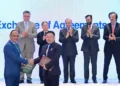

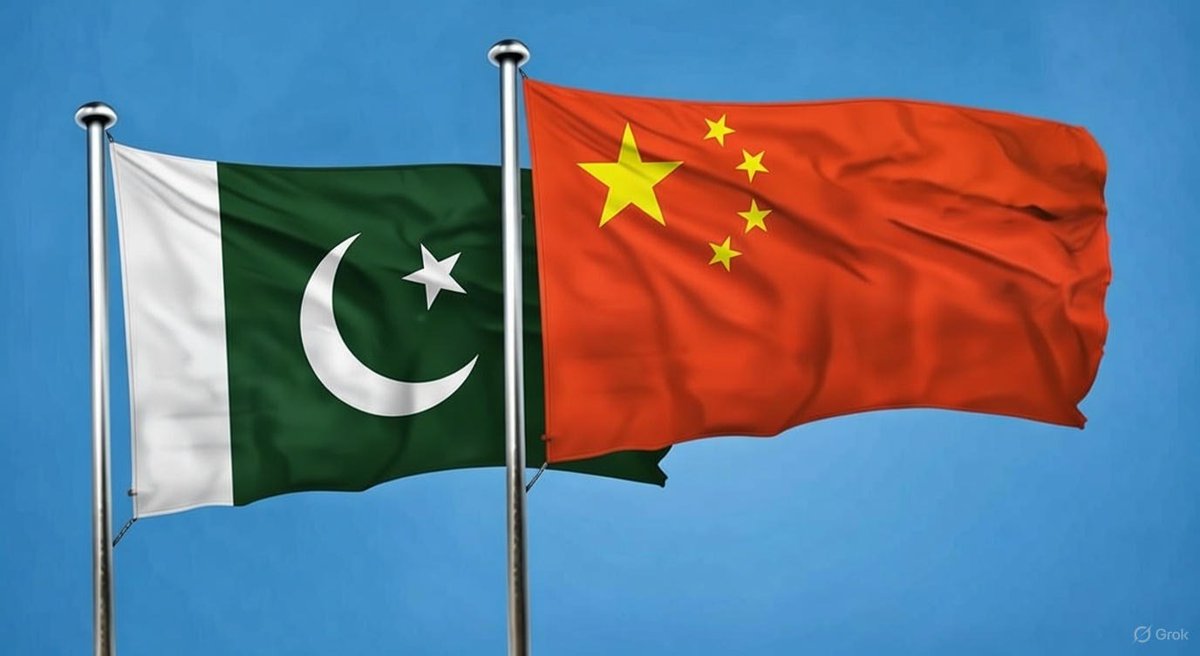
Pakistan and China have signed five new business deals. The signing took place in Guangzhou, China. It happened this week at a major trade forum. The deals cover trade, investment, and business cooperation between the two countries.
This event adds to the long list of Pakistan-China projects. It also comes at a special time. This year marks 75 years of diplomatic relations between the two nations.
What Happened in Guangzhou
The event was called the Pakistan Investment and Business Environment Exchange Forum 2026. This was its fifth edition. Business leaders and officials from both countries attended. The forum brought people together to talk about trade. They also discussed new investment ideas. The goal was simple: grow business ties between Pakistan and China. During the forum, officials held policy talks. Companies also presented investment projects. There were business-to-business meetings too. Firms also displayed their products at the event. By the end, five memorandums of understanding (MoUs) were signed. These MoUs cover different sectors. They are not just papers. They set the stage for real projects in the coming months.
Which Sectors Got New Deals
The five MoUs cover a mix of industries. They focus on electric vehicles (EVs), battery manufacturing, construction materials, furniture, Pine nuts, and medical and business tourism. This spread of sectors is worth noting. Past Pakistan-China deals often focused on roads, power plants, and big infrastructure. This time, the mix looks different. It includes smaller and more varied industries. It also includes electric vehicles and batteries. These are newer, fast-growing fields.
Why This Forum Matters
China is Pakistan’s largest trading partner. The two countries already share deep economic ties. Much of this connection runs through the China-Pakistan Economic Corridor (CPEC).
CPEC has mostly built highways, energy plants, and ports since it started. But Pakistan and China now want to grow ties beyond big infrastructure. The Guangzhou forum reflects that shift. Officials at the event also talked about CPEC. They discussed new chances for industrial and infrastructure teamwork under the corridor. This shows that CPEC is still central to the relationship. But it is expanding into new areas too.
The forum also touched on other sectors. These include energy, e-commerce, construction materials, furniture, and food processing. This tells us Pakistan wants to attract more Chinese investment. It wants that investment spread across many industries, not just a few.
A Symbol of 75 Years of Friendship
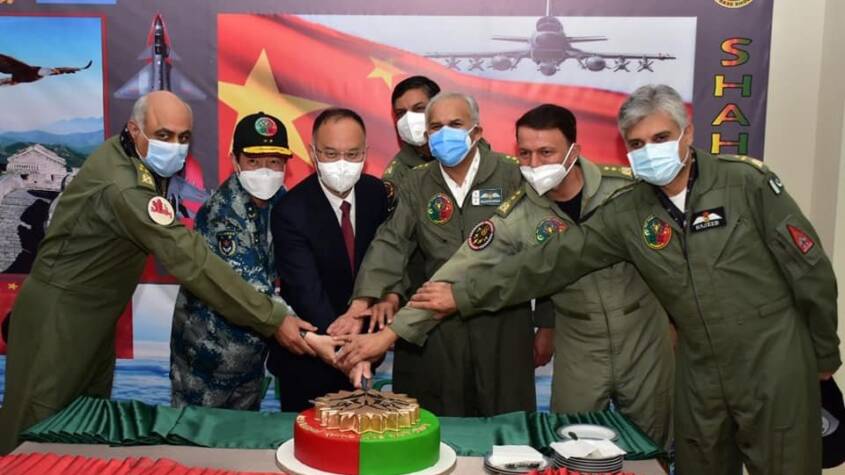
This year is special for Pakistan and China. It marks 75 years since they set up diplomatic relations. Officials often call the relationship an “all-weather friendship.” Leaders from both sides used the Guangzhou forum to mark this milestone. Participants at the event spoke about deepening economic cooperation. They also renewed their commitment to working together in the years ahead. This forum was not just about signing papers. It was also about celebrating a long-standing partnership.
Pakistan and China have held high-level meetings all through 2026. These include visits by top officials from both countries. The Guangzhou forum is the latest addition to this steady flow of engagement.
What This Means for Pakistan’s Economy
New deals like these can bring real benefits to Pakistan. Investment in EVs and batteries could help build local industries. This may create job opportunities. It could also reduce Pakistan’s reliance on imported vehicles and batteries over time. Deals in construction materials and furniture could open new export markets. Pakistani firms may get a chance to sell more goods to China. The pine nut deal is smaller in scale. But it shows interest in Pakistan’s farm and forest products, not just big industry. Medical and business tourism deals could also help. They may bring more Chinese visitors to Pakistan for health services or trade trips. This can support Pakistan’s tourism and services sectors.
Still, MoUs are just a first step. They show intent, not a guarantee of results. Many past agreements between countries take months or years to turn into real projects. Analysts often watch closely to see if such deals lead to actual investment on the ground.
Local businesses will also play a role. Pakistani firms need to build partnerships with Chinese companies. They need to meet quality standards for export markets too. Government support can help speed up this process. Simple rules and clear policies often matter more than big announcements.
The Bigger Picture
The Guangzhou forum fits into a larger pattern. Pakistan and China have been expanding their economic ties in 2026. Earlier this year, Pakistan issued its first Panda Bond in China’s market. This is a yuan-denominated bond, worth $250 million. It was backed by guarantees from the Asian Infrastructure Investment Bank and the Asian Development Bank. That bond was seen as a big step. It moved Pakistan’s ties with China beyond trade and loans. It brought Pakistan into China’s own financial markets.
Alongside trade forums like this one, both countries have also worked on security cooperation. Pakistan has pledged to protect Chinese workers and projects in the country. This is important because CPEC projects need safety to succeed.
Together, these steps show a broader trend. Pakistan and China are working on trade, finance, and security at the same time. The Guangzhou deals are one small but real part of that bigger effort.
What Comes Next
The five MoUs signed in Guangzhou mark a fresh step in Pakistan-China trade ties. Both sides now face the task of turning these agreements into real projects. Businesses and officials will need to follow up. Investment must move from paper to practice. For now, the Guangzhou forum stands as another sign of the close and growing ties between Pakistan and China. As the two countries mark 75 years of friendship, they continue to look for new ways to work together. Watching how these five MoUs unfold over the coming months will show whether this fresh push turns into lasting economic gains for both sides.
Read More Articles:
Pakistan SCO Chairmanship and What It Means for China Relations