

Pakistani robotics company Robionix Technologies is seeking stronger cooperation with Chinese partners to advance industrial automation and robotics manufacturing in Pakistan.
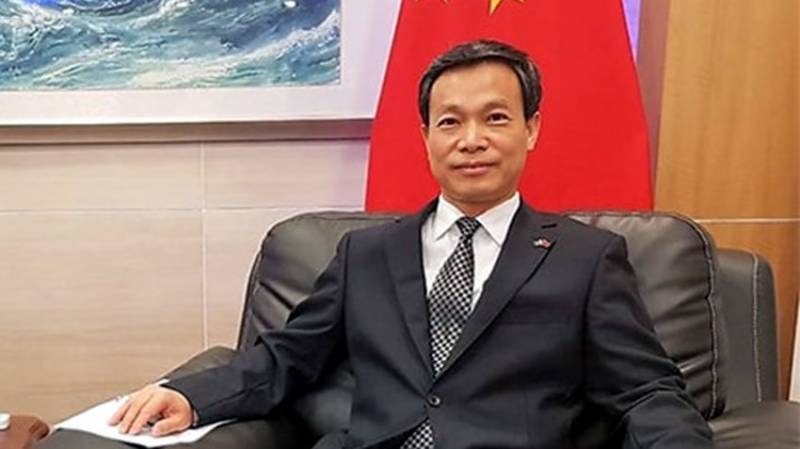
Founder and CEO Awais Yasin called for joint laboratories, industrial ventures, and long-term training programs between Pakistani and Chinese engineers. He shared the proposals in a written interview with China Economic Net.
Robionix Develops Local Inspection Technology
Robionix has developed MagicQC, an AI-based garment inspection system for Pakistan’s textile industry. The system checks finished garments against buyer specifications and returns a pass-or-fail result.
The technology uses a measurement bed, cameras, and computer systems to identify key measurement points. The company can now produce most of the system locally.
According to Yasin, a recent installation required only three major imported components. These included the industrial camera, operator touchscreen, and mounting assembly.
Meanwhile, Pakistani suppliers provided the measurement bed, lighting, display, computer, and electrical components. Local teams also handled system integration.
Robotics Manufacturing Remains a Challenge
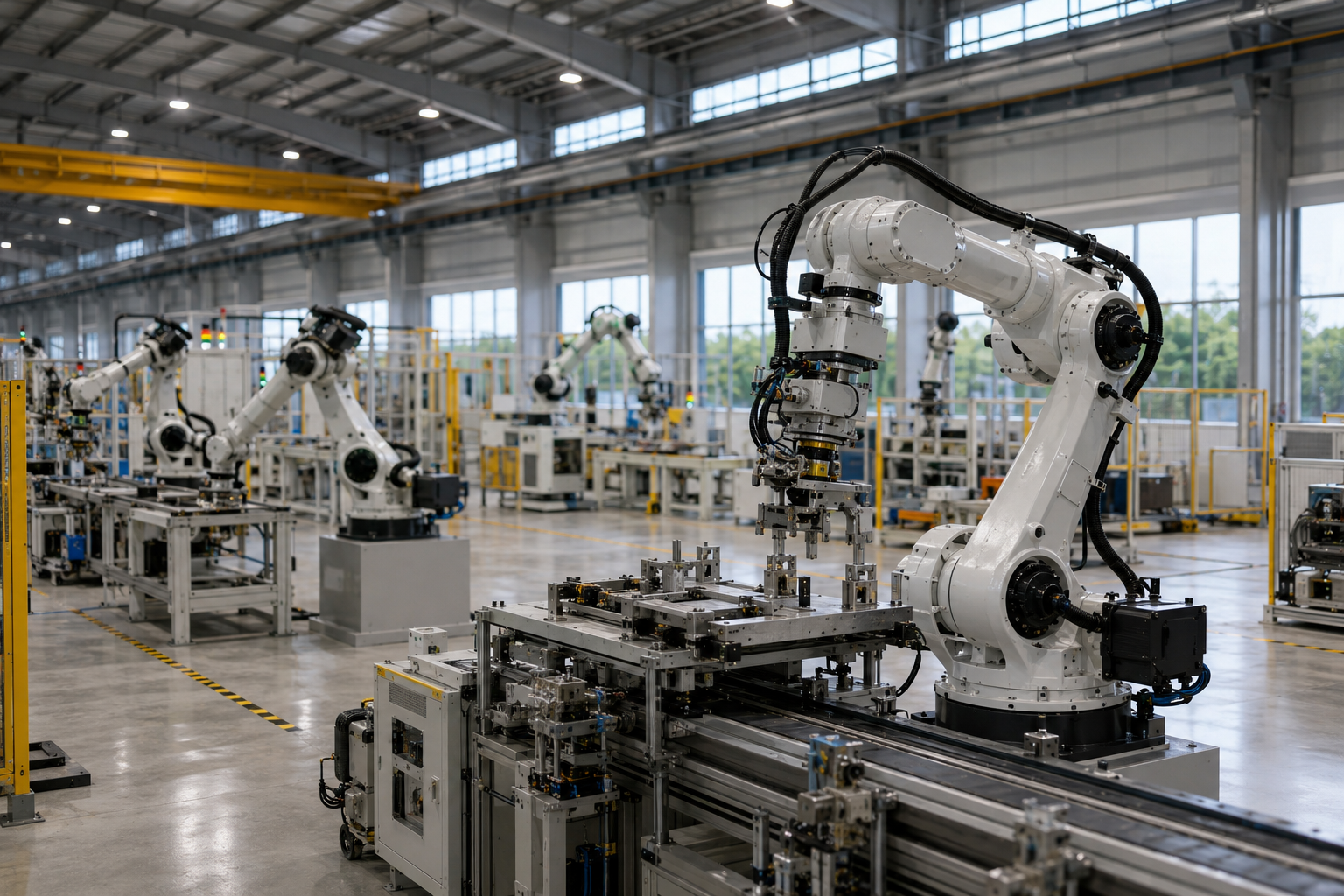
Building industrial robots presents a much bigger challenge. Robot arms require high precision, repeatability, speed, and reliability.
These systems depend on components such as servo motors, precision encoders, gear reducers, and servo drives. Pakistan currently lacks local suppliers capable of producing these components at the required precision and scale.
Yasin said Robionix can design the robot structure, electronics, control software, and vision systems. However, the company still needs a stronger domestic precision manufacturing ecosystem.
“The missing ecosystem around the robot is the bigger challenge,” Yasin said.
China Offers a Potential Partnership
Yasin gained firsthand experience of China’s robotics ecosystem while pursuing a robotics PhD at Beijing Institute of Technology.
He observed universities conducting advanced research alongside robotics manufacturers and precision component suppliers. Factories also deployed these technologies at significant scale.
China installed around 295,000 industrial robots in 2024, accounting for 54% of global installations, according to the International Federation of Robotics.
By comparison, Pakistan continues to import much of its industrial automation equipment. Although local research and startups have grown, the country still faces a major gap in industrial-scale production.
Joint Ventures Could Support Localisation
Yasin believes Chinese companies could help Pakistan develop local robotics capabilities. China has a strong manufacturing base for motors, reducers, controllers, and other critical components.
He proposed starting with local assembly and system integration. The partnership could then gradually move toward manufacturing critical components in Pakistan.
Moreover, Pakistani engineers could work alongside Chinese specialists through long-term training and joint development programs.
Building Pakistan’s Robotics Ecosystem
Robionix has already deployed its systems at factories in Karachi, Faisalabad, and Sialkot. However, commercial installations remain limited.
Stronger Pakistan-China cooperation could help expand these technologies across Pakistan’s manufacturing sector.
As a result, joint laboratories, targeted ventures, and technology transfer could support the development of a domestic robotics industry while reducing dependence on imported automation equipment.
Read More Articles:
Xi Urges Advancing Socialism at Jiang Centenary