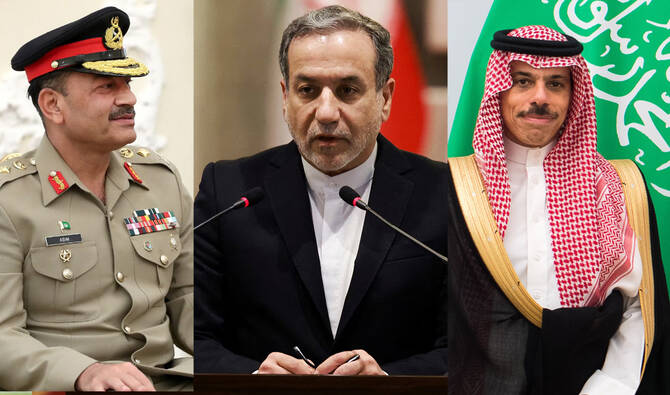
Iranian Foreign Minister Seyed Abbas Araghchi held a second round of telephone conversations with Pakistan’s Field Marshal Syed Asim Munir and Saudi Foreign Minister Faisal bin Farhan Al Saud within 24 hours, as regional diplomacy accelerated to prevent a wider conflict in West Asia.
According to Iranian state media, the leaders reviewed the latest diplomatic initiatives and discussed ways to strengthen regional peace and stability.
Second Round of High-Level Contacts
The latest calls followed a series of conversations on Sunday, when Araghchi also spoke with Turkish Foreign Minister Hakan Fidan.
The renewed contacts came after U.S. President Donald Trump announced that he had paused planned military action, saying Middle Eastern countries had reached the framework of a possible agreement to reduce tensions.
However, Iran rejected Trump’s claim that Tehran had requested the pause. Even so, Iranian officials continued consultations with regional governments.
Focus on Regional Stability
According to Iran’s official news agency, the participants exchanged views on ongoing diplomatic efforts to maintain security and stability across West Asia.
Moreover, they emphasized the importance of regional cooperation and political dialogue as the preferred path toward resolving the crisis.
Nuclear Talks Expected to Resume
The diplomatic outreach comes as Washington and Tehran prepare for another round of negotiations.
The expected talks will likely focus on Iran’s nuclear program and the reopening of the Strait of Hormuz, a vital global shipping route for oil and liquefied natural gas.
Furthermore, renewed negotiations aim to reduce tensions that have affected international energy markets.
Conflict Continues to Affect the Region
On Sunday, Araghchi warned that any military action by the United States or Israel, or support from regional countries for such operations, would receive what he described as a decisive and proportionate response.
The conflict, which began earlier this year, has disrupted shipping across the Gulf and the Red Sea.
As a result, energy prices have increased while governments across the region continue diplomatic efforts to prevent further escalation.
Economic Pressure Grows
The prolonged conflict has also affected global energy supplies.
Iran has largely restricted shipping through the Strait of Hormuz, a route that previously carried around one-fifth of the world’s oil and liquefied natural gas exports.
Consequently, higher fuel prices have increased inflationary pressure and added urgency to diplomatic efforts aimed at reaching a political solution.
Read More Articles:
President, PM Condemn Swat Attack