
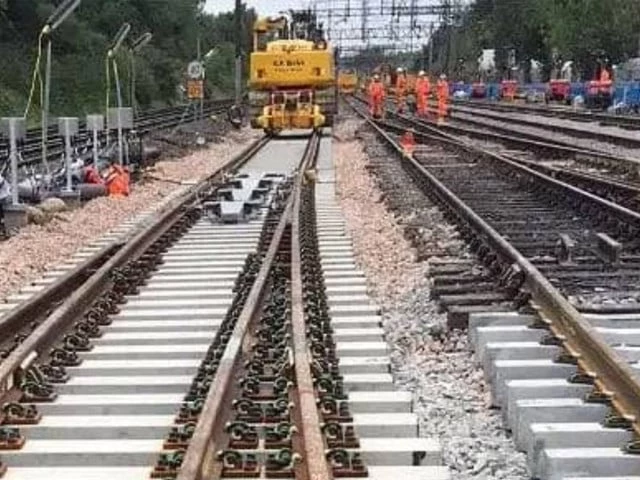
Pakistan Railways has reaffirmed its commitment to modernizing the country’s rail network, stating that the implementation of the ML-1 railway project, ML-3, and Thar coal connectivity is essential for long-term growth, regional connectivity, and improved freight and passenger services.
Railways Minister Hanif Abbasi briefed the federal cabinet on the organization’s performance and future plans, emphasizing infrastructure upgrades, digital transformation, and operational reforms.
ML-1 and Thar Projects Remain a Priority
The minister said Pakistan Railways will continue investing in major railway projects to strengthen the national transport network and facilitate trade.
Moreover, he highlighted the importance of the ML-1 railway project, ML-3, and the Thar coal rail link, describing them as key initiatives for expanding freight capacity, improving passenger services, and enhancing regional integration.
He added that these projects support the government’s vision of modernizing Pakistan’s railway infrastructure and boosting economic growth.
Record Revenue in FY2025-26
Pakistan Railways recorded its highest-ever annual revenue of Rs115.157 billion during the 2025-26 financial year.
The revenue increased by 24% compared with Rs92.728 billion in FY2024-25 and by 42% over the past two years.
According to the minister, the strong financial performance reflects sustained growth across freight, passenger, commercial, and property operations.
Freight and Passenger Earnings Rise
The cabinet was informed that all major revenue streams registered significant growth.
Freight earnings reached Rs40.783 billion, while passenger services generated Rs50.590 billion.
In addition, sundry income rose to Rs16.401 billion, and revenue from railway land and property increased from Rs5.022 billion to Rs11.956 billion through improved commercial utilization of assets.
Reforms Improve Financial Performance
Hanif Abbasi attributed the record performance to reforms focused on financial sustainability, governance, digitalization, and public-private partnerships.
Furthermore, Pakistan Railways increased its operating surplus from 1% in FY2023-24 to 4% in FY2024-25, before reaching 15% in FY2025-26.
He said the improvements resulted from better cost management, stronger governance, and enhanced operational efficiency.
Cabinet Appreciates Progress
Prime Minister Shehbaz Sharif welcomed the financial turnaround and directed the railways minister to present the achievements before the cabinet.
The cabinet appreciated the ministry’s reform efforts and acknowledged that improved management practices had enabled Pakistan Railways to achieve its highest annual revenue while laying the foundation for future expansion through projects such as ML-1, ML-3, and the Thar coal connectivity initiative.
Read More Articles:
China Strengthens Pakistan Industrial Ties